
Under the law of Hong Kong, intoxicating liquor must not be sold or supplied to a minor in the course of business. | 根據香港法律,不得在業務過程中,向未成年人售賣或供應令人醺醉的酒類。


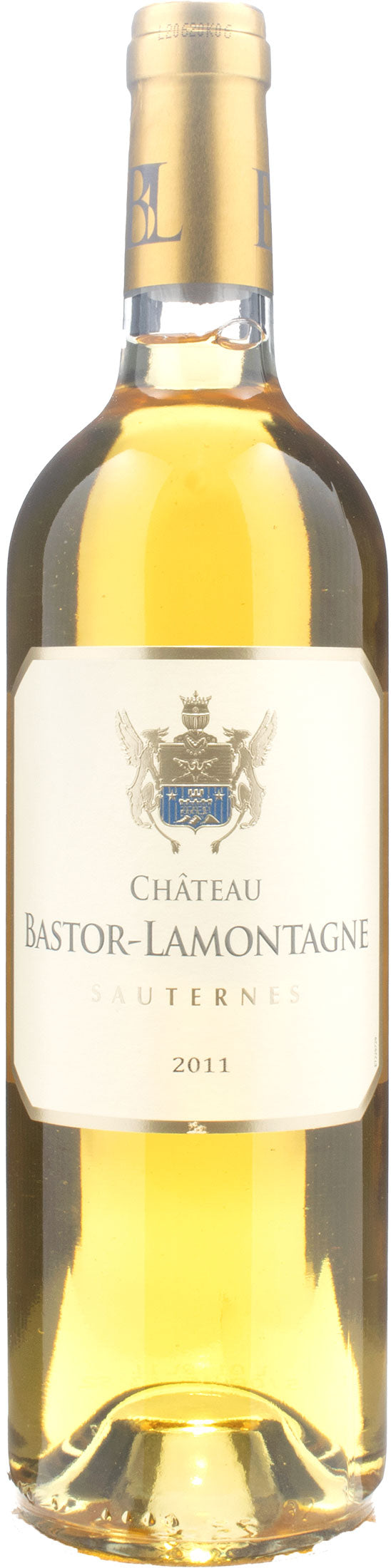
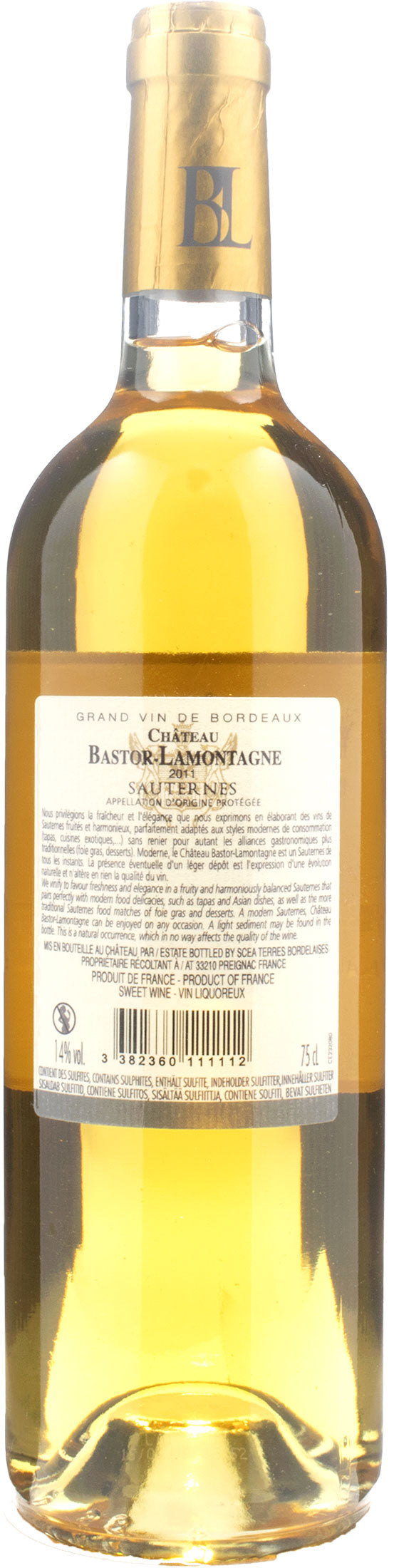
Chateau Bastor-Lamontagne
Sauternes 2011
| 品名 | AOC Sauternes |
|---|---|
| 酒瓶尺寸 | 0,75 l |
| 酒精度 | 14.0% 按体积 |
| 产区 | 波尔多 (France) |
| 葡萄品种 | Sauvignon, Semillon |
| 陈酿 | 发酵结束后,葡萄酒在酒泥上了数月。 |
| 其他年份: | 2012 , 2014 , 2023 |
- 名称与年份:苏玳法定产区2011年,法国波尔多甜型贵腐白葡萄酒
- 葡萄品种与酒精度:赛美蓉与长相思混酿;酒精度14% vol;750毫升瓶装
- 香气特征:花香细腻,带有桃子、梨和糖渍杏子的气息
- 酿造工艺:手工采摘,50%橡木桶、50%不锈钢罐发酵,酒泥陈酿
- 饮用建议与奖项:建议在10-12°C搭配甜点和奶酪饮用;Suckling评分90分,Vinous评分89分
描述
这是一款什么样的葡萄酒
Chateau Bastor Lamontagne Sauternes 是一款甜型白葡萄酒,产自波尔多,由长相思和赛美容葡萄精心混酿而成。倒入杯中呈现出浓郁金色,预示着其精致花香的香气。闻香时可以清晰感受到白色水果的香气,如桃子和梨,并与糖渍杏的气息和谐交融。入口丰富且有层次,结构感强,品饮体验极为满足,非常适合搭配奶酪和甜品。
产地来源
这款葡萄酒产自法国波尔多地区的普雷尼亚克。Chateau Bastor-Lamontagne 的葡萄园分布在砾石-硅质土壤上,底层为石灰岩,这种土壤结构非常适合酿造出极具精致感的葡萄酒。酒庄自1711年起就有文献记载,并采用有机农业管理。它是苏玳产区极少数获得官方认证的酒庄之一,确保了对风土的纯粹表达。
酿造工艺
酿造过程始于细致的人工采摘,以甄选最佳葡萄串。葡萄汁通过气动压榨温和提取,并进行轻度低温澄清。发酵部分在橡木桶中,部分在不锈钢罐中,于严格控温下进行。随后,葡萄酒在酒泥上进行数月的精心陈酿。这种工艺提升了酒体结构,使口感更加圆润,风味更加和谐。
历史与趣闻
Château Bastor-Lamontagne 的起源可以追溯到1711年,当时这座庄园归波尔多议员Vincent de La Montaigne所有。1839年被Larrieu家族收购,如今位于Preignac的56公顷庄园以葡萄种植为主要使命。这款2011年份的著名 Sauternes AOC 是真正的卓越之作,由该产区仅有的三家获得 有机认证 的酒庄之一酿造。每一杯酒都讲述着辉煌的历史,展现出卓越 砾石-硅质土壤 的纯粹表达。
奖项
-
2011
 90
90/100
詹姆斯·萨克林 (James Suckling) 是美国极具影响力的葡萄酒评论家和记者,曾在《葡萄酒观察家》(Wine Spectator) 任职30年。他于2010年离职并创立了自己的网站和指南 (JamesSuckling.com)。他专注于意大利和波尔多葡萄酒的研究。
-
2011
 89
89/100
Vinous 是由世界领先的葡萄酒鉴赏家之一安东尼·盖洛尼 (Antonio Galloni) 创办的在线指南。
详情
香水
颜色
味道
服务于:
10 - 12 °C
长寿:
15 - 25年
- 公顷: 56
这座拥有三个世纪历史的前皇家庄园自 2010 年起将其酿酒工艺转为有机农业("生物农业")。Bastor-Lamontagne 酒庄是苏玳产区三家获得 "生物 "认证的酒庄之一。 阅读更多


| 名称 | Chateau Bastor Lamontagne Sauternes 2011 |
|---|---|
| 类型 | 白葡萄酒 葡萄干甜 甜 |
| 葡萄酒名称 | Sauternes AOC |
| 年份 | 2011 |
| 容量 | 0,75 l |
| 酒精度 | 14.0% 按体积 |
| 葡萄品种 | Sauvignon, Semillon |
| 国家 | France |
| 产地 | 波尔多 |
| 供应商 | Chateau Bastor-Lamontagne |
| 故事 | 历史与趣闻Château Bastor-Lamontagne 的起源可以追溯到1711年,当时这座庄园归波尔多议员Vincent de La Montaigne所有。1839年被Larrieu家族收购,如今位于Preignac的56公顷庄园以葡萄种植为主要使命。这款2011年份的著名 Sauternes AOC 是真正的卓越之作,由该产区仅有的三家获得 有机认证 的酒庄之一酿造。每一杯酒都讲述着辉煌的历史,展现出卓越 砾石-硅质土壤 的纯粹表达。 |
| 产地 | 法国,波尔多,普雷尼亚克 |
| 土壤成分 | 石灰岩基底的硅质砾石 |
| 发酵温度 | 18-20 °C |
| 生产工艺 | 手工采摘;气动压榨;葡萄汁低温轻度澄清;50%在橡木桶中发酵,50%在控温(18-20°C)不锈钢罐中发酵;在酒泥上陈酿数月 |
| 酿酒工艺 | 葡萄汁采用气动压榨机进行压榨,经过低温轻微澄清处理后,50%在橡木桶中发酵,剩余50%在控温(18-20°C)的不锈钢罐中发酵。发酵结束后,葡萄酒在酒泥上陈酿数月。 |
| 陈酿 | 发酵结束后,葡萄酒在酒泥上了数月。 |