

Santa Cristina (Antinori)
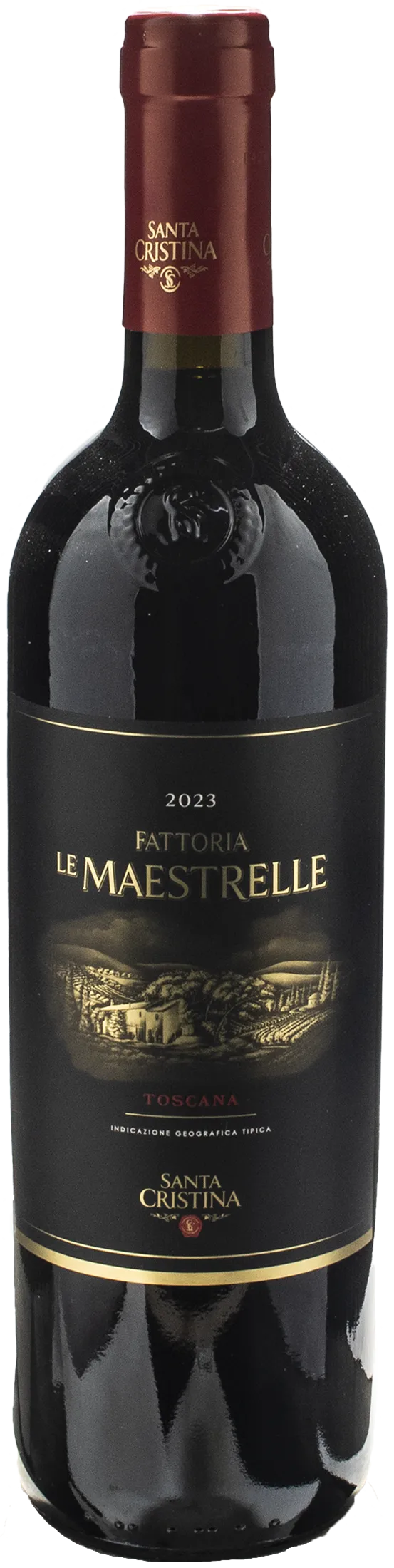
Fattoria Le Maestrelle Toscana 2023
| Denomination | Toscana IGT |
|---|---|
| Size | 0,75 l |
| Alcohol content | 13.0% by volume |
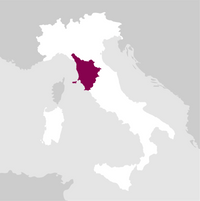
| Area | Tuscany (Italy) |
| Grape varieties | Merlot, Sangiovese, Syrah |
| Aging | At the end of malolactic fermentation, completed by the end of November, the wine began its ageing period, which ended in late spring. |
| Year | 2023 |
| Product name | Fattoria Le Maestrelle Toscana 2023 |
| Color | Ruby red with violet reflections. |
| Perfume | Fruity and floral notes of cherry and violet stand out on the nose, well in harmony with aromas of vanilla, chocolate and mint. |
| Taste | On the palate the velvety tannins are supported by an excellent freshness giving a long and savoury finish. Persistent aftertaste and capable of recalling the sweet sensations perceived on the nose. |
| Region | Tuscany |
| Country | Italy |
Description
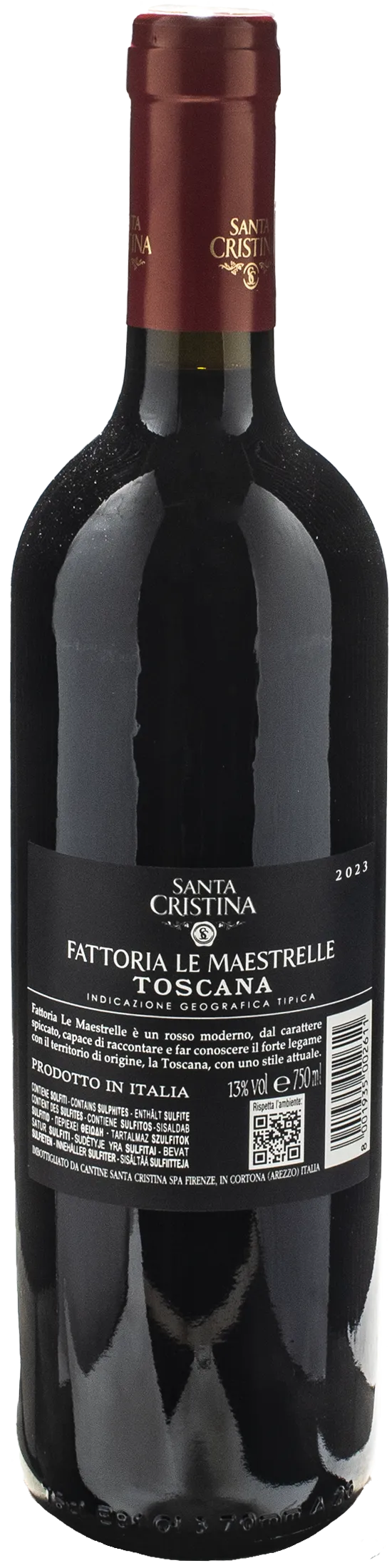
Still red wine from Tuscany IGT, 13% ABV, produced by Santa Cristina (Antinori). Blend of Merlot, Sangiovese, and Syrah. 0.75 L bottle, 2023 vintage. A wine that embodies the Santa Cristina philosophy, a benchmark for connoisseurs thanks to an unwavering commitment to quality. On the nose, fruity and floral notes of cherry and violet stand out, harmoniously blending with aromas of vanilla, chocolate, and mint. Ruby red with violet reflections. On the palate, velvety tannins are supported by excellent freshness, resulting in a long, savory finish.
Details

Perfume

Color

Taste
Serve at:
14 -16 °C.
Longevity:
05 - 10 years
Decanting time:
1 hour
Pairings
- Start up year: 2006
- Oenologist: Filippo Bezzi, Fabrizio Balzi
The care and attention always given to the vineyards and in the cellar have been the stimulus for constant innovation and to deal with native and international varietals, giving rise to a family of different products but distinguished by the same style, the result of an unbreakable bond between the vineyard, terroir, and human labor.
The products of the family Santa Cristina were born from this simple philosophy, thanks to an ongoing dialogue with the earth. Since 1946 continues this dedication, to keep still pristine quality of Santa Cristina. Read more

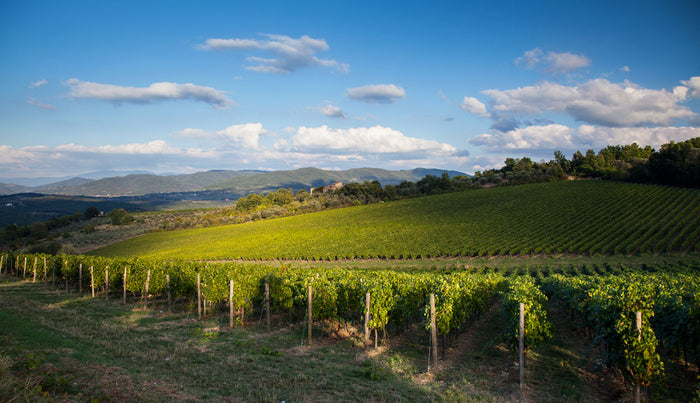
| Name | Santa Cristina Fattoria Le Maestrelle Toscana 2023 |
|---|---|
| Type | Red still |
| Denomination | Toscana IGT |
| Vintage | 2023 |
| Size | 0,75 l |
| Alcohol content | 13.0% by volume |
| Grape varieties | Merlot, Sangiovese, Syrah |
| Country | Italy |
| Region | Tuscany |
| Vendor | Santa Cristina (Antinori) |
| Harvest | The grapes were harvested at different times and vinified separately by variety. |
| Wine making | This process allowed fermentation and maceration to be conducted specifically for each variety, enhancing their aromatic characteristics and the softness of their tannins. The fermentation temperature never exceeded 25 °C and the pumping over was carried out in such a way as to ensure the extraction of soft and delicate tannins. |
| Aging | At the end of malolactic fermentation, completed by the end of November, the wine began its ageing period, which ended in late spring. |
| Allergens | Contains sulphites |