


Marchesi Antinori
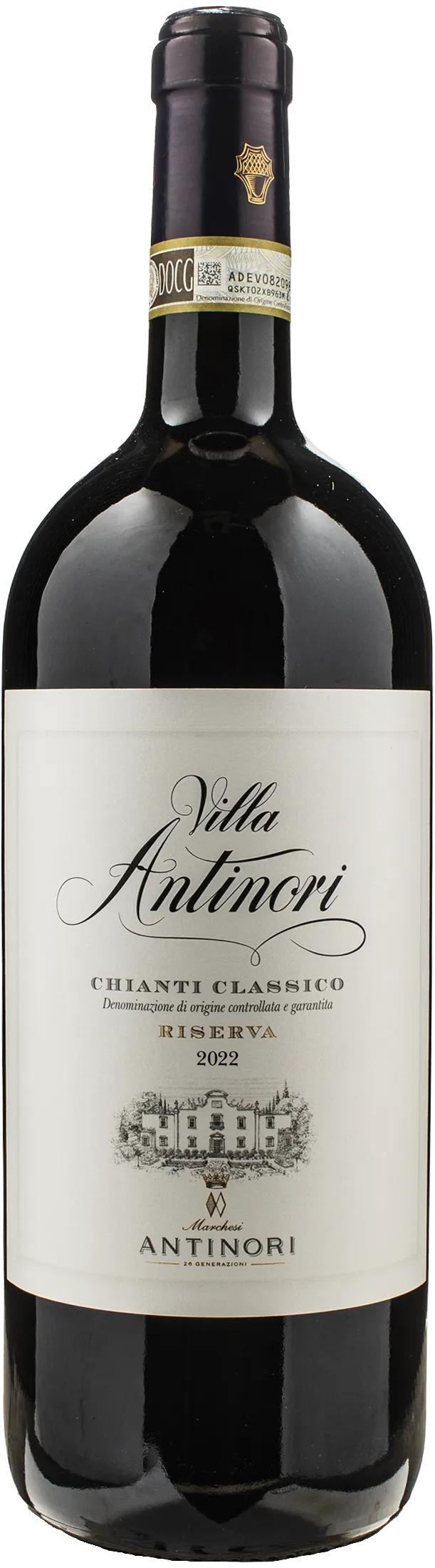
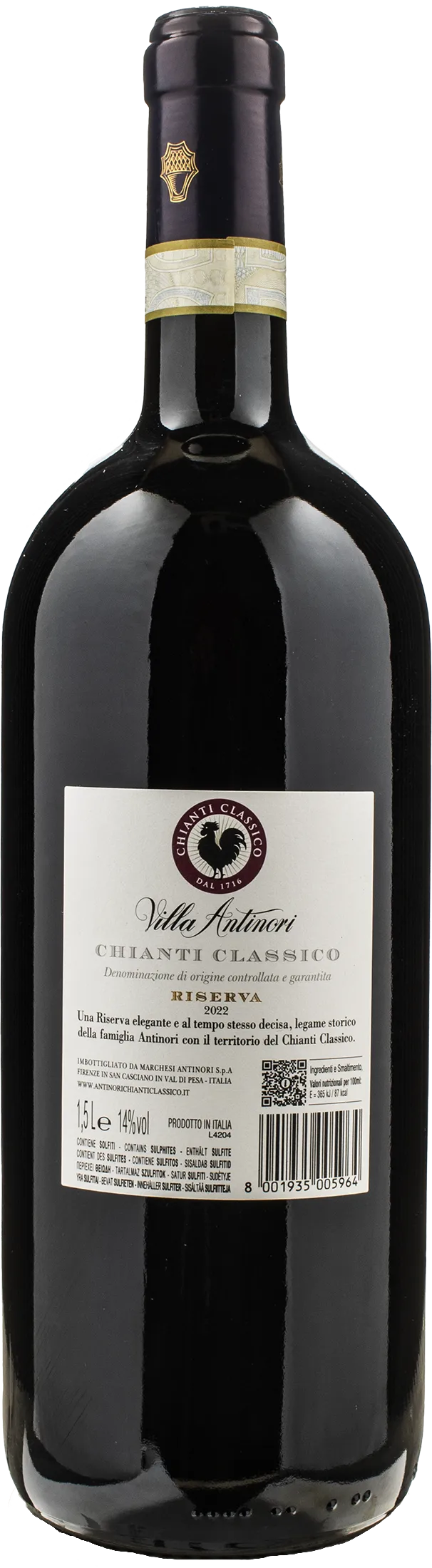
Chianti Classico Riserva Magnum 2022
| Denomination | DOCG Chianti Classico Riserva |
|---|---|
| Size | 1,50 l |
| Alcohol content | 14.0% by volume |
| Area | Tuscany (Italy) |
| Grape varieties | 90% Sangiovese, Canaiolo Nero |
| Aging | At the end of the malolactic fermentation, carried out in stainless steel tanks for the Sangiovese and in second and third-use barriques for the other varieties, the various lots were blended and continued ageing in wood, mainly in large casks and partly in barriques, until the spring. |
- Name and grape varieties: Chianti Classico DOCG Riserva; 90% Sangiovese, 10% Cabernet
- Aromas: ripe cherry and wild berries, with hints of tobacco, toasted wood and a balsamic note
- Flavour: enveloping and savoury, soft and velvety tannins, long and persistent finish
- Vinification: in steel at 30°C, 15 days maceration; malolactic fermentation in steel and barrique
- Serving: Magnum 1.5 l; 14% vol; serve at 16-18°C, decant for 1 hour; ideal with roasts
Description
What kind of wine it is
Villa Antinori Chianti Classico Riserva is a structured and enveloping expression of the renowned Tuscan denomination. Signed by Antinori, this red wine is born from a careful blend of Sangiovese and Cabernet, vinified separately to enhance their individual characteristics. On the nose, distinct aromas of ripe cherry, cranberry and wild berries stand out, well integrated with hints of toasted wood and tobacco. On the palate, it is savoury and thoroughly satisfying, led by soft and velvety tannins that guide the tasting towards a long and very persistent finish.
Where it comes from
The grapes come from the vineyards of San Casciano Val di Pesa, the historic heart of Chianti Classico. The vines grow at an altitude below 700 metres, trained using guyot and spurred cordon systems. The soils boast a mixture of clay and limestone, combined with sands and arenaceous subsoils that ensure ideal water drainage. The warm temperatures of the summer months favour ripening, while the strong temperature variations between day and night are essential for fixing the sugars and preserving the integrity of the aromatic profile.
How it is produced
The harvest takes place between mid-September and early October, starting with the Sangiovese and finishing with the Cabernet. After gentle pressing, the musts undergo alcoholic fermentation in stainless steel at a controlled temperature. Maceration lasts about fifteen days, using mechanical interventions for optimal extraction of colour and aromas. The batches complete malolactic fermentation separately: the Sangiovese in steel and the Cabernet in barrique. Once the final blend is created, maturation proceeds mainly in large casks and barriques.
History and Curiosities
Villa Antinori Chianti Classico DOCG Riserva celebrates the illustrious heritage of the Marchesi Antinori, which began in 1385. A symbol of Tuscan excellence since 1928, this superb blend of Sangiovese and Cabernet expresses intense aromas and a distinctive ruby red colour. The 2022 vintage, awarded 93 points by James Suckling, reveals a vibrant sip with soft tannins, offering a long and enveloping finish that crowns a centuries-old winemaking tradition.
Awards
-
2022
 4
4Italian Sommelier Foundation (FIS) guide This has been one of the most prestigious wine guides in Italy for over 10 years.
-
2022
 93
93/100
James Suckling is an influential American wine critic and journalist who worked at Wine Spectator for 30 years. He left the magazine in 2010 to start his own website and guidebook (JamesSuckling.com). He specialises in Italian and Bordeaux wines.
-
2022
 91
91/100
Vinous is the online guide from Antonio Galloni, one of the world's leading wine connoisseurs.
Tasting notes

Perfume

Color

Taste
Serve at:
16 - 18 °C
Longevity:
10 - 15 years
Decanting time:
1 hour

- Start up year: 1385
- Oenologist: Renzo Cotarella
The Antinori family’s first encounter with wine dates back to 1385, when Giovanni di Piero Antinori joined the Guild of Wine Merchants to make the best use of the family’s country properties in Valdarno, around Florence.
However, it was not until the 16th century that banker and merchant Alessandro Antinori made the wine from his estates famous in Italy and abroad, travelling from Lyons to Flanders, and from Spain to Algiers.
Wine was to remain the family’s passion and main business activity, so much so that in 1898 the "Fattoria dei Marchesi Lodovico e Piero Antinori" was created by brothers Lodovico and Piero, the sons of Marchese Niccolò – a direct descendent of that other Niccolò who purchased Palazzo Antinori in 1506 and poured his efforts into publicising Tuscan wines around the world and creating fine quality products. For 26 generations the Antinori family have continued to make history.
In 2023, at the beginning of February, Villa Antinori Toscana IGT 2019 was named the third wine in the world, the only Italian wine, in Wine Specator's Top 10 Values 2022: the list of the 10 wines that according to the American magazine represent world excellence in terms of value for money. Read more


| Name | Villa Antinori Chianti Classico Riserva Magnum 2022 – Marchesi Antinori |
|---|---|
| Type | Red still |
| Denomination | Chianti Classico DOCG |
| Vintage | 2022 |
| Size | 1,50 l |
| Alcohol content | 14.0% by volume |
| Grape varieties | 90% Sangiovese, Canaiolo Nero |
| Country | Italy |
| Region | Tuscany |
| Vendor | Marchesi Antinori |
| Story | History and Curiosities Villa Antinori Chianti Classico DOCG Riserva celebrates the illustrious heritage of the Marchesi Antinori, which began in 1385. A symbol of Tuscan excellence since 1928, this superb blend of Sangiovese and Cabernet expresses intense aromas and a distinctive ruby red colour. The 2022 vintage, awarded 93 points by James Suckling, reveals a vibrant sip with soft tannins, offering a long and enveloping finish that crowns a centuries-old winemaking tradition. |
| Origin | San Casciano Val di Pesa (Firenze), Toscana, Italia |
| Soil composition | Mixed soil of clay, limestone, sand and sandstone substrates |
| Harvest | From mid-September to early October |
| Fermentation temperature | Not exceeding 30 °C |
| Fermentation | Approximately 15 days |
| Production technique | Destemming and gentle pressing; alcoholic fermentation in stainless steel tanks at controlled temperature (not exceeding 30°C) with maceration for about 15 days; malolactic fermentation in stainless steel (Sangiovese) and in barriques (Cabernet); maturation in wood partly in large casks and partly in barriques. |
| Wine making | The grapes, after being gently destemmed and crushed, were transferred to stainless steel tanks where alcoholic fermentation took place at a controlled temperature not exceeding 30°C; maceration lasted about 15 days with mechanical interventions for the controlled extraction of aromas, structure, and soft tannins. The batches were vinified separately until malolactic fermentation (in stainless steel for the Sangiovese and in barriques for the Cabernet); after blending, the wine was aged in wood, mainly in large casks and partly in barriques, and bottling takes place in June two years after the harvest. |
| Aging | At the end of the malolactic fermentation, carried out in stainless steel tanks for the Sangiovese and in second and third-use barriques for the other varieties, the various lots were blended and continued ageing in wood, mainly in large casks and partly in barriques, until the spring. |
| Allergens | Contains sulphites |