


Tenute Rubino
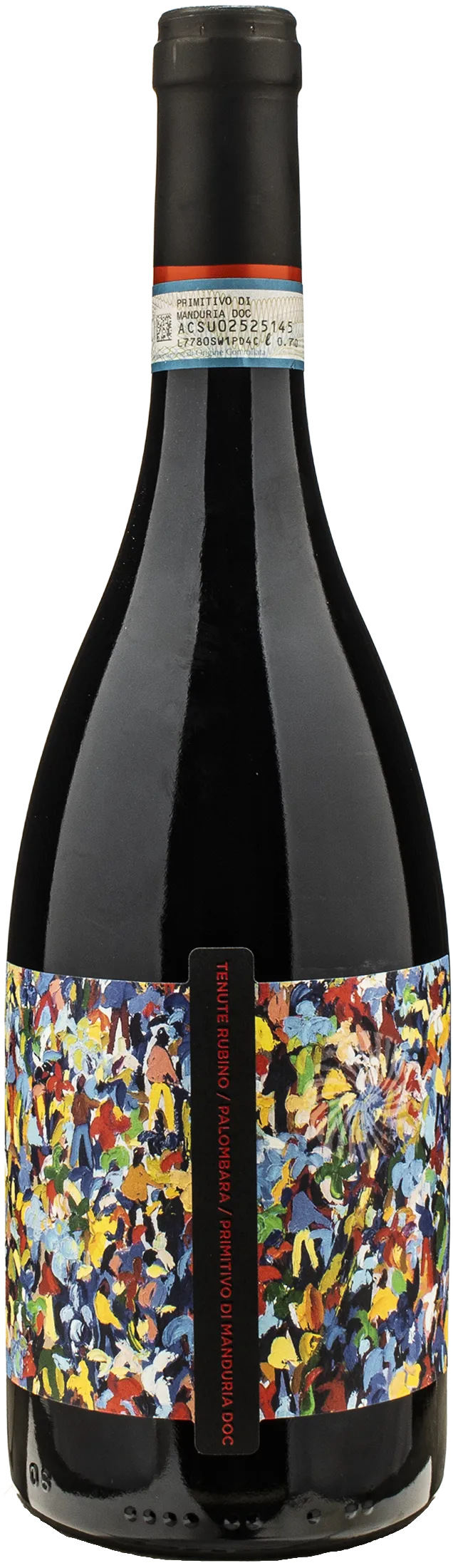
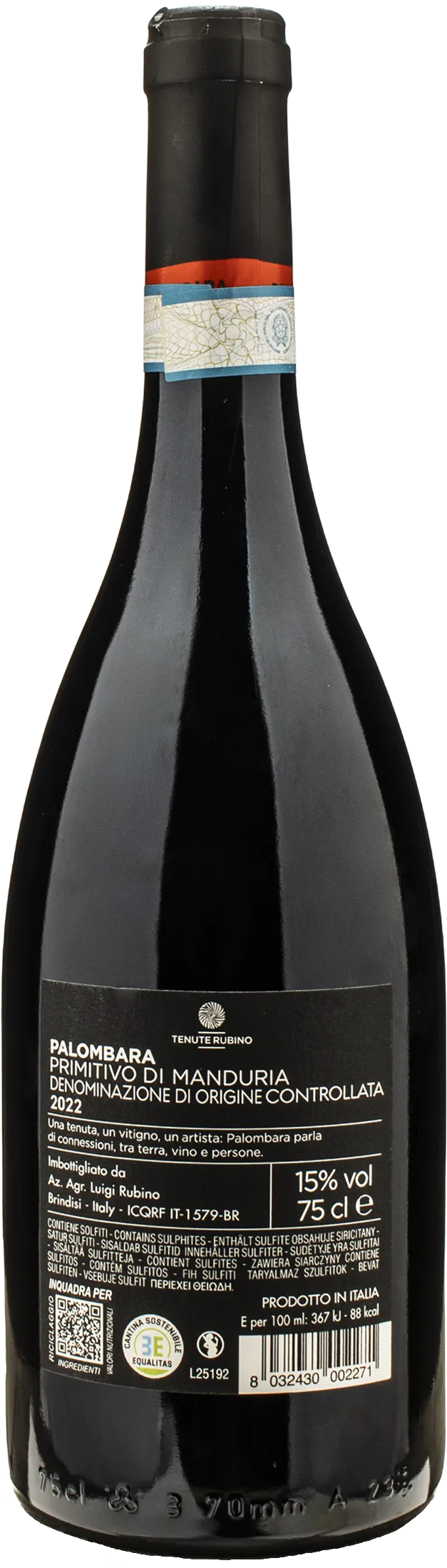
Primitivo di Manduria Palombara 2022
| Denomination | DOC Primitivo di Manduria |
|---|---|
| Size | 0,75 l |
| Alcohol content | 15.0% by volume |
| Area | Apulia (Italy) |
| Grape varieties | 100% Primitivo |
| Aging | 16 months in steel, 6 months in first-passage French oak barriques for 50% of the batch, 8 months in bottle |
- Identity: Primitivo di Manduria DOC 2022, still red wine from Apulia in a 0.75 l bottle
- Aroma: notes of black cherry, violet and blackcurrant enriched with light spices and hints of thyme
- Taste: juicy and harmonious flavour, fresh and smooth, with a persistent fruity finish
- Vinification: fermentation in steel at 22-24 °C, 15 days maceration, without malolactic fermentation
- Ageing: 16 months in steel and 6 in barrique; serve at 16-18 °C (decant for 1 hour)
Description
What kind of wine is it
Tenute Rubino Palombara is a still red wine made from Primitivo grapes, an authentic expression of Primitivo di Manduria. Characterised by a ruby colour with cherry-red highlights, it releases aromas of black cherry, violet and thyme, enriched by an enveloping spiciness. On the palate, it is juicy and harmonious, with a fresh structure and a soft texture. The fruity finish makes it ideal for pairing with orecchiette, grilled meats and medium-aged cheeses.
Where does it come from
This wine originates in Manduria, at the heart of Apulian viticulture. The vines grow at around one hundred metres above sea level on medium-textured soils with stones, which are essential for imparting savouriness and freshness. Following an organic and sustainable approach, Tenute Rubino trains the vines using the spur-pruned cordon method, limiting yields per plant. This agronomic balance allows for optimal ripening, faithfully reflecting the identity of the Apulian terroir.
How is it produced
Harvested at the beginning of September, the grapes undergo fermentation in stainless steel with fifteen days of maceration at a controlled temperature. The absence of malolactic fermentation preserves the vibrancy of the sip. The wine matures for sixteen months in stainless steel tanks, while a portion is aged for six months in first-passage French oak barrels, which add depth without overpowering the fruit. A final refinement in bottle completes and enhances the overall elegance of the wine.
History and Curiosities
The Palombara Primitivo di Manduria DOC encapsulates the authentic Apulian spirit. It originates in Manduria, on medium-textured soils. The family-run winery, founded in 2000 by Tommaso Rubino and now led by his son Luigi, enhances the identity of the region. Overseen by oenologist Luca Petrelli from the harvest onwards, the wine follows a organic and sustainable approach. This project has won over prestigious guides such as the FIS, promoting Taranto's vocation on an international level.
Awards
-
2022
 4
4Italian Sommelier Foundation (FIS) guide This has been one of the most prestigious wine guides in Italy for over 10 years.
-
2022
 2
2One of the most prestigious wine guides in Italy.
Tasting notes

Perfume

Color

Taste
Serve at:
16 - 18 °C
Longevity:
05 - 10 years
Decanting time:
1 hour

- Start up year: 2000
- Oenologist: Luca Petrelli
- Bottles produced: 800.000
- Hectares: 180
Both the traditions of Salento and a vibrant entrepreneurial spirit have been passed down from Tommaso to his son, Luigi, who has since taken over with the support of his wife, Romina. Luigi has undertaken this entrepreneurial legacy, pouring all of his passion into the family’s winery and making it a global ambassador of Apulian viticulture.
After all, winemaking is an ancient art here in Jaddico: over the years, archaeologists have brought to light a Roman manor house filled with kilns, where Visellio—the owner of the estate—fired the amphorae used to export his wine to the four corners of the Roman Empire. At the time, this land was home to extensive vineyards and served as an important manufacturing center for wine containers.
Tenute Rubino is an Apulian brand with a strong international market presence. The company has consistently and successfully exported its labels to 20 countries such as the US, Canada and Brazil. Read more


| Name | Tenute Rubino Primitivo di Manduria Palombara 2022 |
|---|---|
| Type | Red green still |
| Denomination | Primitivo di Manduria DOC |
| Vintage | 2022 |
| Size | 0,75 l |
| Alcohol content | 15.0% by volume |
| Grape varieties | 100% Primitivo |
| Country | Italy |
| Region | Apulia |
| Vendor | Tenute Rubino |
| Story | History and Curiosities The Palombara Primitivo di Manduria DOC encapsulates the authentic Apulian spirit. It originates in Manduria, on medium-textured soils. The family-run winery, founded in 2000 by Tommaso Rubino and now led by his son Luigi, enhances the identity of the region. Overseen by oenologist Luca Petrelli from the harvest onwards, the wine follows a organic and sustainable approach. This project has won over prestigious guides such as the FIS, promoting Taranto's vocation on an international level. |
| Origin | Manduria, Taranto |
| Soil composition | Medium texture with presence of stones |
| Cultivation system | Spurred cordon |
| Plants per hectare | 6000 |
| Yield per hectare | 60 q/ha |
| Harvest | First ten days of September |
| Fermentation temperature | 22-24 °C |
| Fermentation | 15 days |
| Production technique | Fermentation in steel tanks at 22-24 °C with temperature-controlled maceration; ageing in steel and French oak barriques, then in bottle |
| Wine making | Fermentation in stainless steel tanks at 22-24 °C, maceration for 15 days at controlled temperature; malolactic fermentation not carried out; ageing for 16 months in steel, then 6 months in French oak barriques (first use) for 50% of the mass and at least 6-8 months in bottle. |
| Aging | 16 months in steel, 6 months in first-passage French oak barriques for 50% of the batch, 8 months in bottle |
| Total acidity | 6.0 gr/L |
| PH | 3.68 |
| Year production | 800000 bottles |
| Allergens | Contains sulphites |