


Podere Sapaio
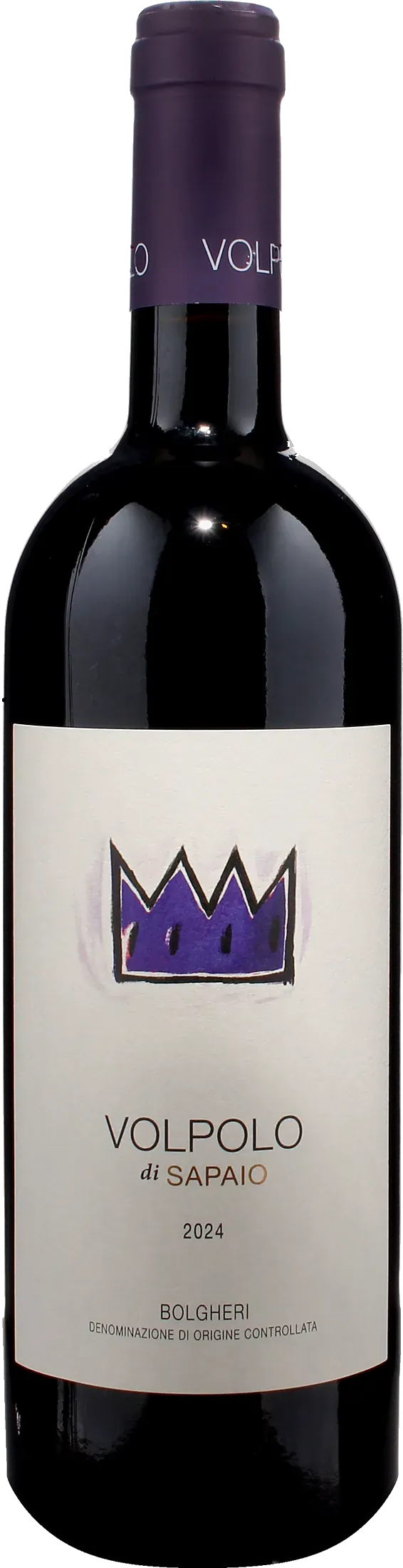
Bolgheri Volpolo 2024
| Denomination | DOC Bolgheri Rosso |
|---|---|
| Size | 0,75 l |
| Alcohol content | 14.5% by volume |
| Area | Tuscany (Italy) |
| Grape varieties | 70% Cabernet Sauvignon, 15% Merlot, 15% Petit Verdot |
| Aging | Aged for 16 months in French oak barriques and tonneaux, followed by 4 months in the bottle. |
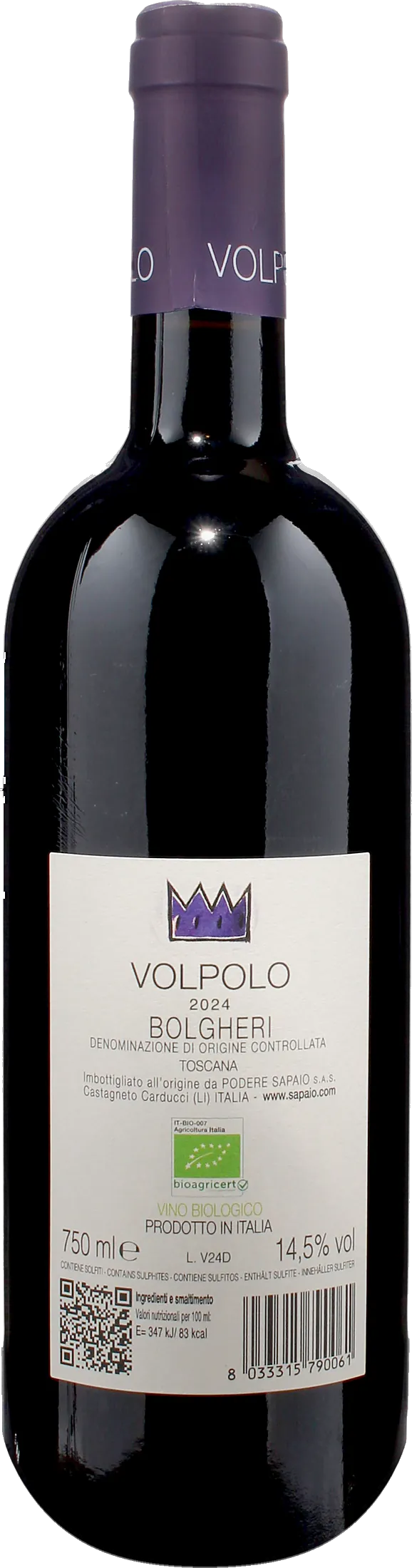
- Identity: Still organic red wine DOC Bolgheri 2024 from Podere Sapaio, 14.5% vol
- Varietal composition: 70% Cabernet Sauvignon, 15% Merlot, 15% Petit Verdot
- Vinification: Fermentation in stainless steel at a controlled temperature and long maceration
- Ageing: 16 months in French oak and 4 months in the bottle for greater complexity
- Serving: Decant for 1 hour; serve at 16–18°C; drink now or by 2035
Description
What type of wine it is
Volpolo from Podere Sapaio is an organic red wine with a designation of controlled origin capable of expressing the authentic character of Bolgheri in the glass. This elegant Bordeaux blend combines Cabernet Sauvignon, Merlot, and Petit Verdot grapes, vinified in steel and aged in oak barrels, creating an enveloping and balanced structure. The aromatic profile offers clear notes of forest fruits and black cherry, enriched by herbaceous and earthy nuances. On the palate, the tannic texture reveals itself as refined, supported by a lively acidity that guides the sip towards a persistent finish, outlined by a pleasant mineral savouriness.
Where it comes from
The vineyards extend across the Tuscan area of Castagneto Carducci, where the plants are cultivated with a high planting density. The maritime influence of the coast gives the wine its characteristic saline footprint. The soils present a complex composition, formed by sands, alluvial pebbles, clay, and volcanic rock. This geological richness favours the development of powdery tannins and gives deep structure to the sip. The entire agronomic management follows the dictates of organic farming, respecting the natural balance of the vines.
How it is produced
Production begins with a rigorous manual harvest to select the best clusters. In the cellar, alcoholic fermentation takes place in temperature-controlled steel tanks, accompanied by a long maceration on the skins to extract colour and aromas. Malolactic fermentation takes place in wood, introducing the subsequent maturation phase. Ageing continues within French oak barrels for several months, concluding with a period of rest in glass useful for integrating the tannic component and stabilising the entire flavour profile.
History and interesting facts
Founded in 1999 by Massimo Piccin, the Podere Sapaio estate embodies the contemporary soul of the Tuscan territory. Its renowned organic Bolgheri DOC pays tribute to the Volpola variety, combining respect for its roots with avant-garde viticulture. Thanks to the expertise of oenologist Carlo Ferrini, the winery produces a refined Bordeaux blend designed to stand the test of time. This extraordinary longevity allows for prestigious vertical tastings, offering enthusiasts a fascinating journey through the evolution of the wine over the years.
Tasting notes

Perfume

Color

Taste
Serve at:
14 -16 °C
Longevity:
10 - 15 years
Decanting time:
1 hour

- Start up year: 1999
- Oenologist: Carlo Ferrini
- Bottles produced: 110.000
- Hectares: 26
The names Sapaio and Volpolo come from two ancient Tuscany vines: Sapaia and Volpola. They were purposely chosen to exalt the local origins of the product beginning with their names. The crown on the trademark for the Podere Sapaio is a tribute to the nobility of the wines and the land, which are always respected in the work that is carried out in the vineyard and in the cellar. Read more


| Name | Sapaio Bolgheri Volpolo 2024 |
|---|---|
| Type | Red organic still |
| Denomination | Bolgheri DOC |
| Vintage | 2024 |
| Size | 0,75 l |
| Alcohol content | 14.5% by volume |
| Grape varieties | 70% Cabernet Sauvignon, 15% Merlot, 15% Petit Verdot |
| Country | Italy |
| Region | Tuscany |
| Vendor | Podere Sapaio |
| Story | History and interesting facts Founded in 1999 by Massimo Piccin, the Podere Sapaio estate embodies the contemporary soul of the Tuscan territory. Its renowned organic Bolgheri DOC pays tribute to the Volpola variety, combining respect for its roots with avant-garde viticulture. Thanks to the expertise of oenologist Carlo Ferrini, the winery produces a refined Bordeaux blend designed to stand the test of time. This extraordinary longevity allows for prestigious vertical tastings, offering enthusiasts a fascinating journey through the evolution of the wine over the years. |
| Origin | Castagneto Carducci (Province of Livorno) |
| Soil composition | Sandy and calcareous soils with alluvial pebbles, marine sands, limestone, clay and volcanic rock |
| Plants per hectare | 7,500 vines per hectare |
| Production technique | Temperature-controlled alcoholic fermentation in stainless steel tanks with long maceration on the skins; malolactic fermentation in French oak; ageing in French oak barriques and tonneaux, followed by ageing in the bottle. |
| Wine making | Temperature-controlled alcoholic fermentation in stainless steel tanks with long maceration on the skins; malolactic fermentation in French oak; ageing for 16 months in French oak barriques and tonneaux, followed by 4 months in the bottle. |
| Aging | Aged for 16 months in French oak barriques and tonneaux, followed by 4 months in the bottle. |
| Year production | 83 bottles |
| Allergens | Contains sulphites |