


San Simone
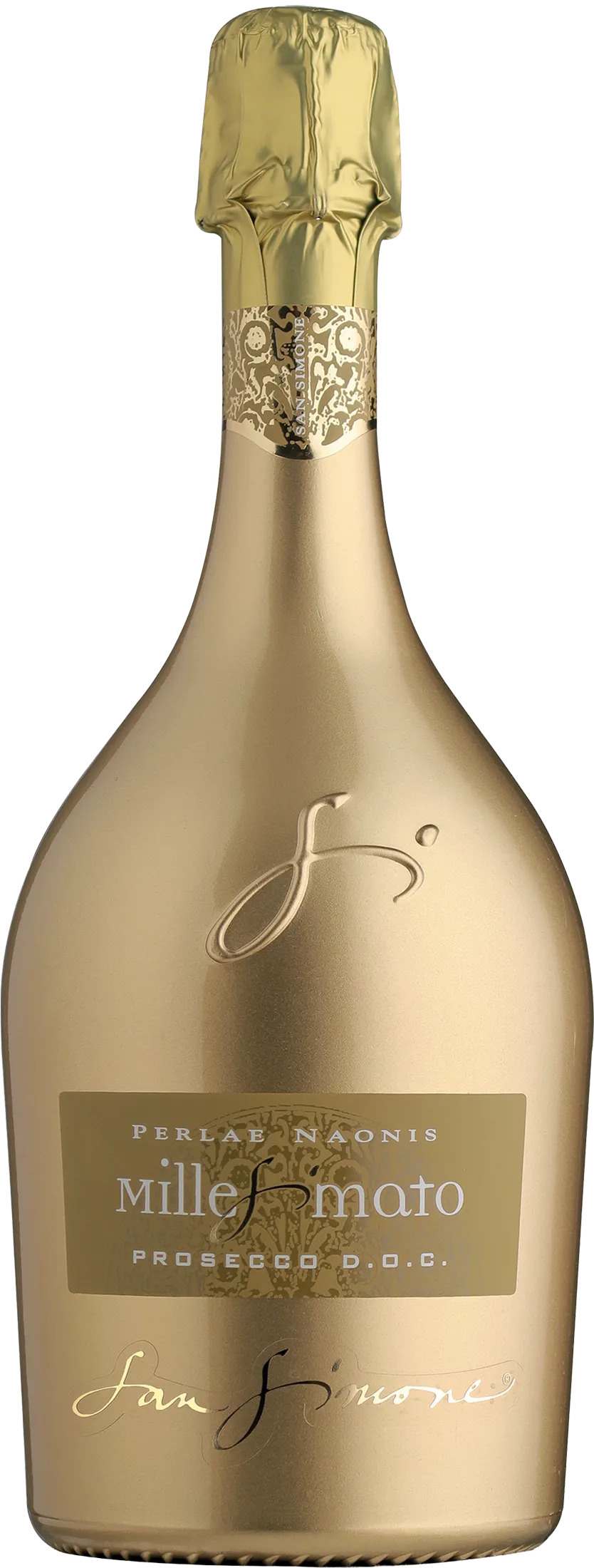
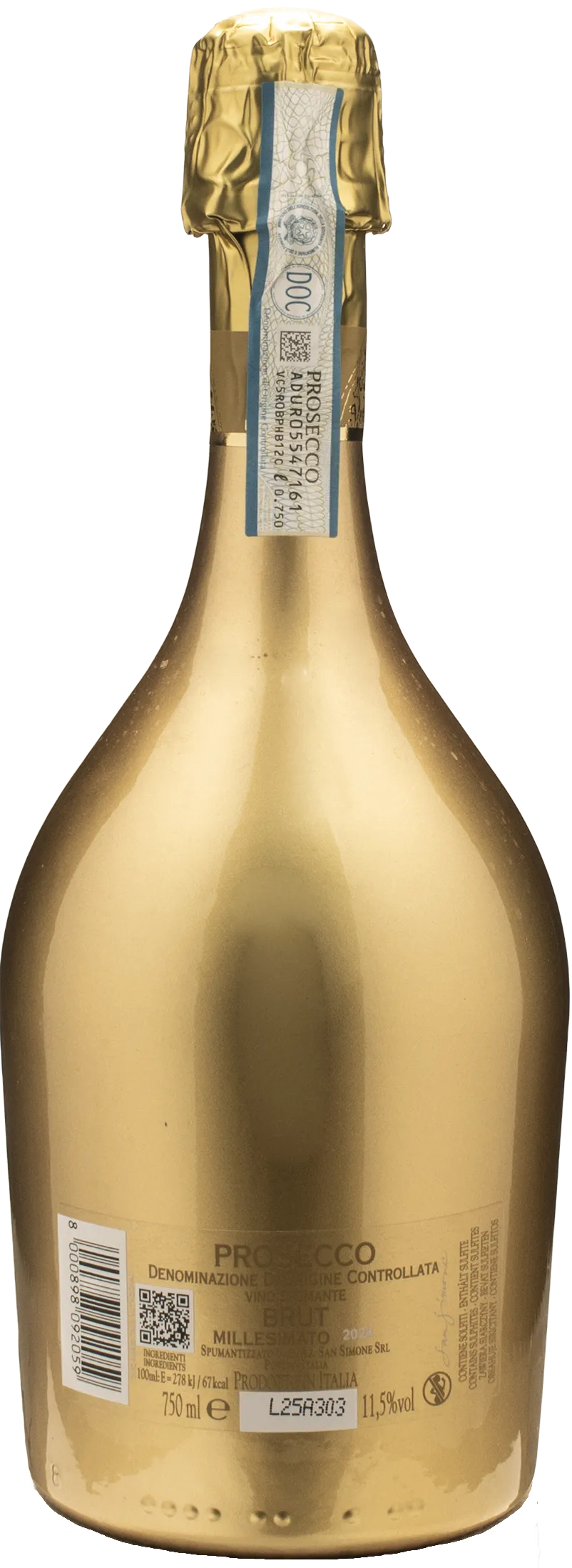
Prosecco Perlae Naonis Gold Edition Brut Millesimato 2024
| Denomination | DOC Prosecco Spumante Brut |
|---|---|
| Size | 0,75 l |
| Alcohol content | 11.5% by volume |
| Area | Friuli-Venezia Giulia (Italy) |
| Grape varieties | 100% Glera |
| Aging | Refermentation in a pressurised tank for about 30 days at a constant temperature between 14–16 °C until reaching 6 bar; then cooling to halt fermentation and maintaining at 8–10 °C for at least 3 months to encourage natural maturation in contact with the yeasts; followed by filtration and isobaric bottling. |
- Name: Prosecco DOC Brut Millesimato 2024 made exclusively from Glera grapes.
- Production: Charmat method in autoclave with 3 months ageing on the lees.
- Aromas: Hints of apple, apricot and citrus with floral notes and an almond finish.
- On the palate: Fine and persistent bubbles, with a rounded, creamy, fresh and lively taste.
- Serving: Limited gold edition, 11.5% vol. Ideal as an aperitif, to be served at 6-8°C.
Description
What kind of wine it is
San Simone Perlae Naonis is a sparkling wine from the Prosecco area, produced in Friuli-Venezia Giulia exclusively from Glera grapes. Crafted using the Charmat Method, it boasts a dry and elegant style, also suitable for those following a vegan diet. In the glass, it reveals a delicate and persistent perlage that precedes an aromatic profile of apple, pear, apricot and citrus fruits, combined with hints of wisteria, acacia and rose. On the palate, it is rounded and enveloping, characterised by a lively freshness and a pleasant finish reminiscent of almond.
Where it comes from
This sparkling wine originates in the western part of the Friuli region, in the heart of the Prosecco area, between the municipalities of Pasiano and Porcia. The Glera vines take root in alluvial soil, rich in limestone and characterised by sandy and clay components, a synergy that gives the wine its delicate flavour profile. The vineyard is managed using the double Guyot system, ensuring optimal planting density. The harvest, carried out in September, allows for the collection of bunches that maintain a perfect aromatic balance and the necessary acidic tension.
How it is produced
Vinification begins with the crushing and destemming of the grapes, followed by gentle pressing to extract the free-run must. The first fermentation in steel takes place at a controlled temperature to preserve the varietal aromatic integrity. The prise de mousse then occurs through a secondary fermentation in autoclave lasting about thirty days, until the ideal pressure is reached. The process concludes by stopping the fermentation through cooling and allowing the wine to rest for three months in contact with the lees to enrich its structure before the final filtration.
History and Curiosities
Founded in 1915, the San Simone winery celebrates the art of sparkling wine with its Prosecco Brut Millesimato in a limited edition. Housed in a sumptuous golden bottle, perfect for elegant gifts, this sparkling wine is made from Friulian Glera grapes and matures for three months on the lees. The result is a glass with a persistent perlage and a creamy texture, capable of releasing lively aromas of apple and wisteria, with a seductive finish of glazed almond. An absolute excellence, awarded 92 points by Luca Maroni, designed to make your most exclusive toasts unforgettable.
Tasting notes

Perlage

Perfume

Color

Taste
Serve at:
06 - 08 °C
Longevity:
03 - 05 years
- Start up year: 1915
- Oenologist: Antonio Brait, Antonio Brisotto
- Bottles produced: 900.000
- Hectares: 65
Later on handed over to our parents, Gino and Liviana convinced that to grow and improve we must always be open to change, which gave birth to a new production project: San Simone. An adventure that started from the historical Brisotto cellars, in Prata and later shifted to the new premises in Porcia, where the company accelerated its pace on the road to quality. This project aims to handle with care even a minimum detail, from the vineyard to the bottle.
At the Concours Mondial Bruxelles, our Prosecco Doc Brut Millesimato Perlae Naonis 2021 was awarded the Gold Medal. Read more


| Name | San Simone Prosecco Perlae Naonis Gold Edition Brut Millesimato 2024 |
|---|---|
| Type | White charmat method sparkling wine brut |
| Denomination | Prosecco DOC |
| Vintage | 2024 |
| Size | 0,75 l |
| Alcohol content | 11.5% by volume |
| Grape varieties | 100% Glera |
| Country | Italy |
| Region | Friuli-Venezia Giulia |
| Vendor | San Simone |
| Story | History and Curiosities Founded in 1915, the San Simone winery celebrates the art of sparkling wine with its Prosecco Brut Millesimato in a limited edition. Housed in a sumptuous golden bottle, perfect for elegant gifts, this sparkling wine is made from Friulian Glera grapes and matures for three months on the lees. The result is a glass with a persistent perlage and a creamy texture, capable of releasing lively aromas of apple and wisteria, with a seductive finish of glazed almond. An absolute excellence, awarded 92 points by Luca Maroni, designed to make your most exclusive toasts unforgettable. |
| Origin | Westernmost part of Friuli, in the centre of the Prosecco DOC area, in the municipalities of Pasiano and Porcia |
| Soil composition | Alluvial soil, rich in limestone, sandy and clayey. |
| Cultivation system | Double Guyot |
| Plants per hectare | 3500 |
| Yield per hectare | 120 q/ha |
| Harvest | Second–fourth week of September |
| Fermentation temperature | 16–18 °C |
| Fermentation | 10 days (first fermentation) + approximately 30 days (second fermentation in autoclave) |
| Production technique | Charmat method (refermentation in autoclave) |
| Wine making | After crushing, destemming and gentle pressing, the must ferments for 10 days in stainless steel tanks at a controlled temperature (16–18 °C). The wine matures in stainless steel until the sparkling process begins. The second fermentation takes place in a pressurised tank for about 30 days at 14–16 °C until a pressure of 6 bar is reached; it is then cooled to stop fermentation and kept at 8–10 °C for at least 3 months for ageing on the lees. This is followed by filtration and isobaric bottling. |
| Aging | Refermentation in a pressurised tank for about 30 days at a constant temperature between 14–16 °C until reaching 6 bar; then cooling to halt fermentation and maintaining at 8–10 °C for at least 3 months to encourage natural maturation in contact with the yeasts; followed by filtration and isobaric bottling. |
| Total acidity | 5.4 gr/L |
| Residual sugar | 10.0 gr/L |
| Allergens | Contains sulphites |