


Rosset Terroir
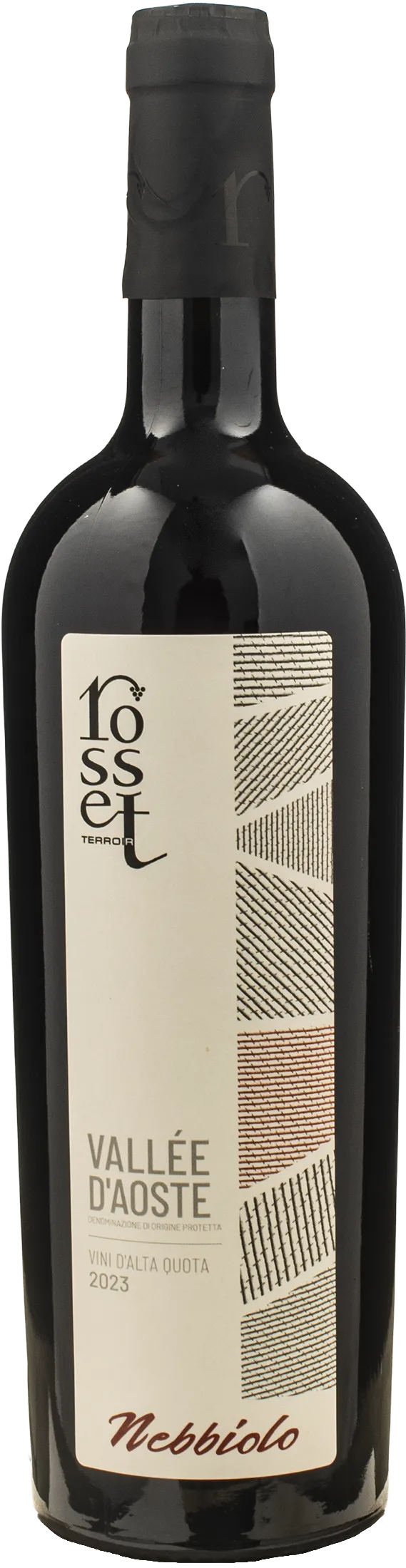
Valle d'Aosta Nebbiolo 2023
| Denomination | DOC Valle d'Aosta Nebbiolo |
|---|---|
| Size | 0,75 l |
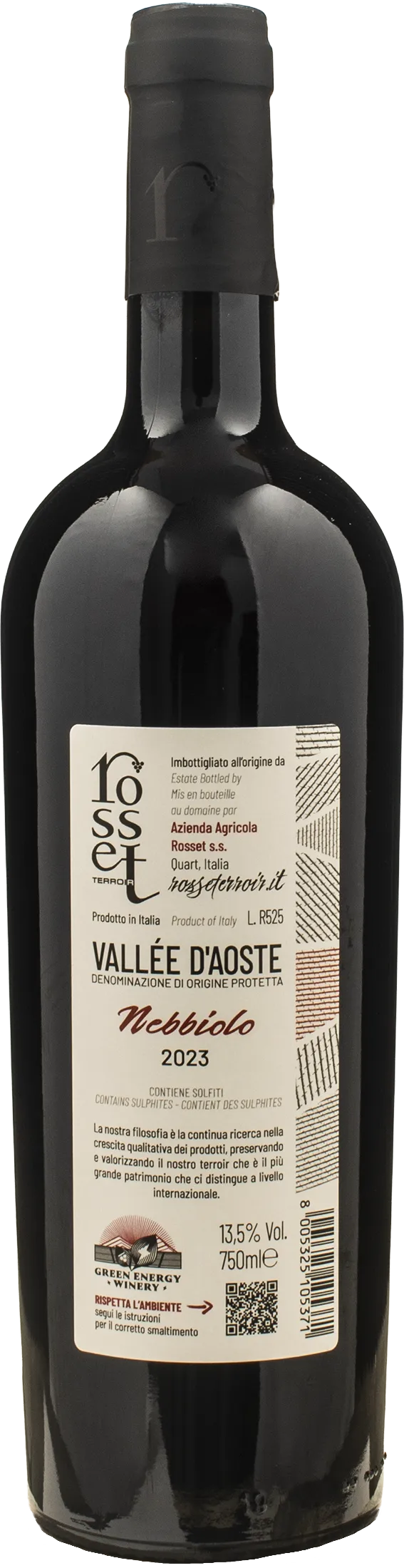
| Alcohol content | 13.5% by volume |
| Area | Aosta Valley (Italy) |
| Grape varieties | 100% Nebbiolo |
| Aging | It is subsequently refined partly in large barrels and partly in used French oak barriques. |
- Origin and variety: 100% Nebbiolo (Picotendro), Valle d’Aosta denomination, harvested in 2023
- Floral and fruity aromas: notes of violet, dried rose, cherry and small red fruits
- Taste profile: freshness, good savouriness, integrated tannins and a mineral finish
- Vinification: in steel, then large barrels and used French oak barriques
- Serving suggestions: decant for one hour, serve at 16-18 °C with red meats, polenta and cheeses
Description
What kind of wine it is
Valle d’Aosta Nebbiolo is a still red wine produced by Rosset Terroir, an authentic expression of Nebbiolo, locally known as Picotendro. Typical of the Aosta Valley, it appears ruby with garnet reflections. Its floral aromatic profile offers notes of violet and dried rose, cherry and small fruits. On the palate, it displays vibrant freshness and excellent savouriness, with a well-integrated tannin and a persistent finish of sweet spices.
Where it comes from
The grapes come from alpine vineyards located between Saint-Christophe and Villeneuve. The unique high-altitude conditions favour a taut and defined ripening. The mountain environment and glacial soils impart a clear mineral imprint to the wine. Nebbiolo has found an ideal adaptation in these valleys, translating the territory into a recognisable identity of mountain viticulture.
How it is produced
After the harvest, fermentation in steel preserves the integrity of the aromas. Ageing in French oak barrels refines the structure without overpowering the fruit, ensuring remarkable evolutionary potential. Served between 16 and 18°C, this red from the Aosta Valley pairs excellently with structured dishes such as red meats, polenta concia and mature cheeses.
History and Curiosities
Nebbiolo finds an extraordinary expression in the high-altitude vineyards of the Aosta Valley, where it is known locally as Picotendro. The Rosset Terroir winery, founded in 2001 by the Rosset-Levi family, historic master distillers for generations, passionately cultivates thirteen hectares between Saint-Christophe and Villeneuve. Under the guidance of oenologist Matteo Moretto, the company produces an elegant Alpine red, awarded in the AIS 2023 guide.
Awards
-
2023
 3
3One of the most prestigious wine guides in Italy.
-
2023
 3
3Italian Sommelier Association (AIS) guide
Tasting notes

Perfume

Color

Taste
Serve at:
16 - 18 °C
Longevity:
10 - 15 years
Decanting time:
1 hour

- Start up year: 2001
- Oenologist: Matteo Moretto
- Bottles produced: 50.000
- Hectares: 13
The story began to take shape in 2001, with the planting of the first three hectares of vineyard in the municipality of Saint-Christophe, just outside Aosta. The first varieties grown were Chardonnay, Syrah, and the native Cornalin. In just a few years, the estate expanded its vineyard surface and selected new, highly suited plots, where Muscat Blanc, Pinot Gris, and additional parcels of Syrah were also introduced.
A turning point came in 2017, when Rosset Terroir ventured beyond 900 meters above sea level, in the village of Villeneuve. On particularly steep slopes, in a context of heroic viticulture, the cultivation of the traditional Petite Arvine grape variety comes to life, from which the winery’s flagship wine is born: the Sopraquota 900, awarded in 2021 as Italy’s Best White Wine by Gambero Rosso ‘s Vini d’Italia guide and included in James Suckling’s Top 100 World Wines in 2024.
Today, Rosset Terroir manages around 13 hectares of vineyards and produces approximately 50,000 bottles per year, carefully selecting the region’s most promising plots and combining the expertise of seasoned technicians with modern, functional facilities. Read more


| Name | Rosset Terroir Valle d'Aosta Nebbiolo 2023 |
|---|---|
| Type | Red still |
| Denomination | Valle d'Aosta DOC |
| Vintage | 2023 |
| Size | 0,75 l |
| Alcohol content | 13.5% by volume |
| Grape varieties | 100% Nebbiolo |
| Country | Italy |
| Region | Aosta Valley |
| Vendor | Rosset Terroir |
| Story | History and Curiosities Nebbiolo finds an extraordinary expression in the high-altitude vineyards of the Aosta Valley, where it is known locally as Picotendro. The Rosset Terroir winery, founded in 2001 by the Rosset-Levi family, historic master distillers for generations, passionately cultivates thirteen hectares between Saint-Christophe and Villeneuve. Under the guidance of oenologist Matteo Moretto, the company produces an elegant Alpine red, awarded in the AIS 2023 guide. |
| Origin | Saint-Christophe and Villeneuve (Aosta Valley, Italy) |
| Climate | Alpine |
| Harvest | October |
| Production technique | Fermentation in stainless steel; ageing partly in large casks and partly in used French oak barriques |
| Wine making | Fermentation in stainless steel; maturation partly in large casks and partly in used French oak barriques. |
| Aging | It is subsequently refined partly in large barrels and partly in used French oak barriques. |
| Allergens | Contains sulphites |