


Ricasoli 1141
Bolgheri Rosso La Volpe e L'Uva 2023
| Denomination | DOC Bolgheri Rosso |
|---|---|
| Size | 0,75 l |
| Alcohol content | 14.0% by volume |
| Area | Tuscany (Italy) |
| Grape varieties | 60% Cabernet Sauvignon, 20% Merlot, 15% Cabernet Franc, 5% Petit Verdot |
| Aging | Ageing for 12–14 months in barriques, followed by 6 months in bottle |
- Bordeaux blend: Cabernet Sauvignon 50%, Merlot 25%, Petit Verdot 25%
- Aromatic profile: plum, blackberry, blackcurrant, spices, cinnamon, chocolate and pepper
- Taste and structure: full-bodied and round, balanced freshness, silky tannins, long finish
- Vinification and ageing: fermentation in stainless steel; 12–14 months in barrique and 6 months in bottle
- Serving and pairings: temperature 16–18 °C, decant for 1 hour; red meats, game, cheeses
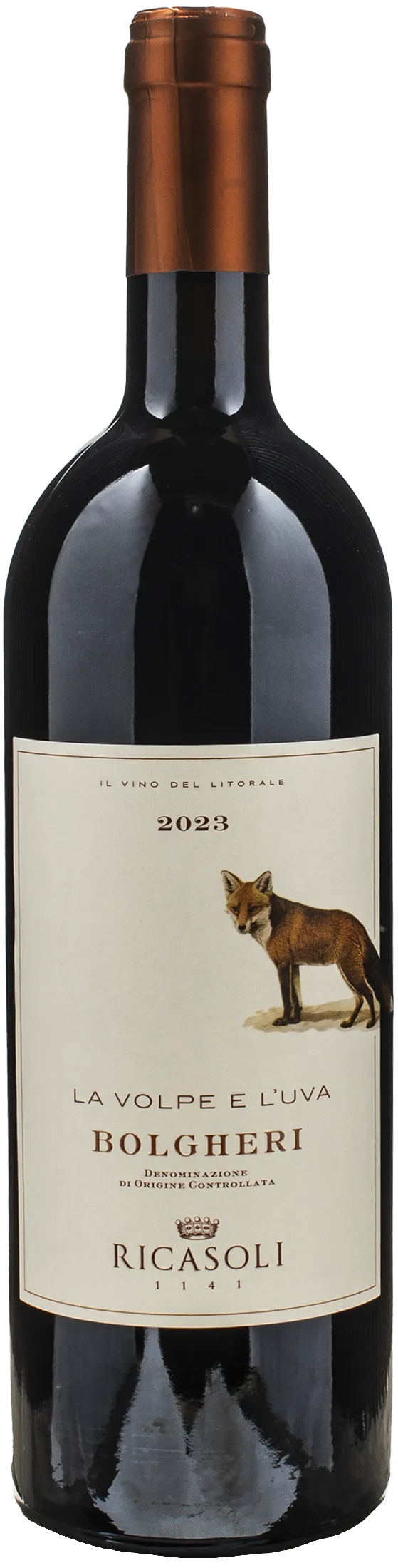
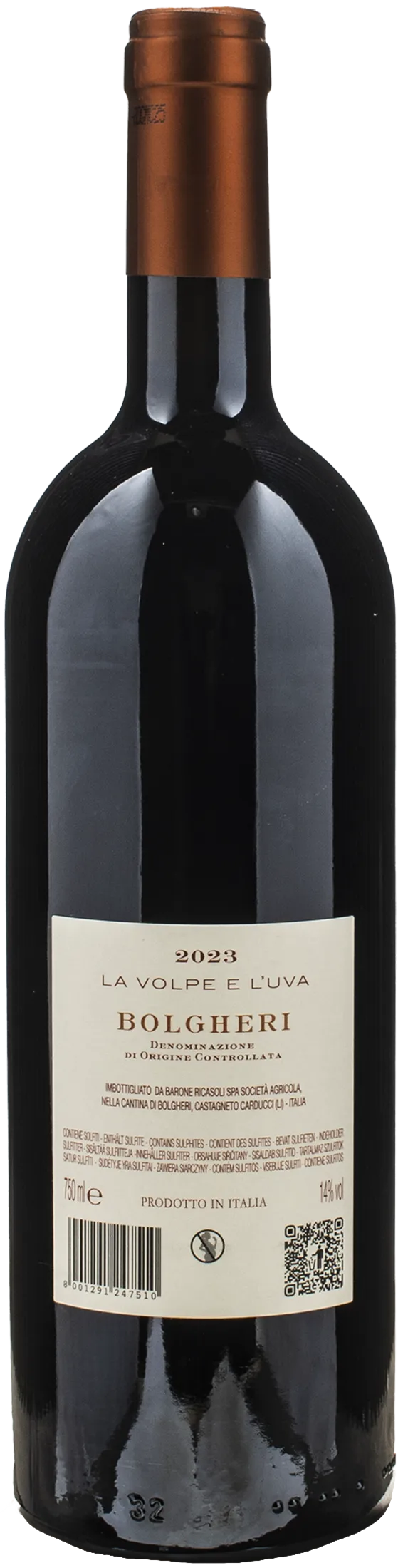
Description
What type of wine it is
The Bolgheri Rosso La Volpe e L’Uva by Ricasoli 1141 is a still Tuscan red wine from the Bolgheri appellation that elegantly interprets the Bordeaux style. This blend combines Cabernet Sauvignon, Merlot, and Petit Verdot, offering a deep ruby colour enriched by violet highlights. The aromatic profile reveals itself as complex, with intense notes of plum, blackberry, pepper, cinnamon, and chocolate. After fermentation in steel and ageing in barrels, it is round and full-bodied on the palate, with a concentration harmonised by a pleasant freshness and silky tannins that accompany the sip towards a long and enveloping finish.
Where it comes from
This wine originates in the renowned territory of Bolgheri, in Tuscany, from vineyards situated between thirty and eighty metres above sea level. The vines, facing the coast to the west and protected to the east by the Colline Metallifere, enjoy an exposure that preserves the grapes' aromatic freshness intact. The clay-limestone soil, characterised by a balanced presence of sand and silt, provides the ideal base for the development of a significant structure. The Barone Ricasoli estate is immersed in woods and Mediterranean scrub, an environment that fosters rich biodiversity and enhances the local ecosystem.
How it is produced
The vineyards, trained using the spurred cordon system, are cultivated with agricultural practices attentive to sustainability, avoiding the use of synthetic herbicides and insecticides. The harvest follows the rhythms of nature: the Merlot is picked at the beginning of September, while the Cabernet Sauvignon and Petit Verdot ripen until October. Temperature-controlled fermentation takes place in stainless steel tanks, preserving the purity of the primary aromas. Subsequently, the wine ages for a period of twelve to fourteen months in barrels, gaining roundness and depth. A further six months of ageing in the bottle finally allows it to reach the perfect structural balance.
History and interesting facts
With 881 years of history linked to Brolio Castle, Barone Ricasoli embodies the Tuscan vocation. The ‘Iron Baron’, Bettino Ricasoli, defined the formula for modern Chianti. Since the 1990s, the company has renewed its winemaking to enhance the local terroir. Today, Francesco Ricasoli conceives wine as a work of art, leading the estate towards sustainability that respects the environment and people for future generations.
Tasting notes

Perfume

Color

Taste
Serve at:
14 -16 °C
Longevity:
10 - 15 years
Decanting time:
1 hour

- Start up year: 1141
- Oenologist: Carlo Ferrini
- Bottles produced: 2.500.000
- Hectares: 235
Francesco Ricasoli, current owner and President of the company, has generated new ideas and concepts to render the vineyards sustainable. The ongoing study of soil types and the clonal selection of the Brolio Sangiovese are among his greatest passions, and he has totally renovated the vineyards and completely mapped them. The new wines are therefore the expression of research carried out with the same scientific rigor of his illustrious ancestor but with a contemporary spirit, like a runner receiving the baton and carrying it forward with renewed energy. Read more


| Name | Ricasoli 1141 Bolgheri Rosso La Volpe e L'Uva 2023 |
|---|---|
| Type | Red still |
| Denomination | Bolgheri DOC |
| Vintage | 2023 |
| Size | 0,75 l |
| Alcohol content | 14.0% by volume |
| Grape varieties | 60% Cabernet Sauvignon, 20% Merlot, 15% Cabernet Franc, 5% Petit Verdot |
| Country | Italy |
| Region | Tuscany |
| Vendor | Ricasoli 1141 |
| Story | History and interesting facts With 881 years of history linked to Brolio Castle, Barone Ricasoli embodies the Tuscan vocation. The ‘Iron Baron’, Bettino Ricasoli, defined the formula for modern Chianti. Since the 1990s, the company has renewed its winemaking to enhance the local terroir. Today, Francesco Ricasoli conceives wine as a work of art, leading the estate towards sustainability that respects the environment and people for future generations. |
| Origin | Bolgheri, Tuscany, Italy |
| Soil composition | Clay-limestone with 30% sand and silt. |
| Cultivation system | Spurred cordon |
| Plants per hectare | Five thousand five hundred |
| Harvest | The Merlot was harvested in early September; Cabernet Franc, Cabernet Sauvignon, and Petit Verdot in early October. |
| Production technique | Temperature-controlled fermentation in stainless steel; aged for 12–14 months in barriques, followed by 6 months in the bottle. |
| Wine making | Temperature-controlled fermentation in stainless steel. |
| Aging | Ageing for 12–14 months in barriques, followed by 6 months in bottle |
| Total acidity | 5.12 gr/L |
| PH | 3.6 |
| Dry extract | 31.31 gr/L |
| Allergens | Contains sulphites |