


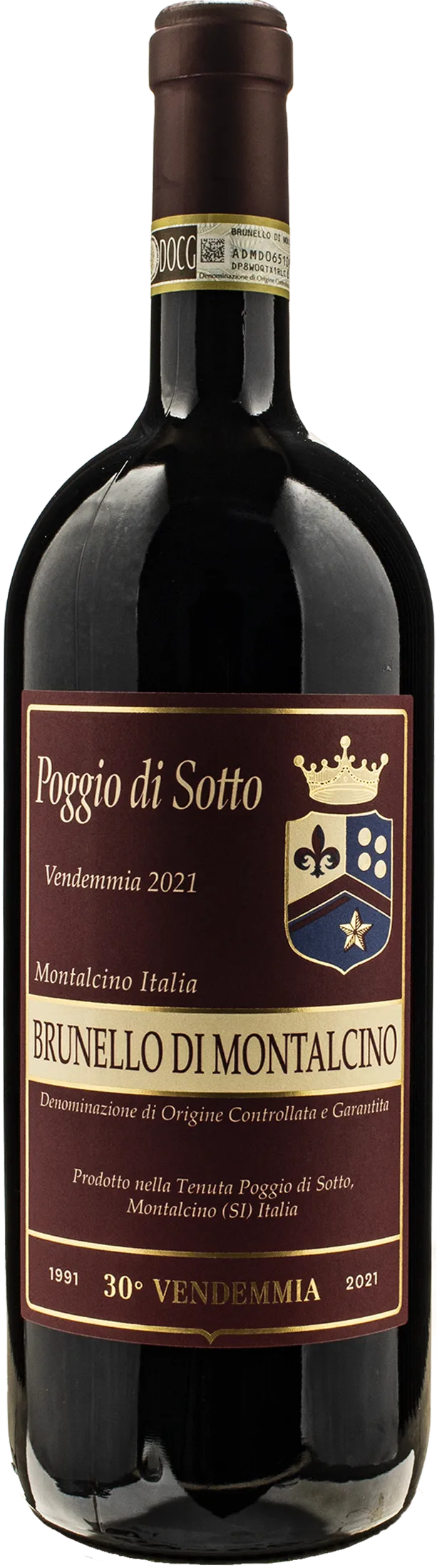
Poggio di Sotto
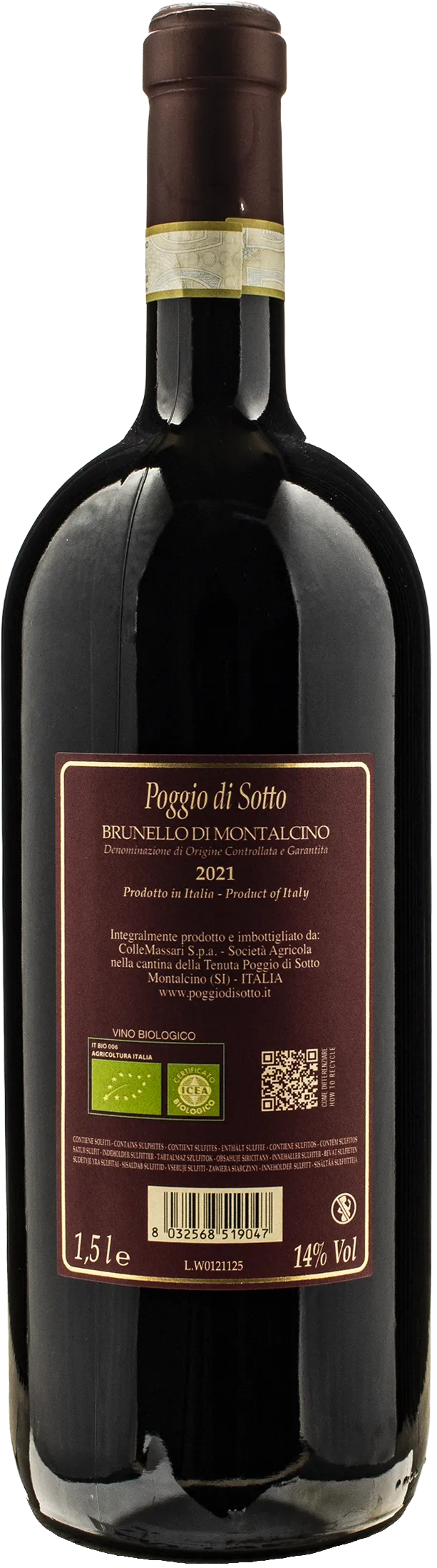
Brunello di Montalcino 2021
Other years:
2020| Denomination | DOCG Brunello di Montalcino |
|---|---|
| Size | 1,50 l |
| Alcohol content | 14.0% by volume |
| Area | Tuscany (Italy) |
| Grape varieties | 100% Sangiovese |
| Aging | After racking, the wine is refined in stainless steel and oak vats in a temperature-controlled environment until December/January, undergoing malolactic fermentation; it is then transferred to 25–30 hl oak barrels for about four years with rackings and topping up; bottled without filtration, treatments or additives; aged in bottle for at least one year. |
| Other years | 2020 |
- Name and format: Brunello di Montalcino DOCG 2021, Magnum 1.5 L
- Grapes and style: 100% Sangiovese, still organic red, 14% vol
- Vinification: hand-picked, spontaneous fermentation with indigenous yeasts
- Ageing: 4 years in 25–30 hl oak barrels, bottled without filtration
- Tasting and serving: intense ruby colour, ethereal and spicy aroma; decant for 1 hour, serve at 18–20°C
Description
What kind of wine it is
Poggio di Sotto Brunello di Montalcino is an organic red wine that purely expresses the characteristics of Sangiovese. To the eye, it displays a deep ruby red colour, enhanced by elegant garnet highlights. The bouquet is intense and complex, distinguished by a refined ethereal and spicy undertone. On the palate, it is a wine of great body, with a vigorous yet harmonious tannic structure that ensures balance and enjoyment. Its significant structure makes it perfect for pairing with game dishes, flavourful pork preparations, and a selection of mature cheeses.
Where it comes from
This Brunello di Montalcino originates in the heart of Tuscany, from vineyards located near the village of Castelnuovo dell’Abate. The Poggio di Sotto vineyards benefit from a southern exposure that guarantees an optimal microclimate for the full ripening of Sangiovese. The vines sink their roots into poor, stony soils, composed of marl and galestro. The presence of rocky fragments is essential to prevent waterlogging and promote a natural water balance. Additionally, the soil absorbs heat during the day and releases it at night, contributing to the wine’s flavour structure and its capacity to evolve.
How it is produced
Production begins with manual harvesting, followed by a double selection of the bunches. Spontaneous fermentation is entrusted to indigenous yeasts and takes place in steel and oak vats, with a maceration of about twenty days marked by pumping over and délestage for optimal colour extraction. After malolactic fermentation, the wine undergoes a long period of ageing in oak barrels for about four years, during which regular rackings are carried out. To preserve the sensory profile, bottling takes place without filtration, concluding the process with a further year of bottle ageing.
History and Curiosities
Founded in 1989 in Castelnuovo dell’Abate, the Poggio di Sotto estate produces its majestic Brunello di Montalcino DOCG by making the most of microclimates and south-facing terroirs, ideal for the perfect ripening of Sangiovese. Practising organic farming, the winery ferments with indigenous yeasts and without filtration. After 4 years in oak barrels, the 2021 vintage, awarded 98 points by Robert Parker, guarantees longevity of over 25 years.
Awards
-
2021
 96
96/100
Decanter is a wine and lifestyle magazine, published monthly in around 90 countries. The magazine includes industry news, classic guides and advice on wine and spirits.
-
2021
 98
98/100
James Suckling is an influential American wine critic and journalist who worked at Wine Spectator for 30 years. He left the magazine in 2010 to start his own website and guidebook (JamesSuckling.com). He specialises in Italian and Bordeaux wines.
-
2021
 98
98/100
The prestigious international wine guide from the renowned Robert Parker, the world's most experienced and trusted wine taster.
-
2021
 96
96/100
Vinous is the online guide from Antonio Galloni, one of the world's leading wine connoisseurs.
Tasting notes

Perfume

Color

Taste
Serve at:
18 - 20 °C
Longevity:
Over 25 years
Decanting time:
1 hour

- Start up year: 1989
- Oenologist: Federico Staderini, Luca Marrone
- Bottles produced: 45.000
- Hectares: 20


| Name | Poggio di Sotto Brunello di Montalcino Magnum 2021 |
|---|---|
| Type | Red organic still |
| Denomination | Brunello di Montalcino DOCG |
| Vintage | 2021 |
| Size | 1,50 l |
| Alcohol content | 14.0% by volume |
| Grape varieties | 100% Sangiovese |
| Country | Italy |
| Region | Tuscany |
| Vendor | Poggio di Sotto |
| Story | History and Curiosities Founded in 1989 in Castelnuovo dell’Abate, the Poggio di Sotto estate produces its majestic Brunello di Montalcino DOCG by making the most of microclimates and south-facing terroirs, ideal for the perfect ripening of Sangiovese. Practising organic farming, the winery ferments with indigenous yeasts and without filtration. After 4 years in oak barrels, the 2021 vintage, awarded 98 points by Robert Parker, guarantees longevity of over 25 years. |
| Origin | Castelnuovo dell’Abate (Siena) |
| Soil composition | Loose soils, stony, poor, with a prevalence of Galestro; soils with optimal water balance that do not allow deep water stagnation and, thanks to significant large rocky fragments, absorb heat during the day and release it during the cooler hours. |
| Cultivation system | Very sparse simple Guyot, leaving few buds |
| Plants per hectare | Approximately 3,000–4,200 |
| Harvest | September/October |
| Fermentation | Circa 20 giorni |
| Production technique | Manual harvest; spontaneous fermentation with indigenous yeasts; maceration for about 20 days; ageing in 25–30 hl oak barrels for about four years; bottled without filtration |
| Wine making | Spontaneous fermentation with indigenous yeasts; fermentation and maceration in steel vats and also in oak vats, monitored with chemical and sensory analyses; maceration for about 20 days with periodic pump-overs and sometimes délestage; initial maturation in stainless steel and oak vats in a temperature-controlled environment until December/January with malolactic fermentation; ageing in 25–30 hl oak barrels for about four years with rackings and topping up; bottling without filtration or treatments or additions, followed by at least one year of bottle ageing. |
| Aging | After racking, the wine is refined in stainless steel and oak vats in a temperature-controlled environment until December/January, undergoing malolactic fermentation; it is then transferred to 25–30 hl oak barrels for about four years with rackings and topping up; bottled without filtration, treatments or additives; aged in bottle for at least one year. |
| Allergens | Contains sulphites |