


Moser
Trento 51.151 Brut Magnum
| Denomination | DOC Trento Spumante Bianco |
|---|---|
| Size | 1,50 l |
| Alcohol content | 12.5% by volume |
| Area | Trentino Alto Adige (Italy) |
| Grape varieties | Chardonnay, Pinot Nero |
| Aging | Ageing of the base wine in oak and acacia barrels and barriques until the completion of malolactic fermentation; then resting in the bottle on selected lees for a minimum of 30 months until disgorgement. |
- Metodo Classico Trento DOC: second fermentation in the bottle, Brut dosage with a dry and savoury profile
- Grape variety and terroir: Chardonnay and Pinot Noir from vineyards at 650 metres on limestone soils
- Ageing on the lees: at least 30 months to achieve a fine perlage and fresh, fragrant aromas
- Magnum format 1.5 L: ideal for toasts, with a robust structure and good ageing potential
- Serving and storage: 6–8 °C, 12.5% vol; ageing potential 10–15 years
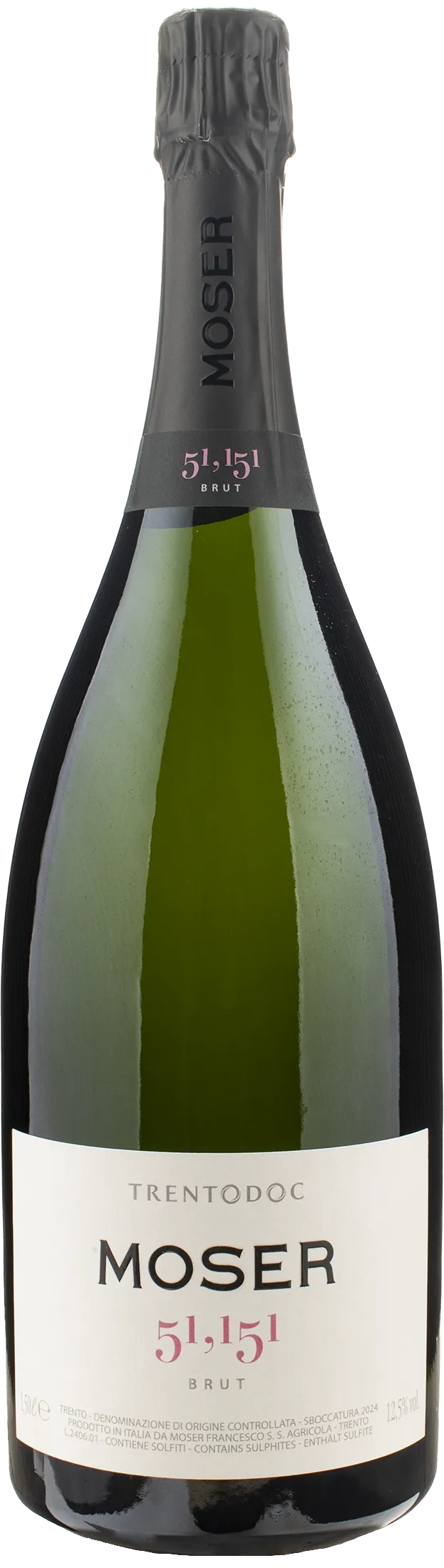

Description
What kind of wine it is
This Traditional Method sparkling wine with Brut dosage expresses the authenticity of the Trento region, born from a careful blend of Chardonnay and Pinot Noir. In the glass, it displays a bright straw yellow colour, enlivened by a fine and continuous perlage. On the nose, fresh and fragrant aromatic notes emerge, introducing an elegant sip. The palate is dry, savoury and very lively, finishing with a prolonged persistence. Thanks to its solid structure, it offers an interesting ageing potential in the bottle.
Where it comes from
The grapes come from Maso Villa Warth, located in a natural amphitheatre on the hills north of Trento, towards the Cembra Valley. Grown using pergola and Guyot systems, the vines thrive at six hundred and fifty metres above sea level on mainly calcareous soils. The strong temperature variations between day and night allow for a slow ripening of the bunches, preserving the acid profile necessary to ensure the balance and energy of this mountain production.
How it is produced
Manual harvesting preserves the integrity of the grapes until they reach the Moser winery. After gentle pressing, the free-run must ferments in steel tanks. The base wine then matures in oak and acacia barrels, completing malolactic fermentation in spring. This is followed by bottling for secondary fermentation according to the Traditional Method, with ageing on the lees for thirty months. The process ends with disgorgement and Brut dosage, which defines the dry character and clarity of the final sip.
History and Curiosities
Born in the fourteenth-century hamlet of Maso Villa Warth, whose winemaking history dates back to 1979, the Moser Trento 51.151 Brut Magnum embodies the pure essence of the Alpine region. Created by oenologist Matteo Moser, this Metodo Classico sparkling wine is made from grapes grown at an altitude of 650 metres on limestone soils between the hills of Trento and the Cembra Valley. Deep respect for rural tradition guides every stage of production, culminating in a rigorous 30-month maturation on the lees that gives the wine exceptional elegance, celebrated by the prestigious 5 Grappoli from Bibenda.
Awards
-
 5
5Italian Sommelier Foundation (FIS) guide This has been one of the most prestigious wine guides in Italy for over 10 years.
-
 2
2One of the most prestigious wine guides in Italy.
-
 89
89/100
Vinous is the online guide from Antonio Galloni, one of the world's leading wine connoisseurs.
Tasting notes

Perlage

Perfume

Color

Taste
Serve at:
06 - 08 °C
Longevity:
10 - 15 years

- Start up year: 1979
- Oenologist: Matteo Moser
- Bottles produced: 130.000
- Hectares: 17


| Name | Moser Trento 51.151 Brut Magnum |
|---|---|
| Type | White classic method sparkling wine brut |
| Denomination | Trento DOC |
| Size | 1,50 l |
| Alcohol content | 12.5% by volume |
| Grape varieties | Chardonnay, Pinot Nero |
| Country | Italy |
| Region | Trentino Alto Adige |
| Vendor | Moser |
| Story | History and Curiosities Born in the fourteenth-century hamlet of Maso Villa Warth, whose winemaking history dates back to 1979, the Moser Trento 51.151 Brut Magnum embodies the pure essence of the Alpine region. Created by oenologist Matteo Moser, this Metodo Classico sparkling wine is made from grapes grown at an altitude of 650 metres on limestone soils between the hills of Trento and the Cembra Valley. Deep respect for rural tradition guides every stage of production, culminating in a rigorous 30-month maturation on the lees that gives the wine exceptional elegance, celebrated by the prestigious 5 Grappoli from Bibenda. |
| Origin | Maso Villa Warth, hills just north of Trento between Trento and the Cembra Valley (Trentino) |
| Soil composition | Predominantly calcareous |
| Cultivation system | Pergola and Guyot |
| Fermentation | 30 months |
| Production technique | Traditional method (bottle fermentation) |
| Wine making | Manual harvesting; gentle pressing at controlled temperature with selection of the free-run must; fermentation with selected yeasts in stainless steel tanks; ageing in oak and acacia barrels and barriques until completion of malolactic fermentation; bottling and secondary fermentation in the bottle (traditional method) with ageing on the lees for 30 months; disgorgement and Brut dosage. |
| Aging | Ageing of the base wine in oak and acacia barrels and barriques until the completion of malolactic fermentation; then resting in the bottle on selected lees for a minimum of 30 months until disgorgement. |
| Allergens | Contains sulphites |