


Marchesi di Barolo
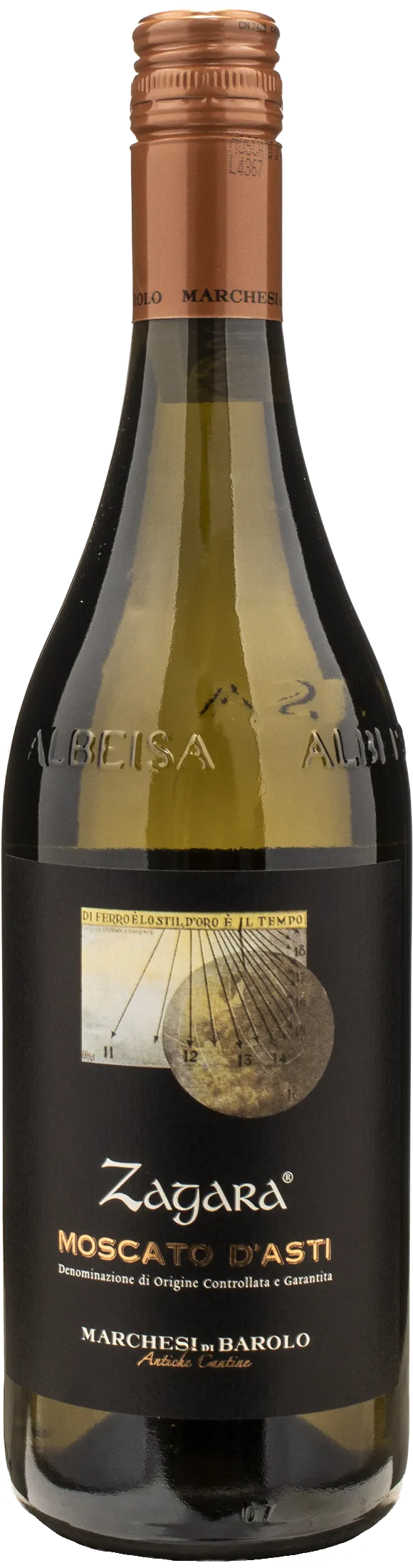
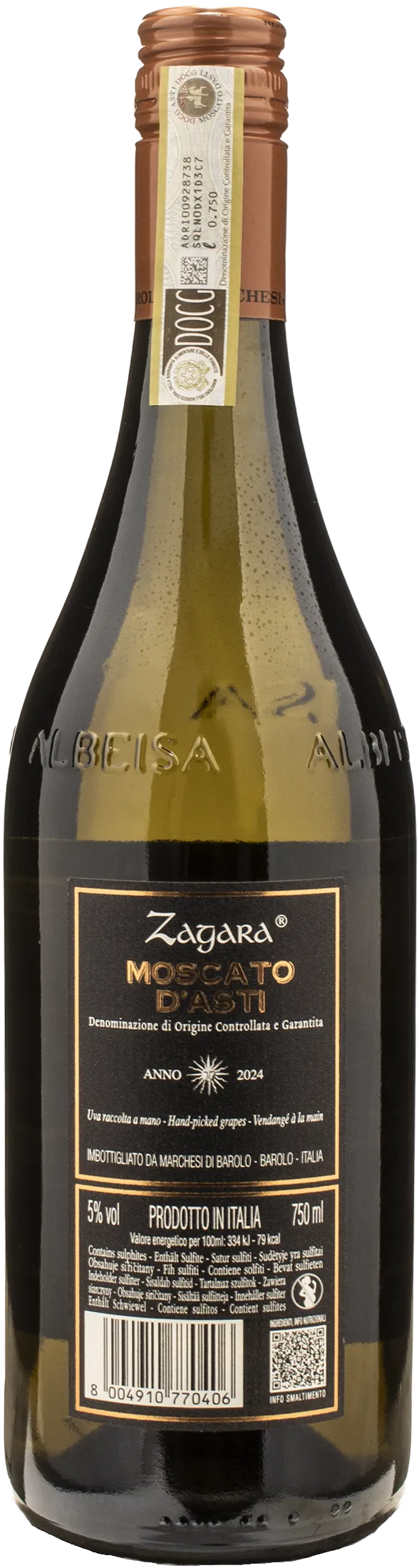
Moscato d'Asti Zagara 2024
| Denomination | DOCG Moscato d'Asti |
|---|---|
| Size | 0,75 l |
| Alcohol content | 5.0% by volume |
| Area | Piedmont (Italy) |
| Grape varieties | 100% Moscato Bianco/Moscato Reale |
- Origin: Grapes from historic Piedmont vineyards, grown using the Guyot method
- Vinification: Fermentation in steel with the development of natural carbon dioxide
- Aromatic profile: Aromas of orange blossom, apricot and peach, with a fine perlage
- Taste and alcohol content: Sweet and light flavour, 5% ABV, balanced acidity and lasting freshness
- Serving and pairings: Serve at 10-12 °C; suitable for desserts, hazelnut nougat and cheeses
Description
What kind of wine it is
Marchesi di Barolo Moscato d’Asti Zagara is a sweet, aromatic white wine, an authentic expression of Moscato Bianco grapes. Produced in the Asti area, at the heart of the Moscato d’Asti zone in Piedmont, it stands out for its fresh and smooth profile. Careful processing results in a fine and persistent perlage that enhances its liveliness in the glass. On the nose, it offers intense notes of orange blossom, apricot and peach. On the palate, the pronounced aromatic sweetness meets a perfect moderate acidity, leaving a clear and lingering sensation of cleanliness.
Where it comes from
The grapes come from historic crus in Piedmont, rooted on hillside slopes that enjoy constant sunlight, ideal for the aromatic development of Moscato Bianco trained using the Guyot method. The soils, composed of medium-textured marl, have a predominance of fine fractions over the calcareous matrix. The presence of quartz sands and very fine silt enriches the soil with essential trace elements. This geological structure is reflected in the glass, ensuring the wine has a balanced flavour profile and a marked territorial character.
How it is produced
Vinification requires extreme speed: the harvested grapes are immediately pressed to preserve the fruit’s fragrance. The must is quickly chilled before being transferred to stainless steel tanks. This is followed by partial fermentation in autoclave, where the carbon dioxide produced is naturally retained to create the characteristic lively mousse. The process is halted when there are about 140 grams per litre of residual sugar, ensuring the typical sweet balance and an absolutely pleasant finish.
History and Curiosities
Founded in the Langhe and linked to the historic 1806 marriage between Carlo Tancredi Falletti and Juliette Colbert, the renowned winery Marchesi di Barolo boasts an invaluable heritage. The grapes for this exceptional Moscato d’Asti come from historic crus, the very same sun-kissed vineyards already cultivated in the nineteenth century. Today’s outstanding production continues in the footsteps of Pietro Emilio Abbona, who acquired the ancient Tenuta Opera Pia Barolo. A fascinating tribute to Piedmontese tradition, capable of encapsulating centuries of noble winemaking mastery in every sip.
Tasting notes

Perlage
Perfume

Color

Taste
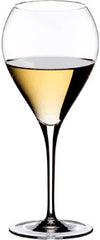
Serve at:
10 - 12 °C
Longevity:
03 - 05 years
- Start up year: 1800
- Oenologist: Marco Marsili
- Bottles produced: 1.500.000
- Hectares: 105


| Name | Marchesi di Barolo Moscato d'Asti Zagara 2024 |
|---|---|
| Type | White naturally sweet dessert wine aromatic |
| Denomination | Asti DOCG |
| Vintage | 2024 |
| Size | 0,75 l |
| Alcohol content | 5.0% by volume |
| Grape varieties | 100% Moscato Bianco/Moscato Reale |
| Country | Italy |
| Region | Piedmont |
| Vendor | Marchesi di Barolo |
| Story | History and Curiosities Founded in the Langhe and linked to the historic 1806 marriage between Carlo Tancredi Falletti and Juliette Colbert, the renowned winery Marchesi di Barolo boasts an invaluable heritage. The grapes for this exceptional Moscato d’Asti come from historic crus, the very same sun-kissed vineyards already cultivated in the nineteenth century. Today’s outstanding production continues in the footsteps of Pietro Emilio Abbona, who acquired the ancient Tenuta Opera Pia Barolo. A fascinating tribute to Piedmontese tradition, capable of encapsulating centuries of noble winemaking mastery in every sip. |
| Origin | Piedmont, Asti area |
| Soil composition | Medium-textured marls in which, compared to limestone, fine fractions prevail: quartz sands and very fine silt. |
| Cultivation system | Guyot |
| Production technique | Partial fermentation in a stainless steel autoclave, naturally retaining carbon dioxide |
| Wine making | Grapes brought to the winery and pressed immediately after harvesting; the must is immediately chilled; partial fermentation in stainless steel autoclave, naturally retaining carbon dioxide; fermentation is stopped when approximately 140 g/l of residual sugars is reached. |
| Residual sugar | 140.0 gr/L |
| Allergens | Contains sulphites |