


Les Cretes
Petite Arvine 2025
| Denomination | DOC Valle d'Aosta Petite Arvine |
|---|---|
| Size | 0,75 l |
| Alcohol content | 14.5% by volume |
| Area | Aosta Valley (Italy) |
| Grape varieties | 100% Petite Arvine |
| Aging | 1-2 months on the lees with continuous bâtonnage |
- Grape variety and designation: 100% Petite Arvine, Valle d’Aosta DOC, 2025 harvest
- Aromatic profile: hints of jasmine, peony, apple and citrus with a touch of vanilla
- Taste: fleshy structure, pronounced minerality and a savoury marine note, with a fresh and fruity finish
- Vinification: gentle pressing, 12-day fermentation at 18°C, periodic bâtonnage
- Pairings: perfect with shellfish, spiced white meats, cured meats and medium-aged cheeses
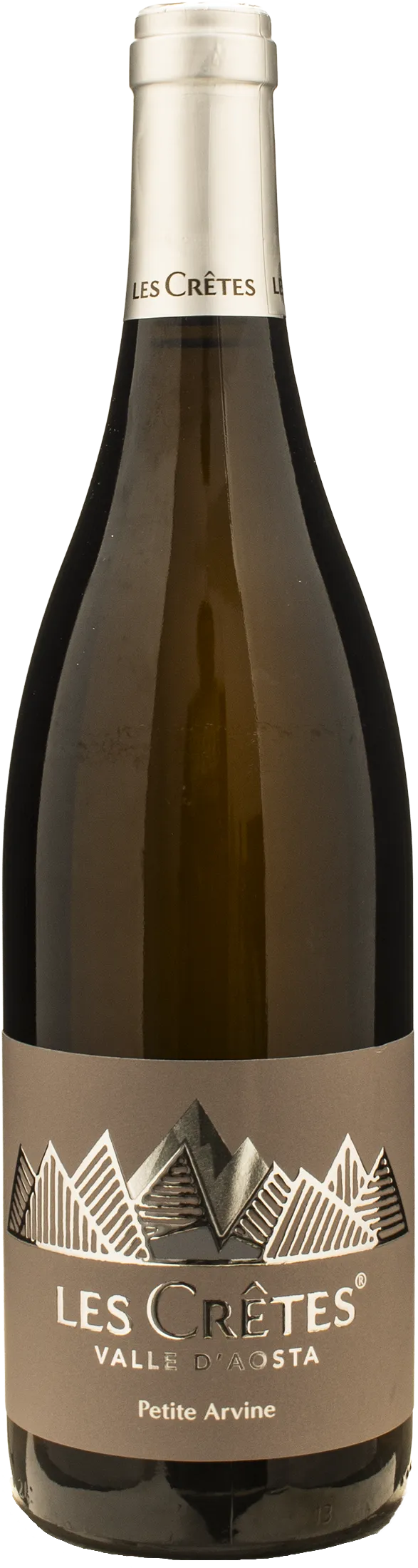
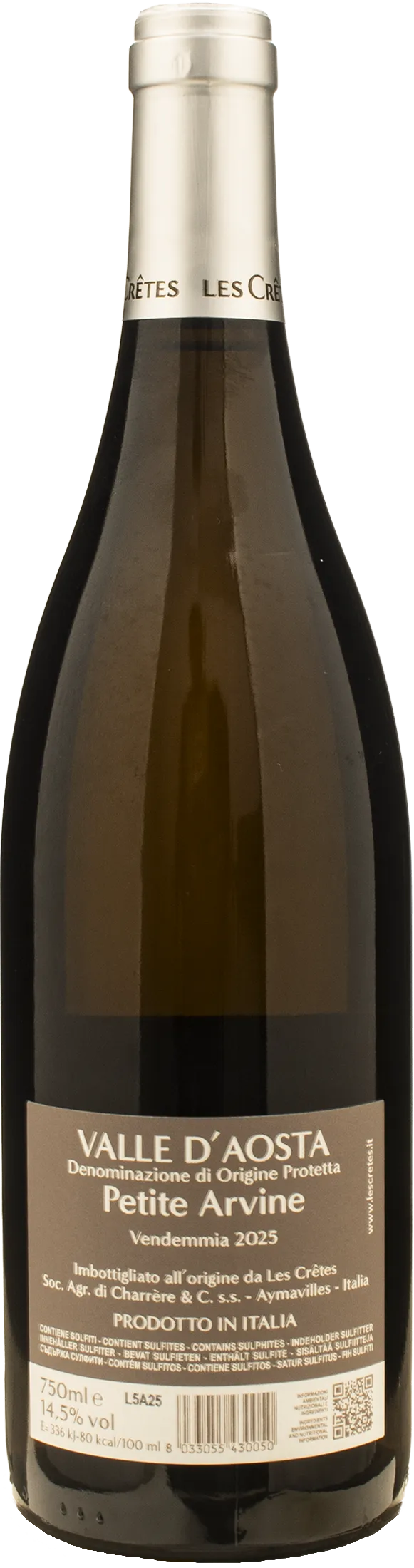
Description
What kind of wine it is
Les Cretes Petite Arvine Valle d’Aosta is a still white wine originating from the Aosta Valley. Made from Petite Arvine grapes, it stands out for its bright straw-yellow colour, enhanced by silvery and bronze highlights. On the nose, it releases elegant scents of jasmine, peony and apple, accompanied by citrus notes and a hint of vanilla. On the palate, it reveals a fleshy and enveloping texture, with nuances reminiscent of biscuit and mountain flowers. The structure is supported by pronounced minerality and a savoury streak that evokes marine sensations, leading the tasting towards a fresh and pleasantly fruity finish.
Where it comes from
The grapes are grown in the vineyards of Aymavilles, set in a picturesque Alpine amphitheatre where the small, steep plots require rigorous heroic viticulture. The rows grow between 550 and 750 metres above sea level, enjoying optimal west-south exposure. The terroir is characterised by moraine soils, loose and sandy, which ensure excellent drainage. The Les Cretes winery masterfully enhances this high-altitude pedoclimatic environment, highlighting the natural tension and savouriness typical of this particular small-berried grape variety.
How it is produced
The manual harvest, carried out towards the end of September, is followed by gentle pressing to preserve the aromatic integrity of the must. Fermentation takes place in stainless steel tanks at a controlled temperature for about twelve days. Afterwards, the wine matures for one or two months on the fine lees through continuous bâtonnage, a technique that increases its structural roundness without altering its varietal freshness. Thanks to its intense bouquet and vibrant saline acidity, this wine pairs perfectly with seafood dishes, spiced white meats, cured meats and medium-aged cheeses.
History and Curiosities
Founded in 1989, with roots dating back to 1750, Les Crêtes represents the excellence of heroic viticulture in the Aosta Valley. Petite Arvine, so named for its small berries, is a variety of Swiss origin introduced to these valleys in the 1970s. Grown on sandy slopes among the highest vineyards in Europe, this noble grape is transformed into an elegant wine with a vivid minerality. Tasting this bottle means embracing a fascinating Alpine heritage, enhanced by an unmistakable fleshy texture with delicate marine nuances.
Tasting notes

Perfume

Color

Taste
Serve at:
12 - 14 °C
Longevity:
05 - 10 years

- Start up year: 1989
- Oenologist: Raffaele Crotta, Eleonora Charrère
- Bottles produced: 250.000
- Hectares: 35


| Name | Les Cretes Petite Arvine 2025 |
|---|---|
| Type | White still |
| Denomination | Valle d'Aosta DOC |
| Vintage | 2025 |
| Size | 0,75 l |
| Alcohol content | 14.5% by volume |
| Grape varieties | 100% Petite Arvine |
| Country | Italy |
| Region | Aosta Valley |
| Vendor | Les Cretes |
| Story | History and Curiosities Founded in 1989, with roots dating back to 1750, Les Crêtes represents the excellence of heroic viticulture in the Aosta Valley. Petite Arvine, so named for its small berries, is a variety of Swiss origin introduced to these valleys in the 1970s. Grown on sandy slopes among the highest vineyards in Europe, this noble grape is transformed into an elegant wine with a vivid minerality. Tasting this bottle means embracing a fascinating Alpine heritage, enhanced by an unmistakable fleshy texture with delicate marine nuances. |
| Origin | Aymavilles (Valle d'Aosta) |
| Climate | Alpine (mountain) |
| Soil composition | Morainic, loose, sandy on a slope |
| Cultivation system | Guyot |
| Plants per hectare | 7500 |
| Yield per hectare | 10,000 kg/Ha |
| Harvest | Manual, late September |
| Fermentation temperature | 18 °C |
| Fermentation | 12 days |
| Production technique | Soft pressing; 12-day fermentation in stainless steel at 18 °C; ageing for 1-2 months on the lees with continuous bâtonnage |
| Wine making | Soft pressing; 12-day fermentation in stainless steel at 18°C; traditional vinification; fermented and matured in stainless steel; aged for 1-2 months on the lees with continuous bâtonnage. |
| Aging | 1-2 months on the lees with continuous bâtonnage |
| Year production | 250000 bottles |
| Allergens | Contains sulphites |