


Cantine Leonardo da Vinci
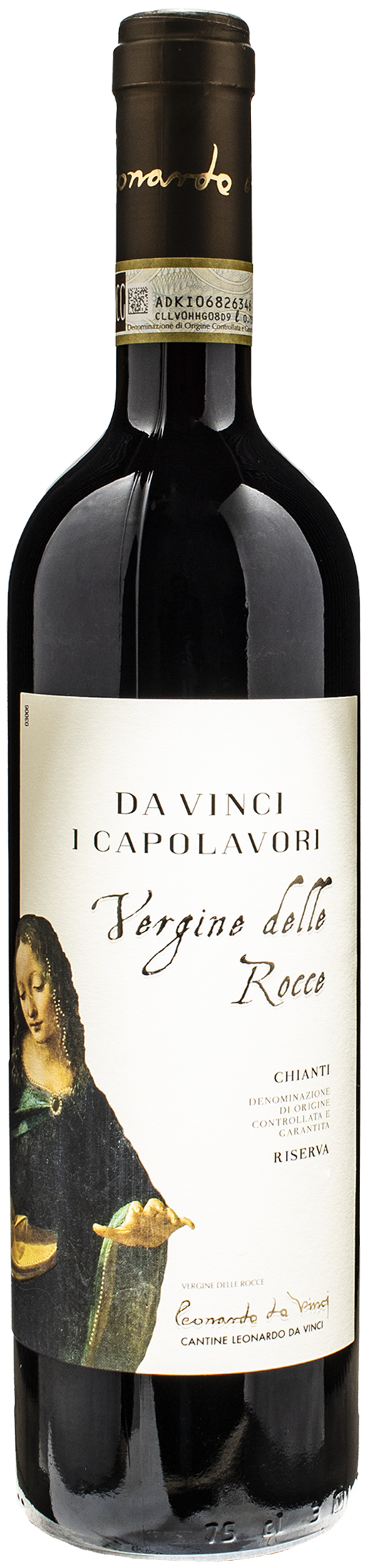
Capolavori Chianti Riserva Vergine delle Rocce 2020
Other years:
2023| Denomination | DOCG Chianti Riserva |
|---|---|
| Size | 0,75 l |
| Alcohol content | 13.5% by volume |
| Area | Tuscany (Italy) |
| Grape varieties | 85% Sangiovese, 10% Merlot |
| Aging | Aged in French and American oak barriques for 10 months; malolactic fermentation completed in stainless steel after racking. |
| Other years | 2023 |
- Name and vintage: Chianti DOCG Riserva 2020, still red wine from Tuscany
- Grape blend: 85% Sangiovese and 10% Merlot for harmony and character
- Aged in wood: 10 months in French and American oak barriques
- Aroma and taste: notes of cherry, vanilla and cinnamon; velvety tannins and a persistent finish
- Serving and pairings: 16–18 °C; decant for 1 hour; ideal with ragù, game and cheeses
Description
What kind of wine it is
The Capolavori Chianti Riserva Vergine delle Rocce by Leonardo da Vinci is a harmonious and still red wine that expresses the essence of the Tuscan region. This blend of Sangiovese and Merlot stands out for its deep purple-red colour. On the nose, it reveals a clear profile, characterised by fragrant cherry aromas intertwined with notes of vanilla and cinnamon. On the palate, it is full and balanced, supported by soft tannins that lead to a long and persistent finish. Its structure makes it ideal for accompanying pasta dishes with meat sauces, game, and mature cheeses.
Where it comes from
The grapes for this Chianti Riserva come from the hills of Vinci, Cerreto Guidi, and the surrounding municipalities. The vineyards are situated between thirty and forty metres above sea level, on Pliocene-origin soils composed of alluvial deposits rich in fossils and shells, a key geological element in defining the wine's sensory profile. The vineyard management mainly relies on the Guyot training system, complemented by the spur cordon and the typical Tuscan arch, used to enhance and preserve the estate's oldest vines.
How it is produced
After the harvest, which takes place between late September and early October, the must undergoes a skin maceration of about ten to twelve days. Alcoholic fermentation occurs at a controlled temperature to maximise aromatic extraction, followed by malolactic fermentation in steel tanks. The wine then matures through ageing in French and American oak barrels for ten months, gaining elegant spicy nuances. To fully appreciate its characteristics, it is recommended to decant for about an hour before serving at a temperature between 16 and 18°C.
History and Curiosities
Founded in 1961, Cantine Leonardo da Vinci pays tribute to Tuscan history with the Chianti Riserva Vergine delle Rocce, whose name celebrates Leonardo's famous masterpiece. Born from the evocative hills of Vinci and Cerreto Guidi, this noble red embodies the winemaking tradition under the guidance of oenologist Riccardo Pucci, who oversees the estate's 750 hectares of vineyards. The grapes, cultivated using the Guyot method and harvested between September and October, give rise to an excellence awarded 90 points by James Suckling, uniting art and passion.
Tasting notes

Perfume

Color

Taste
Serve at:
16 - 18 °C
Longevity:
10 - 15 years
Decanting time:
1 hour

- Start up year: 1961
- Oenologist: Riccardo Pucci
- Bottles produced: 5.000.000
- Hectares: 750
The original headquarters, restructured and enlarged, are still the operative centre today. The winery is situated in the borough of Vinci, just 5 kilometres from the birthplace of the world famous artist and inventor Leonardo.
The co-operative takes its name from the great man, paying homage to the mind of the man who was universally recognised as a genius and to emphasise its deep-rooted bond with the territory, the same bond which Leonardo felt and whose surname is specifically associated with the village where he was born on 15 April 1452.
Today, Cantine Leonardo da Vinci is a pioneering co-operative, innovative and modern, which relies on the work and grape production of its 160 members. Read more


| Name | Leonardo da Vinci Capolavori Chianti Riserva Vergine delle Rocce 2020 |
|---|---|
| Type | Red still |
| Denomination | Chianti DOCG |
| Vintage | 2020 |
| Size | 0,75 l |
| Alcohol content | 13.5% by volume |
| Grape varieties | 85% Sangiovese, 10% Merlot |
| Country | Italy |
| Region | Tuscany |
| Vendor | Cantine Leonardo da Vinci |
| Story | History and Curiosities Founded in 1961, Cantine Leonardo da Vinci pays tribute to Tuscan history with the Chianti Riserva Vergine delle Rocce, whose name celebrates Leonardo's famous masterpiece. Born from the evocative hills of Vinci and Cerreto Guidi, this noble red embodies the winemaking tradition under the guidance of oenologist Riccardo Pucci, who oversees the estate's 750 hectares of vineyards. The grapes, cultivated using the Guyot method and harvested between September and October, give rise to an excellence awarded 90 points by James Suckling, uniting art and passion. |
| Origin | Hilly areas of Vinci, Cerreto Guidi and neighbouring municipalities (Florence) |
| Soil composition | Pliocene alluvial deposits rich in shells |
| Cultivation system | Mainly Guyot, but also spur cordon and, for older vineyards, Tuscan arch |
| Harvest | From 20 September to 10 October |
| Fermentation temperature | 27–29 °C |
| Fermentation | Approximately 10–12 days |
| Production technique | Maceration on the skins for about 10–12 days; temperature-controlled fermentation (27–29 °C); malolactic fermentation in steel after racking; ageing in French and American oak barriques for 10 months |
| Wine making | The ripe grapes were left on the skins for about 10 2 days. Fermentation took place at a controlled temperature of 27-28 °C. After racking, the wine completed malolactic fermentation in stainless steel and was then aged in French and American oak barriques for 10 months. |
| Aging | Aged in French and American oak barriques for 10 months; malolactic fermentation completed in stainless steel after racking. |
| Allergens | Contains sulphites |