


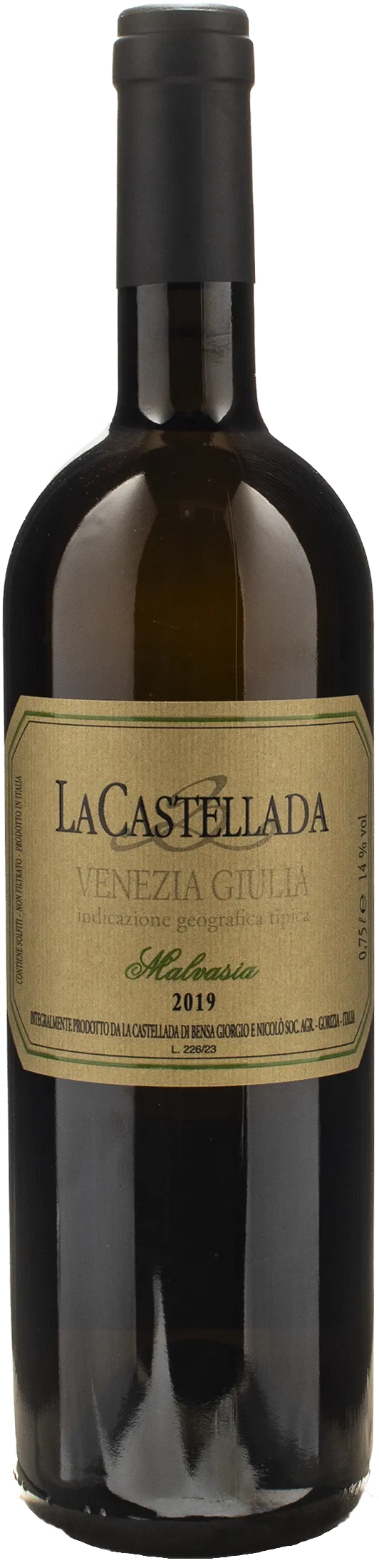
La Castellada
Malvasia 2019
| Denomination | IGT Venezia Giulia |
|---|---|
| Size | 0,75 l |
| Alcohol content | 14.0% by volume |
| Area | Friuli-Venezia Giulia (Italy) |
| Grape varieties | 100% Malvasia |
| Aging | Matured in barriques or large barrels for one or two years, then in stainless steel for another year; further ageing in bottle for at least one year before being released on the market. |
- Grape variety and designation: 100% Malvasia, IGT Venezia Giulia, 2019 harvest
- Style and colour: still aromatic white wine, bright straw yellow colour
- Natural vinification: skin maceration, indigenous yeasts, unfiltered
- Sensory profile: fruity and exotic notes; fresh, savoury and mineral taste
- Serving and pairings: 12-14 °C; ideal with fish dishes, lean fish and cheeses
Description
What kind of wine it is
The Malvasia by La Castellada is a still, aromatic white wine that embodies the essence of Friuli-Venezia Giulia. Set within the context of Venezia Giulia, this wine stands out for its bright straw-yellow colour and enveloping structure, the result of skin maceration. On the nose, fruity aromas and exotic notes emerge, heralding a fresh, savoury sip characterised by a pronounced mineral texture. It pairs beautifully with fish dishes and cheeses, best served at an ideal temperature between twelve and fourteen degrees, and boasts a long ageing potential.
Where it comes from
This wine originates from the hills of Oslavia, close to the Slovenian border. The vineyards benefit from a unique microclimate, marked by significant temperature variations and constant ventilation between the Julian Alps and the Adriatic Sea. The historic vines, with an average age of between forty-five and fifty-five years, sink their roots into soils composed of sandy sediments and Eocene-era sandstones. The balance of soil and climate, along with low yields, ensures optimal ripening of the Malvasia grapes, giving the glass a pronounced savouriness and clear aromas.
How it is produced
The production process follows an approach aimed at respecting the integrity of the fruit. Fermentation takes place in truncated cone vats thanks to the action of only indigenous yeasts, with prolonged contact with the skins to enrich aromas and structure. Ageing continues in barriques or large barrels for one or two years, followed by a further year in steel to encourage natural stability. The wine is finally bottled without filtration and rests for at least twelve months before being released, preserving its authentic identity intact.
History and Curiosities
Founded in 1985, the company La Castellada enhances the authenticity of Oslavia, on the border with Slovenia, through fifty-year-old vineyards rooted in sandy sediments and Eocene sandstone. This fascinating white wine is produced from grapes vinified using natural practices and minimal intervention. The skin maceration in truncated conical vats with indigenous yeasts and subsequent ageing in both wood and steel develop rich exotic aromas. Bottled without filtration, it offers the palate a lively, savoury freshness and a mineral quality of extraordinary elegance.
Tasting notes

Perfume

Color

Taste
Serve at:
12 - 14 °C
Longevity:
05 - 10 years
- Start up year: 1985
- Oenologist: Stefano Bensa
- Bottles produced: 25.000
- Hectares: 10
The farm consists of 10 hectares of vineyards, 5 of which are populated by very old plants (45-55 years of age) and the other half by younger plants but with a lower yield to reach more maturations and concentrations of sugars. The microclimate is determined by thermal excursions and a fresh and ventilated air that comes from the Julian Alps and the Adriatic Sea while the ground floor has sandy sediments of rocks and sandstones of Eocene origin. The cultivation technique admits the exclusive use of sulfur and sulfur sulphate and roping along the rows, playing the role of water regulator, does not require irrigation.
The preference for natural techniques is evident also in the cellar, where traditional oenological techniques are followed with great rigor. All grapes ferment in contact with skins in truncated tin for longer or lesser periods and under the action of indigenous yeasts only. The wines then affinate in barriques or large barrels for one or two years and then in steel for another year to come, finally bottled without filtration. In bottle, the wine ripens at least a year before the market is released.
Ideal pedoclimatic conditions, strict cultivation, and a cellar work that is limited to minimal and non-invasive interventions, investing in ripening time, are the basis of an elegant and refined production that has been able to attract the attention of enthusiastic enthusiasts all over the world. world. The unmistakable magic of the grapes of Oslavia, preserved in the cellar with patience and absolute respect for tradition for several years, reaches the maximum expression in the bottles of La Castellada and emits into the glass unique and unmistakable emotions. Read more


| Name | La Castellada Malvasia 2019 |
|---|---|
| Type | White still aromatic |
| Denomination | Venezia Giulia IGT |
| Vintage | 2019 |
| Size | 0,75 l |
| Alcohol content | 14.0% by volume |
| Grape varieties | 100% Malvasia |
| Country | Italy |
| Region | Friuli-Venezia Giulia |
| Vendor | La Castellada |
| Story | History and Curiosities Founded in 1985, the company La Castellada enhances the authenticity of Oslavia, on the border with Slovenia, through fifty-year-old vineyards rooted in sandy sediments and Eocene sandstone. This fascinating white wine is produced from grapes vinified using natural practices and minimal intervention. The skin maceration in truncated conical vats with indigenous yeasts and subsequent ageing in both wood and steel develop rich exotic aromas. Bottled without filtration, it offers the palate a lively, savoury freshness and a mineral quality of extraordinary elegance. |
| Origin | Ridge of the Oslavia hills, near the Slovenian border |
| Climate | Microclimate influenced by temperature variations and fresh, breezy air from the Julian Alps and the Adriatic Sea |
| Soil composition | Sandy sediments and sandstones of Eocene origin |
| Production technique | Skin-contact fermentation (maceration on the skins) with indigenous yeasts; bottled without filtration |
| Wine making | Fermentation in contact with the skins in truncated cone-shaped vats for varying periods using indigenous yeasts; ageing in barriques or large barrels for one or two years, then in stainless steel for another year; bottled without filtration and further aged in bottle for at least one year before release. |
| Aging | Matured in barriques or large barrels for one or two years, then in stainless steel for another year; further ageing in bottle for at least one year before being released on the market. |
| Year production | 25000 bottles |
| Allergens | Contains sulphites |