


Giacomo Borgogno e Figli
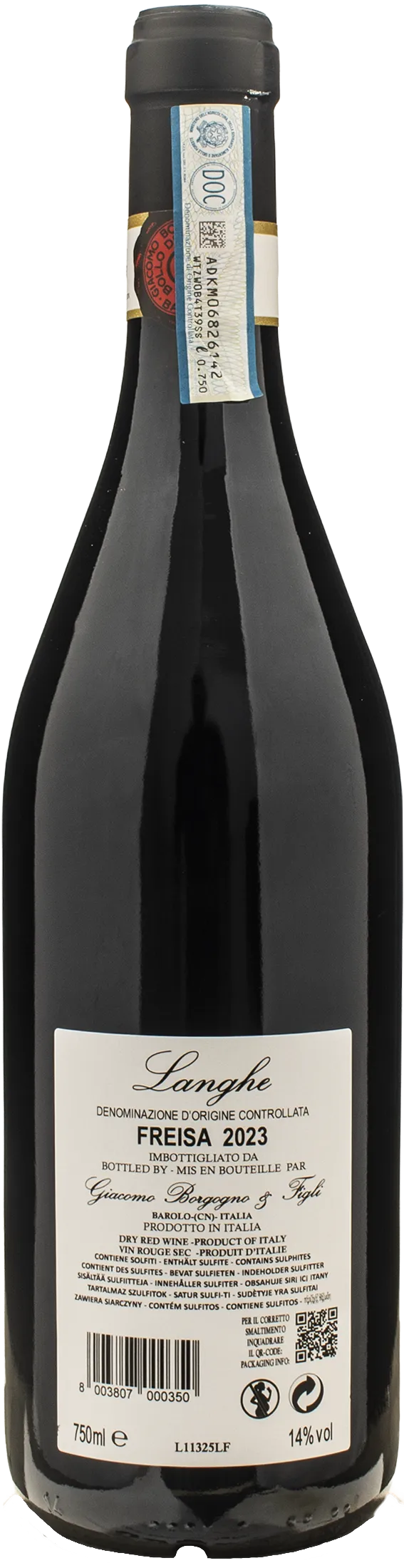
Langhe Freisa 2023
| Denomination | DOC Langhe Freisa |
|---|---|
| Size | 0,75 l |
| Alcohol content | 14.0% by volume |
| Area | Piedmont (Italy) |
| Grape varieties | 100% Freisa |
| Aging | Light pressing and maturation for 10 months in large oak barrels, followed by 4 months of bottle ageing. |
- Grape variety and designation: 100% Freisa, Langhe DOC, still red wine from Piedmont
- Aromatic profile: notes of plum, red fruits, violet and spices; intense ruby red colour
- Taste and structure: dry and full-bodied flavour, lively acidity, elegant tannins, slightly bitter finish
- Traditional vinification: spontaneous fermentation in cement vats for 12 days at 22–28 °C
- Ageing and serving: 10 months in oak, 4 in bottle; decant for 1 hour and serve at 14–16 °C

Description
What kind of wine it is
Langhe Freisa by Borgogno is a still red wine from Piedmont made from Freisa grapes, a historic variety considered the ancestor of Nebbiolo. It displays a ruby red colour and releases an intense bouquet of fresh red fruit, plum, delicate hints of violet and clear spices. On the palate, it is dry and full-bodied, characterised by a lively acidity and elegant tannins that lead to a typically slightly bitter finish. Instantly enjoyable, it boasts excellent structure for ageing and is best paired with fresh pasta with game, roasts or the traditional bagna cauda.
Where it comes from
This wine originates from the renowned Langhe area, on soils composed of calcareous-clay marl, ideal for giving depth to the dense tannic texture. The vines, trained using the modified Guyot system, benefit from optimal east and north-east exposure, ensuring perfect ripening of the grapes. Borgogno cultivates its plots using only organic products and dedicates large areas to reforestation, implementing strict biodiversity protection to preserve the authenticity and vitality of the Piedmontese ecosystem.
How it is produced
The production process begins with manual harvesting, followed by fermentation in cement for about twelve days, spontaneously started by indigenous yeasts at a controlled temperature. After gentle pressing, the wine undergoes ten months of ageing in large oak barrels, ideal containers for softening the sip while respecting the varietal aromas. The process concludes with a crucial final rest of four months, necessary to stabilise the wine's balance before tasting, which is recommended after an hour of decanting.
History and Curiosities
Founded in 1761, the winery Giacomo Borgogno e Figli preserves the authentic winemaking tradition of Piedmont, placing great emphasis on protecting biodiversity. The Langhe Freisa 2023 celebrates a native grape variety of great charm, historically considered the ancestor of Nebbiolo. This wine is produced through spontaneous fermentation with indigenous yeasts in cement vats, following slow and natural processes. The result is an elegant glass, characterised by firm tannins and remarkable ageing potential.
Tasting notes

Perfume

Color
Taste
Serve at:
14 -16 °C
Longevity:
05 - 10 years
Decanting time:
1 hour
- Start up year: 1761
- Oenologist: Simone Borsari
- Bottles produced: 250.000
- Hectares: 40
The winery has some interesting records: in 1861, Barolo Borgogno sealed the pact for the birth of Italian unity, and in 1908, it was served to the Tsar of all Russia during a visit to Racconigi.
The turning point came in 1920, when Cesare Borgogno began exporting abroad. However his greatest insight came when he decided to "forget" half of the production of Barolo Riserva in order to sell it 20 years later, realising the great versatility and power of Nebbiolo.
Borgogno is synonymous with slowness: the winery chooses to take its time understanding things and doing them correctly. The vineyards are cared for and attended to with only organic products.
This has resulted in the winery to gain their first Biological harvest.
The decision to plant forest on eight of their 39 hectars is to protect the biodiversity of the Langa fauna from being decimated by the cultivation of vineyards.
Borgogno has a sense of history, tradition, and roots that blend with the innovation of the changing times. Read more


| Name | Giacomo Borgogno Langhe Freisa 2023 |
|---|---|
| Type | Red still |
| Denomination | Langhe DOC |
| Vintage | 2023 |
| Size | 0,75 l |
| Alcohol content | 14.0% by volume |
| Grape varieties | 100% Freisa |
| Country | Italy |
| Region | Piedmont |
| Vendor | Giacomo Borgogno e Figli |
| Story | History and Curiosities Founded in 1761, the winery Giacomo Borgogno e Figli preserves the authentic winemaking tradition of Piedmont, placing great emphasis on protecting biodiversity. The Langhe Freisa 2023 celebrates a native grape variety of great charm, historically considered the ancestor of Nebbiolo. This wine is produced through spontaneous fermentation with indigenous yeasts in cement vats, following slow and natural processes. The result is an elegant glass, characterised by firm tannins and remarkable ageing potential. |
| Origin | Langhe |
| Soil composition | Calcareous-clay marls |
| Cultivation system | Modified Guyot (archetto) |
| Plants per hectare | 4000 |
| Harvest | From 20 September to 5 October |
| Fermentation temperature | 22–28 °C |
| Fermentation | About 12 days |
| Production technique | Spontaneous fermentation in concrete tanks with indigenous yeasts |
| Wine making | After manual harvesting, spontaneous fermentation takes place in cement vats for about 12 days at 22–28 °C, followed by gentle pressing and ageing for 10 months in large oak barrels, then 4 months of bottle ageing. |
| Aging | Light pressing and maturation for 10 months in large oak barrels, followed by 4 months of bottle ageing. |
| Allergens | Contains sulphites |