


Fleurs de Prairie
Cotes de Provence Rosè 2025
| Denomination | AOC Cotes de Provence Rosè |
|---|---|
| Size | 0,75 l |
| Alcohol content | 12.5% by volume |
| Area | Provence (France) |
| Grape varieties | 55% Grenache, 30% Cinsault, 15% Syrah |
| Aging | Young (minimal or no wood ageing) |
- Style and origin: Still dry rosé wine, Côtes de Provence PDO, 2025 vintage, 12.5% vol
- Grape composition: 55% Grenache, 30% Cinsault, 15% Syrah; 0.75 L bottle
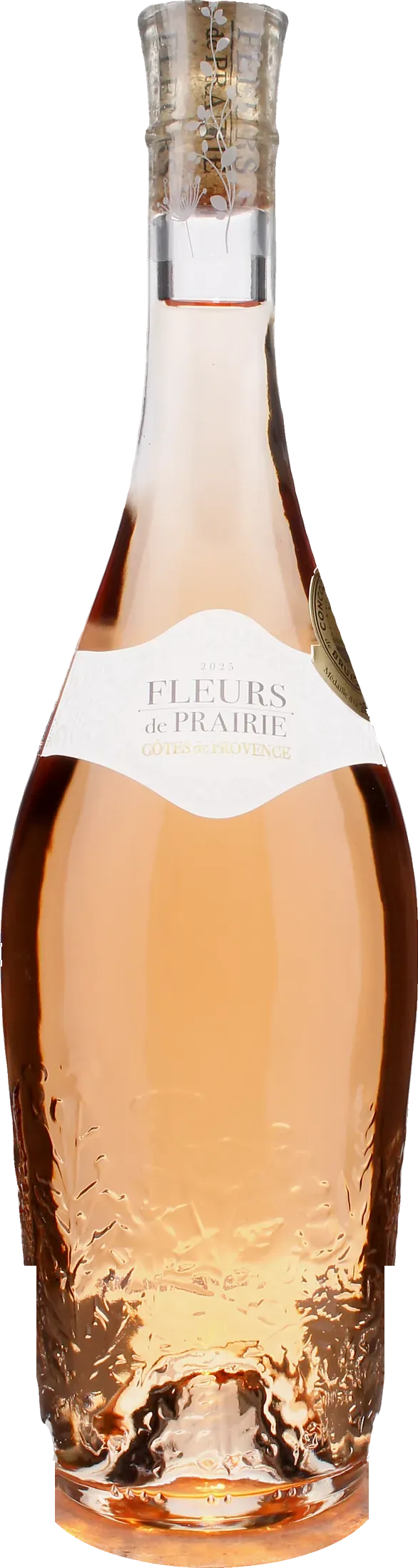
- Aroma: Strawberry, citrus zest, rose petals and herbs; light salmon pink colour
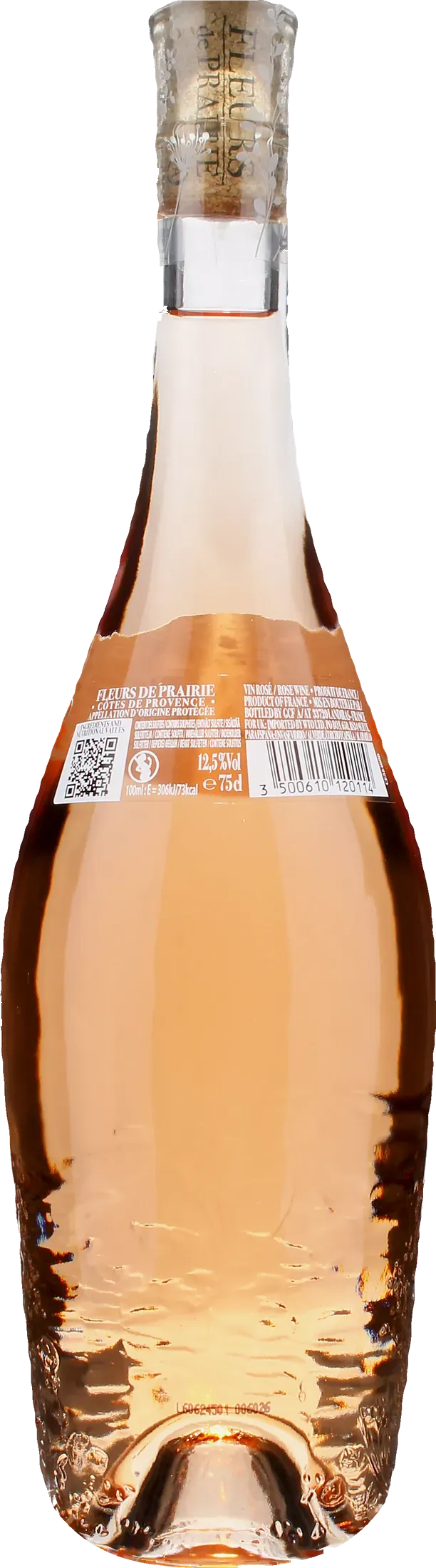
- Taste: Medium-bodied, vibrant acidity and light minerality; clean and crisp finish
- Technique and serving: Pressing and slow tank fermentation; serve at 8–10°C
Description
What type of wine it is
Fleurs de Prairie Côtes de Provence Rosé, produced by Fleurs de Prairie, is a dry Provençal rosé with a protected designation of origin made from a blend of Grenache, Cinsault and Syrah and vinified in tanks. In the glass, it presents a pale pink colour enriched by delicate salmon reflections. The aromatic profile is fresh and fragrant, with notes of strawberry, citrus zest and rose petals. The medium-bodied structure is enlivened by a brilliant acidity and a subtle mineral trail. Thanks to its clean and crisp finish, it is an excellent companion for an aperitif, perfect for pairing with fresh fish, sushi and summer salads.
Where it comes from
This wine originates in the terroirs of Côtes de Provence. The vineyards grow on clay and limestone soils located between 350 and 500 metres in altitude. Fleurs de Prairie follows the principles of sustainable viticulture, dedicating particular attention to the protection of biodiversity. The result purely expresses the territorial identity of the area, offering an elegant sip that pays homage to the region's typical flowery landscapes.
How it is produced
The grapes are harvested in the early hours of the morning to preserve the integrity of the fruit. In the cellar, immediate pressing takes place, followed by the cooling of the must. Fermentation proceeds slowly and in an environment almost devoid of oxygen, a fundamental technique for maintaining the delicate colour and the intensity of the varietal aromas. No barrels are used: the brief ageing in tanks is aimed at enhancing the perfect balance between roundness and freshness. This careful temperature-controlled vinification gives the wine an extremely clear and harmonious profile.
History and Curiosities
The Fleurs de Prairie brand (literally “meadow flowers”) is a refined tribute to the wild beauty and the flowery expanses of the South of France. The 2025 vintage embodies the essence of authentic dry rosé wine from the Côtes de Provence appellation. The winery actively protects biodiversity through rigorous sustainable viticulture, guaranteed by the “High Environmental Value” certification. A prestigious label that combines the charm of Provençal tradition with the utmost respect for the natural ecosystem.
Tasting notes

Perfume

Color

Taste
Serve at:
10 - 12 °C
Longevity:
03 - 05 years
- Start up year: 2016
- Oenologist: Vincent Euzet



| Name | Fleurs de Prairie Cotes de Provence Rosè 2025 |
|---|---|
| Type | Rosé still |
| Denomination | Cotes de Provence AOC |
| Vintage | 2025 |
| Size | 0,75 l |
| Alcohol content | 12.5% by volume |
| Grape varieties | 55% Grenache, 30% Cinsault, 15% Syrah |
| Country | France |
| Region | Provence |
| Vendor | Fleurs de Prairie |
| Story | History and Curiosities The Fleurs de Prairie brand (literally "meadow flowers") is a refined tribute to the wild beauty and the flowery expanses of the South of France. The 2025 vintage embodies the essence of authentic dry rosé wine from the Côtes de Provence appellation. The winery actively protects biodiversity through rigorous sustainable viticulture, guaranteed by the "High Environmental Value" certification. A prestigious label that combines the charm of Provençal tradition with the utmost respect for the natural ecosystem. |
| Origin | Provence (Côtes de Provence), France |
| Soil composition | Clay and limestone soils |
| Harvest | The grapes were harvested at the peak of ripeness in the early hours of the morning to preserve the maximum expression of the fruit. |
| Fermentation | About 2 weeks |
| Production technique | Immediate pressing of the grapes and vinification in tanks (cooling before yeast inoculation), slow fermentation for approximately 2 weeks in an almost oxygen-free environment. |
| Wine making | The grapes are immediately crushed and sent to tanks to cool before yeast inoculation. The wines are fermented slowly for 2 weeks and kept in a near oxygen-free environment to preserve the colour and intense fruit aromas. |
| Aging | Young (minimal or no wood ageing) |
| Total acidity | 5.0 gr/L |
| PH | 3.4 |
| Residual sugar | 3.0 gr/L |
| Allergens | Contains sulphites |