


Duca di Salaparuta
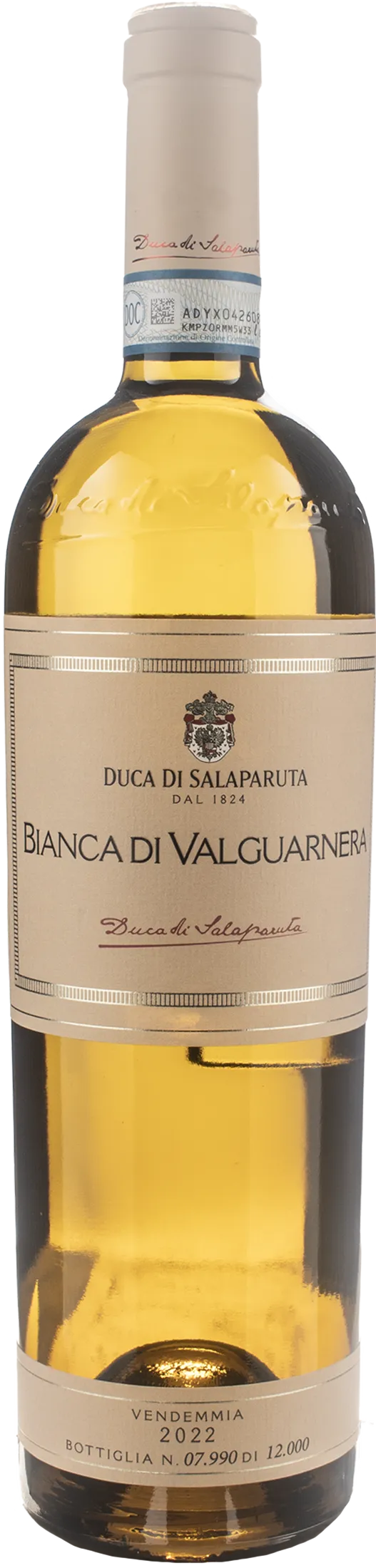
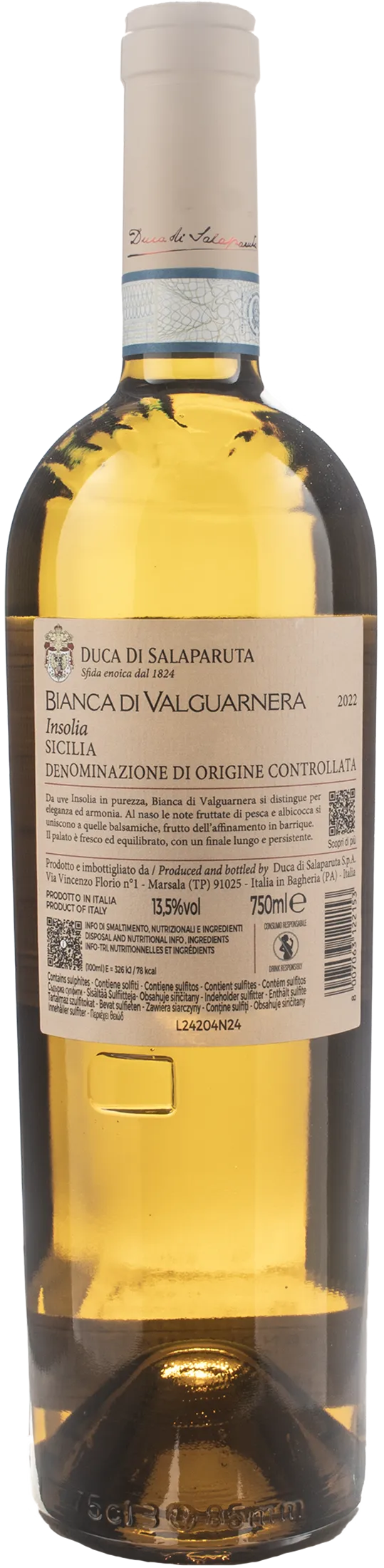
Insolia Bianca di Valguarnera 2022
| Denomination | DOC Sicilia Inzolia |
|---|---|
| Size | 0,75 l |
| Alcohol content | 13.5% by volume |
| Area | Sicily (Italy) |
| Grape varieties | 100% Ansonica/Inzolia |
| Aging | Ageing on its own lees in barriques for at least 8 months; following bottling, 12 months of ageing in a temperature-controlled cellar with bottles stored horizontally for the development of the bouquet. |
- Grape variety and appellation: Insolia DOC Sicilia, a structured and elegant still white wine
- Aromatic profile: notes of flowers, tropical fruit, citrus, vanilla and dried fruit
- Vinification in oak: pressing, oak fermentation and ageing on the lees
- Palate: broad, velvety and savoury flavour, with a long and harmonious finish
- Technical data and awards: 13.5% alcohol; 91 Vinous points and 91 James Suckling points
Description
What type of wine it is
Bianca di Valguarnera Duca di Salaparuta is a structured and elegant white wine with a Sicily Controlled Designation of Origin, an authentic expression of the Insolia grape variety. To the eye, it boasts a straw-yellow hue, enhanced by delicate greenish highlights. The bouquet blends intense floral notes with hints of tropical fruit and Sicilian citrus, enriched by nuances of vanilla and dried fruit resulting from maturation in wood. On the palate, it reveals itself to be broad, velvety and pleasantly savoury, ideal for accompanying seafood starters, grilled bluefin tuna and medium-aged cheeses.
Where it comes from
This white wine originates from the territory of Sicily, in the municipality of Salemi, located in the central-western part of the island. The vines are cultivated using the traditional alberello (head-trained) system on clay-limestone soils, fundamental elements for giving the wine savouriness and a full structure. The Mediterranean climate, characterised by rainy winters and hot summers, favours optimal ripening of the grapes, ensuring the development of a clear aromatic profile in which fruity references stand out.
How it is produced
The harvest takes place in September, with the best bunches being carefully selected. In the cellar, destemming precedes a soft pressing aimed at extracting only the free-run must. After static decantation, fermentation begins at a controlled temperature to conclude slowly inside oak barrels. The process continues with ageing on the lees, known as sur lie, which gives the wine complexity and smoothness. The journey is completed with an appropriate final rest before reaching full expressive maturity.
History and interesting facts
Born in Salemi, this icon from Duca di Salaparuta comes to life from the finest Insolia grapes of the 2022 vintage, carefully selected in small 4 kg crates. A hot summer, mitigated by a temperate end to the season, forged a wine with an unmistakable profile, enhanced by slow ageing in barriques on the lees and subsequent resting in the bottle. Presented in an elegant limited and numbered edition, this Sicilian gem has won over international critics, earning 91 points from Vinous and James Suckling.
Tasting notes

Perfume

Color

Taste
Serve at:
12 - 14 °C
Longevity:
05 - 10 years
- Start up year: 1824
- Oenologist: Team di tecnici
- Bottles produced: 9.500.000
- Hectares: 150
In this part of the island for centuries the Nero d'Avola, the prince of the Sicilian vines, which in the area of Riesi, thanks to special conditions pedoclimatic, has found an ideal habitat.
The vineyards, currently about 127 hectares, are located on soils with a composition of silicaocalcarea that allows the roots to penetrate deeply finding water, rare and precious in this part of Sicily in summer.
Here are born some of the great Duca di Salaparuta wines, each with its own personality. different thanks to the fact that the grapes from which they are born are harvested in different areas. of the estate. the particular exposure to the sun and wind of the vineyards and the nature characteristic of the various areas of the soil, in fact, guarantee different fruits to a few yards apart.
Duca Entico 2017 received a special award as Best Wine from Nero d'Avola grapes from Doctor Wine - Essential Guide to the Wines of Italy 2022 with 96 points out of 100. Read more


| Name | Duca di Salaparuta Insolia Bianca di Valguarnera 2022 |
|---|---|
| Type | White still |
| Denomination | Sicilia DOC |
| Vintage | 2022 |
| Size | 0,75 l |
| Alcohol content | 13.5% by volume |
| Grape varieties | 100% Ansonica/Inzolia |
| Country | Italy |
| Region | Sicily |
| Vendor | Duca di Salaparuta |
| Story | History and interesting facts Born in Salemi, this icon from Duca di Salaparuta comes to life from the finest Insolia grapes of the 2022 vintage, carefully selected in small 4 kg crates. A hot summer, mitigated by a temperate end to the season, forged a wine with an unmistakable profile, enhanced by slow ageing in barriques on the lees and subsequent resting in the bottle. Presented in an elegant limited and numbered edition, this Sicilian gem has won over international critics, earning 91 points from Vinous and James Suckling. |
| Origin | Central-western Sicily, municipality of Salemi (Sicily, Italy) |
| Climate | Mild winters with very dry springs and summers; hot summer |
| Soil composition | Clay-limestone |
| Cultivation system | Little tree |
| Plants per hectare | Five thousand |
| Yield per hectare | Max 6,000 kg/ha (1.2 kg per plant × 5,000 plants/ha) |
| Harvest | First half of September (late September) |
| Fermentation temperature | Temperature controlled |
| Production technique | Destemming, soft pressing to obtain the free-run juice, static settling, temperature-controlled fermentation completed in oak barriques with ageing on fine lees (sur lie). |
| Wine making | After destemming, the grapes undergo gentle pressing (using membrane presses) to obtain the free-run must; this is followed by static settling of the musts and temperature-controlled fermentation, completed slowly in selected oak barriques, with ageing on the fine lees (sur lie). |
| Aging | Ageing on its own lees in barriques for at least 8 months; following bottling, 12 months of ageing in a temperature-controlled cellar with bottles stored horizontally for the development of the bouquet. |
| Total acidity | 5.7 gr/L |
| PH | 3.21 |
| Allergens | Contains sulphites |