


Donnafugata
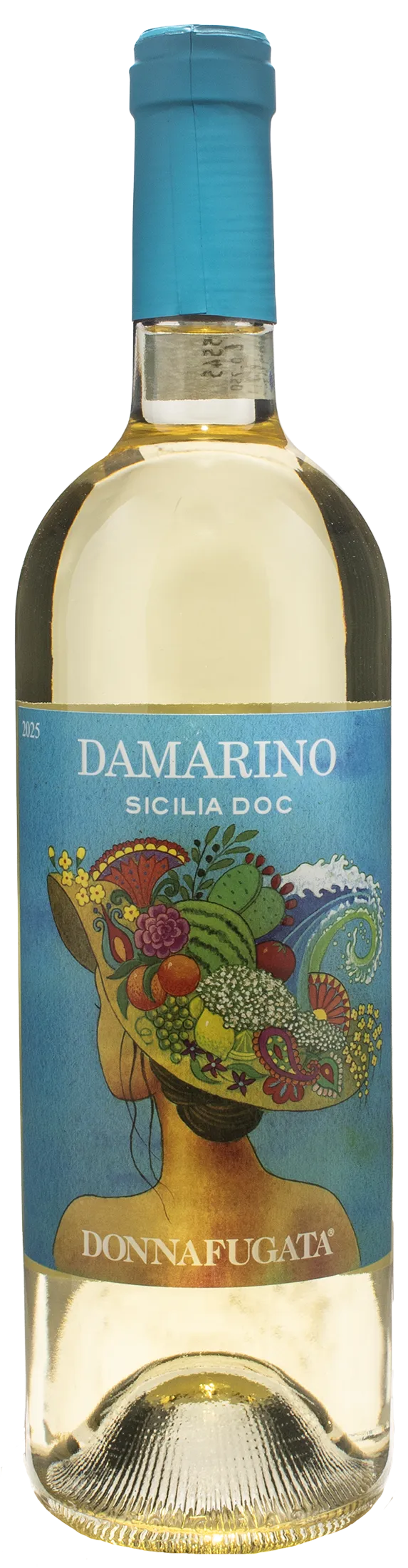
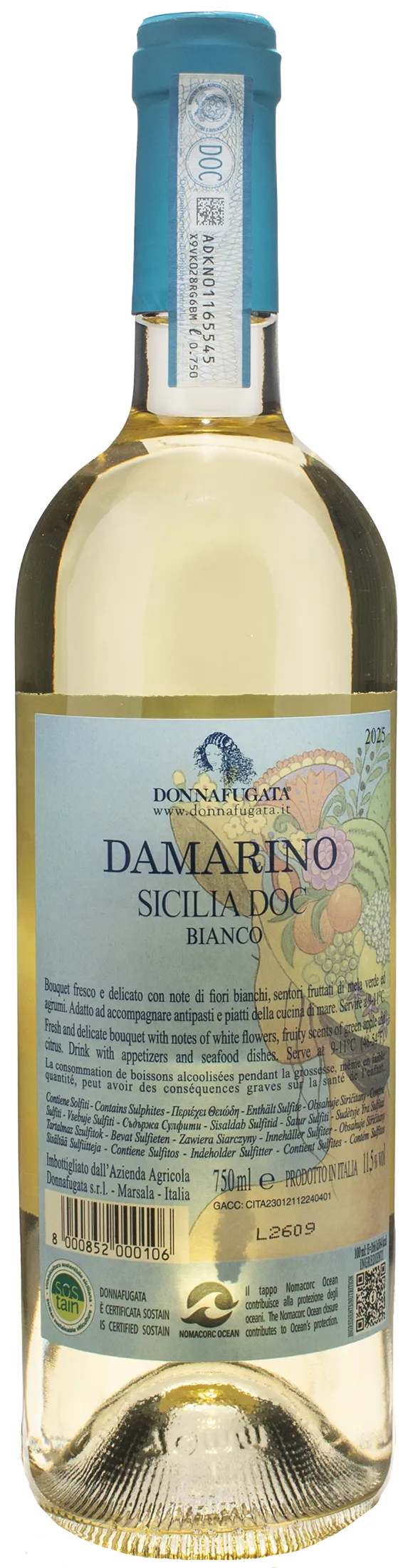
Sicilia Damarino 2025
| Denomination | DOC Sicilia Bianco |
|---|---|
| Size | 0,75 l |
| Alcohol content | 11.5% by volume |
| Area | Sicily (Italy) |
| Grape varieties | Ansonica/Inzolia, Catarratto Bianco Lucido, Grecanico Dorato, Grillo |
| Aging | Ageing in tanks for at least two months, then in the bottle for approximately two months before commercialisation. |
- Type and designation: Dry white wine Sicilia DOC for informal consumption
- Grape varieties and origin: Predominantly Ansonica and indigenous varieties, from Contessa Entellina
- Aromatic profile: Notes of white flowers, lime, grapefruit, peach and tropical fruit
- Vinification and ageing: In stainless steel at 14–16°C, aged for 2 months in tanks and 2 months in the bottle
- Sustainability and pairings: Recycled plastic stopper, ideal with seafood, pizza and vegetables
Description
What type of wine it is
Damarino Donnafugata is a fresh and lively white wine produced under the Sicilia designation and vinified in steel. This blend of Ansonica grapes and other native varieties expresses a delicate bouquet, in which notes of white flowers such as jasmine and elderflower stand out, combined with fresh hints of lime and grapefruit. On the palate, it is agile, with pleasant hints of peach and tropical fruit. The sip is characterised by a fresh minerality and a soft finish, which makes it perfect for accompanying light seafood dishes, pizzas, or vegetarian recipes.
Where it comes from
The vineyards are located in south-western Sicily, at the Contessa Entellina Estate, situated on hills between 200 and 400 metres above sea level. The area benefits from a mild climate, with dry and well-ventilated summers, where significant temperature variations between day and night preserve the aromatic richness of the grapes. The silty-clay and limestone soils guarantee balanced nourishment for the vines. The combination of these natural elements gives the wine a distinct aromatic clarity and a pleasant drinkability.
How it is produced
The Ansonica harvest begins at the end of August, followed in September by the other varieties that make up the blend. The grapes undergo soft pressing to gently extract the must. Fermentation takes place in steel tanks at a controlled temperature, between 14 and 16 degrees, an essential measure to keep the primary aromas of the clusters intact. After vinification, the wine ages in tanks for two months, concluding its journey with a rest in the bottle for another two months to reach perfect gustatory harmony.
History and curiosities
Damarino from Donnafugata combines art, Mediterranean charm and sustainability. This bottle features the Nomacorc Ocean cork, the world's first closure made from recycled plastics collected along coastlines to protect marine ecosystems. The colourful artist label, designed by Stefano Vitale, enhances the connection with the sea by depicting the profile of a woman framed by a hat of vine branches and bunches. A vibrant celebration of femininity that invites you to enjoy a responsible and elegant sip.
Tasting notes
Perfume

Color

Taste
Serve at:
10 - 12 °C
Longevity:
03 - 05 years
- Start up year: 1983
- Oenologist: Antonio Rallo, Antonino Santoro e Pietro Russo con la consulenza di Stefano Valla
- Bottles produced: 3.650.000
- Hectares: 488
Giacomo Rallo, is the fourth generation of a family with over 170 years of experience in producing quality wine. In 1983 he founded Donnafugata together with his wife Gabriella, considered a pioneer of feminine viticulture. Today the company is led by their children Antonio and José together with a team of people committed to excellence and to the very best representation of Made in Italy.
Donnafugata is a world full of colors and timeless values, pleasant and elegant wines with a unique style. Our trademark labels tell the colours of Sicily and the character of the wines in a distinctive and fantastic feminine style. Read more


| Name | Donnafugata Sicilia Damarino 2025 |
|---|---|
| Type | White still |
| Denomination | Sicilia DOC |
| Vintage | 2025 |
| Size | 0,75 l |
| Alcohol content | 11.5% by volume |
| Grape varieties | Ansonica/Inzolia, Catarratto Bianco Lucido, Grecanico Dorato, Grillo |
| Country | Italy |
| Region | Sicily |
| Vendor | Donnafugata |
| Story | History and curiosities Damarino from Donnafugata combines art, Mediterranean charm and sustainability. This bottle features the Nomacorc Ocean cork, the world's first closure made from recycled plastics collected along coastlines to protect marine ecosystems. The colourful artist label, designed by Stefano Vitale, enhances the connection with the sea by depicting the profile of a woman framed by a hat of vine branches and bunches. A vibrant celebration of femininity that invites you to enjoy a responsible and elegant sip. |
| Origin | South-western Sicily, Contessa Entellina Estate and surrounding areas |
| Climate | Mild winters, dry and breezy summers, with significant temperature variations between day and night |
| Soil composition | Hilly topography and clay-loam soils |
| Cultivation system | Vertical trellis training with Guyot pruning and other traditional training systems suitable for producing high-quality grapes. |
| Plants per hectare | 4,500 - 6,000 |
| Yield per hectare | 80–90 quintals per hectare |
| Harvest | The grape harvest took place between the second ten-day period of August and the middle of September. |
| Fermentation temperature | 14 to 16 °C |
| Production technique | Soft pressing of the grapes; fermentation in stainless steel at a controlled temperature (14–16 °C) |
| Wine making | Soft pressing of the grapes; fermentation of the must in stainless steel at a controlled temperature (14–16 °C). |
| Aging | Ageing in tanks for at least two months, then in the bottle for approximately two months before commercialisation. |
| Total acidity | 5.5 gr/L |
| PH | 3.2 |
| Allergens | Contains sulphites |