


Cocchi Giulio
Asti Spumante
| Denomination | DOCG Asti Spumante |
|---|---|
| Size | 0,75 l |
| Alcohol content | 7.0% by volume |
| Area | Piedmont (Italy) |
| Grape varieties | 100% Moscato Bianco/Moscato Reale |
| Aging | Not intended for ageing; to be consumed young |
- Name and grape variety: Asti DOCG made from 100% Moscato Bianco, sweet white sparkling wine
- Production method: Charmat method in autoclave with slow fermentation in stainless steel
- Aromatic profile: notes of lychee, ripe peach, jasmine, Fuji apple, honey and lemon cream
- Perlage and taste: very fine and creamy bubbles, balanced sweetness, light and fresh body
- Serving and pairings: serve at 6–8°C, ideal with hazelnut desserts and blue cheese
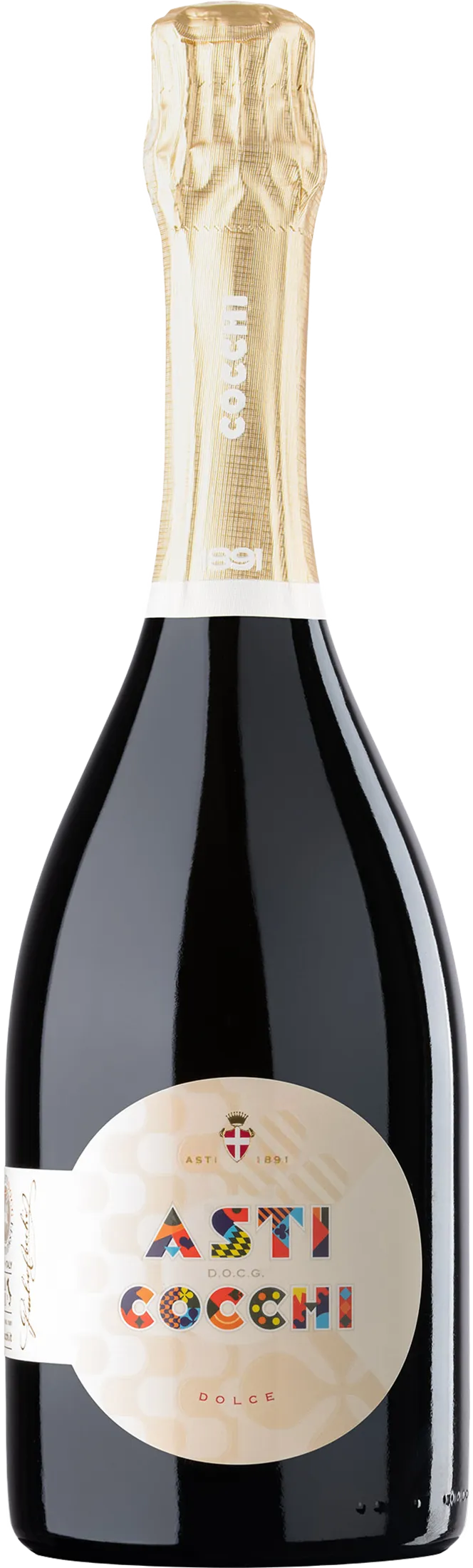
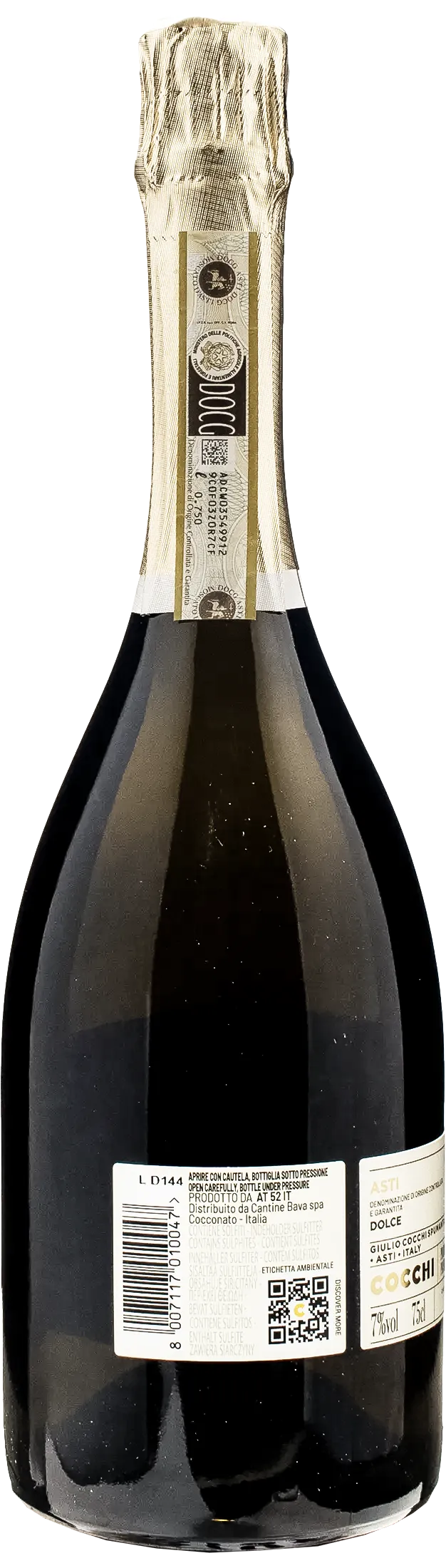
Description
What kind of wine it is
Cocchi Asti Spumante is a sweet sparkling wine typical of the Asti area, made from Moscato Bianco grapes. On the palate, it offers immediate aromatic pleasure, enhanced by very fine, creamy bubbles and a well-balanced sweetness. The bouquet reveals notes of lychee, ripe peach, jasmine and lemon cream. Soft and fresh, it pairs excellently with hazelnut-based desserts or blue cheeses.
Where it comes from
This wine originates from the Asti Hills in Piedmont, an ideal region for the production of aromatic sparkling wines. Cocchi carefully selects the best grapes grown near Cocconato d’Asti to enhance the natural expressiveness of the grape variety. The local climate allows the bunches to develop an intense aromatic profile, with nuances of Fuji apple, acacia and honey that reflect the distinctive character and elegance of the Asti area.
How it is produced
Vinification begins with the pressing of whole bunches, essential to obtain a must rich in fragrance and natural sweetness. The sparkling process takes place using the Charmat Method, with a slow fermentation in temperature-controlled steel tanks. This process preserves the typical varietal aromas of the grape and gives the wine a delicate and enveloping perlage. Served well chilled, it is an excellent choice both as an aperitif and to end a meal.
History and Curiosities
Cocchi's Asti Spumante DOCG embodies the centuries-old Piedmontese tradition. Produced in Cocconato d’Asti since 1891, this elegant wine celebrates its roots by featuring the vibrant colours of the medieval Palio on its label. An international excellence born from the expert sparkling wine school of the winery, it has managed to win Gold Medals and Master awards at the Global Sparkling Masters, as well as achieving 90 points in the prestigious Luca Maroni guide.
Tasting notes

Perlage

Perfume

Color

Taste
Serve at:
06 - 08 °C
Longevity:
03 - 05 years

- Start up year: 1891
- Oenologist: Giulio Bava
- Bottles produced: 350.000
Giulio Cocchi completaCocchi’s original products and recipes was well-known during Belle Epoque and on the versatile scene of the Futurist period. Cocchi’s products and name were soon spreading worldwide, as shown by exportation documents to New York, London, Sydney, Colonial Africa and Venezuela, where the "Casa Cocchi de Venezuela" was founded and run for a long while in Caracas.
Since 1978, Giulio Cocchi is owned and operated by the Bava Family, themselves highly renowned wine producers in Monferrato and Langhe. Today the winery still maintains its artisan character and follows the original recipes, formulated by Giulio Cocchi in 1891, to craft the distinctive wines that have made the Cocchi a cult name. Among the results of last 30 years, the defense of Barolo Chinato from forgetfulness and the relaunch of Vermouth di Torino category. Storico Vermouth di Torino since 2011 has been the driving force for the rebirth of the top-of-the-range Vermouth di Torino on the international scene. Not to be forgotten the attention for the sparkling wines, with the committment for the valorization of Alta Langa DOCG.
With more than a century of uninterrupted activity behind it, Giulio Cocchi is registered in the National Register of Historic Enterprises. Read more


| Name | Cocchi Asti Spumante |
|---|---|
| Type | White charmat method sparkling wine dessert wine aromatic |
| Denomination | Asti DOCG |
| Size | 0,75 l |
| Alcohol content | 7.0% by volume |
| Grape varieties | 100% Moscato Bianco/Moscato Reale |
| Country | Italy |
| Region | Piedmont |
| Vendor | Cocchi Giulio |
| Story | History and Curiosities Cocchi's Asti Spumante DOCG embodies the centuries-old Piedmontese tradition. Produced in Cocconato d’Asti since 1891, this elegant wine celebrates its roots by featuring the vibrant colours of the medieval Palio on its label. An international excellence born from the expert sparkling wine school of the winery, it has managed to win Gold Medals and Master awards at the Global Sparkling Masters, as well as achieving 90 points in the prestigious Luca Maroni guide. |
| Origin | Asti hills (Asti), Piedmont, Italy |
| Production technique | Charmat method (Martinotti method) in autoclave with slow fermentation in temperature-controlled steel vats |
| Wine making | Pressing of whole bunches to obtain a very sweet must; slow fermentation at a controlled temperature in steel tanks (Charmat/Metodo Martinotti method) to preserve and enhance the fresh and delicate aromas and to achieve very fine bubbles. |
| Aging | Not intended for ageing; to be consumed young |
| Allergens | Contains sulphites |