


Chateau d'Yquem
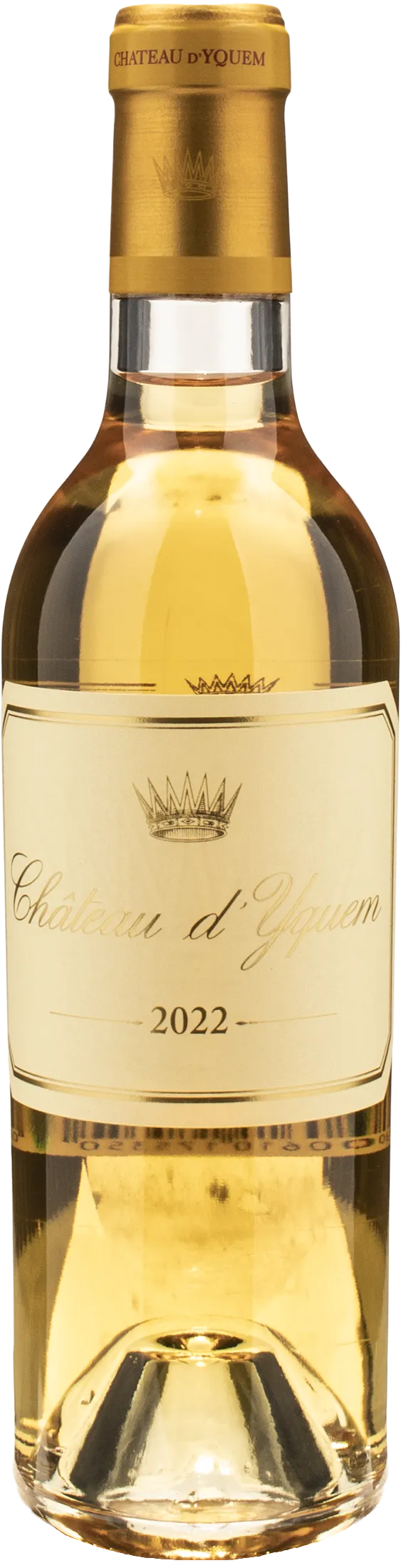
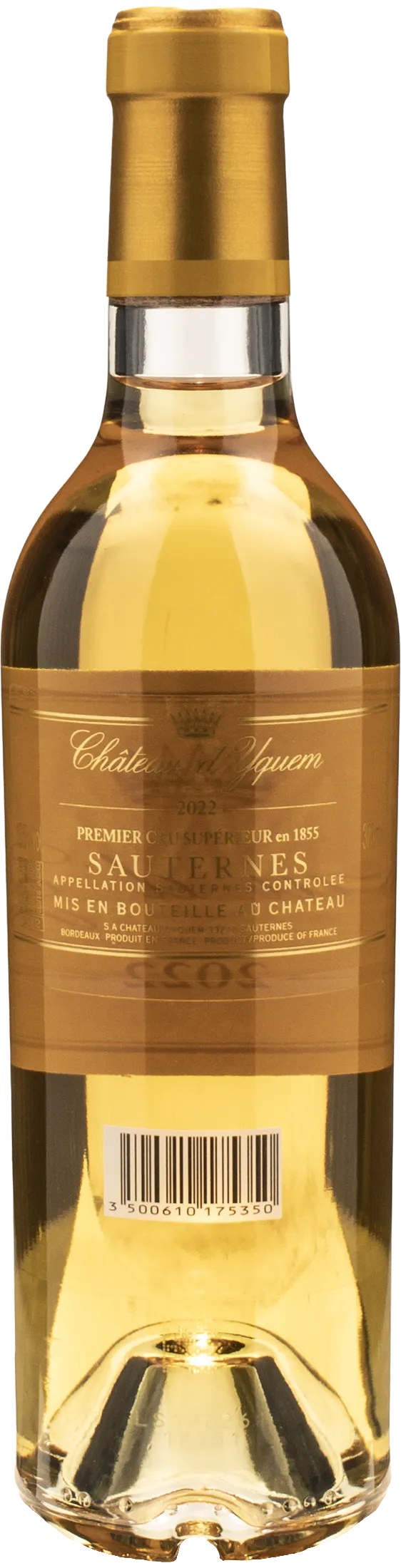
Sauternes 0.375L 2022
| Denomination | AOC Sauternes Premier Grand Cru Classè |
|---|---|
| Size | 0,375 l |
| Alcohol content | 13.5% by volume |
| Area | Bordeaux (France) |
| Grape varieties | 80% Semillon, 20% Sauvignon |
| Aging | After fermentation, the wine is ready for a very long period of ageing in new barriques, with slight oxidation through the pores of the oak; every 3 months it is racked to separate it from the lees; it completes its maturation in barriques and is bottled in the fourth spring after the harvest. |
| Other years | 2021 , 2023 |
- Vintage and format: 2022, 0.375 l bottle of Sauternes AOC
- Blend and style: 80% Sémillon, 20% Sauvignon Blanc; sweet wine produced from noble rot
- Vinification: hand-harvested in several passes, successive pressings, new barriques
- Tasting notes: dried apricot, saffron, lime blossom; silky palate, sweet-acid balance
- Scores and serving: 100 points James Suckling; temperature 10–12 °C; ageing potential 15–25 years
Description
What kind of wine is it
Chateau d’Yquem is a sweet white wine made from grapes affected by noble rot. The only Premier Grand Cru Classé supérieur of the 1855 classification, this Sauternes is born from a harmonious blend of Sémillon and Sauvignon Blanc. After repeated pressings, fermentation stops naturally, preserving a rich residual sugar content. On the nose, it reveals aromas of dried apricot, saffron and lime blossom, while on the palate it is enveloping and silky, with a structure where richness and lively acidity merge in an ideal balance.
Where does it come from
This wine originates in Sauternes, in the renowned Bordeaux region. The oceanic climate, moderated by its distance from the Atlantic Ocean, encourages the optimal development of botrytis while maintaining the freshness of the grapes. The vines grow on gentle slopes characterised by overlapping layers of clay, sand and gravel. This particular soil composition gives the fruit a precise aromatic expression, laying the foundation for the extraordinary longevity that distinguishes this label.
How is it produced
Production requires an extremely meticulous manual harvest, carried out in multiple passes through the rows to select only the berries that have reached maximum concentration. The bunches are pressed repeatedly to extract a very rich must. The different assembled batches ferment until they stop spontaneously, retaining their natural sweetness. This is followed by a long period of ageing in new barrels, characterised by delicate oxidation and quarterly rackings to separate the wine from the lees, before bottling in the fourth spring after the harvest.
History and Curiosities
With a history dating back to 1593, the iconic Château d’Yquem is the only Premier Cru Supérieur of Sauternes. This legendary sweet wine is made from Sémillon and Sauvignon Blanc grapes affected by noble rot, hand-picked over several passes. The exceptional 2022 vintage, awarded 100 points by James Suckling, is aged for a long time in new barriques before being bottled in the fourth spring after the harvest. In its precious 0.375 l format, it offers a sumptuous balance between sweetness and acidity, promising extraordinary longevity.
Awards
-
2022
 100
100/100
James Suckling is an influential American wine critic and journalist who worked at Wine Spectator for 30 years. He left the magazine in 2010 to start his own website and guidebook (JamesSuckling.com). He specialises in Italian and Bordeaux wines.
-
2022
 98
98/100
The prestigious international wine guide from the renowned Robert Parker, the world's most experienced and trusted wine taster.
-
2022
 97
97/100
Wine spectator is the most influential wine guide on the internet.
Tasting notes
Perfume
Color
Taste
Serve at:
10 - 12 °C
Longevity:
15 - 25 years
- Start up year: 1593
- Oenologist: Sandrine Garbay, Lurton, Dubourdieu
- Hectares: 103
Yquem's success stems largely from the site's susceptibility to attack by "noble rot".
Wines from Château d'Yquem are characterised by their complexity, concentration and sweetness. A relatively high acidity helps to balance the wine's sweetness. Another characteristic for which Château d'Yquem wines are known is their longevity. With proper care, a bottle will keep for a century or more. During this time, the fruity overtones will gradually fade and integrate with more complex secondary and tertiary flavours. Read more


| Name | Chateau d'Yquem Sauternes 0.375L 2022 |
|---|---|
| Type | White dessert wine from grapes with noble rot dessert wine semi-aromatic |
| Denomination | Sauternes AOC |
| Vintage | 2022 |
| Size | 0,375 l |
| Alcohol content | 13.5% by volume |
| Grape varieties | 80% Semillon, 20% Sauvignon |
| Country | France |
| Region | Bordeaux |
| Vendor | Chateau d'Yquem |
| Story | History and Curiosities With a history dating back to 1593, the iconic Château d’Yquem is the only Premier Cru Supérieur of Sauternes. This legendary sweet wine is made from Sémillon and Sauvignon Blanc grapes affected by noble rot, hand-picked over several passes. The exceptional 2022 vintage, awarded 100 points by James Suckling, is aged for a long time in new barriques before being bottled in the fourth spring after the harvest. In its precious 0.375 l format, it offers a sumptuous balance between sweetness and acidity, promising extraordinary longevity. |
| Origin | Sauternes (Bordeaux), France |
| Climate | Oceanic climate tempered by the distance from the Atlantic |
| Soil composition | Layers of clay, sand and gravel superimposed on top of each other |
| Yield per hectare | 9 hl/hectare |
| Fermentation | About 3-4 weeks |
| Production technique | The grapes are pressed several times immediately after harvesting to completely extract the substances contained in the grape and obtain a highly concentrated must. |
| Wine making | Alcoholic fermentation occurs naturally and lasts about 3-4 weeks, after which the wine will have a residual sugar content of approximately 125 g/l. |
| Aging | After fermentation, the wine is ready for a very long period of ageing in new barriques, with slight oxidation through the pores of the oak; every 3 months it is racked to separate it from the lees; it completes its maturation in barriques and is bottled in the fourth spring after the harvest. |
| Residual sugar | 125.0 gr/L |
| Allergens | Contains sulphites |