


Castello della Sala (Antinori)
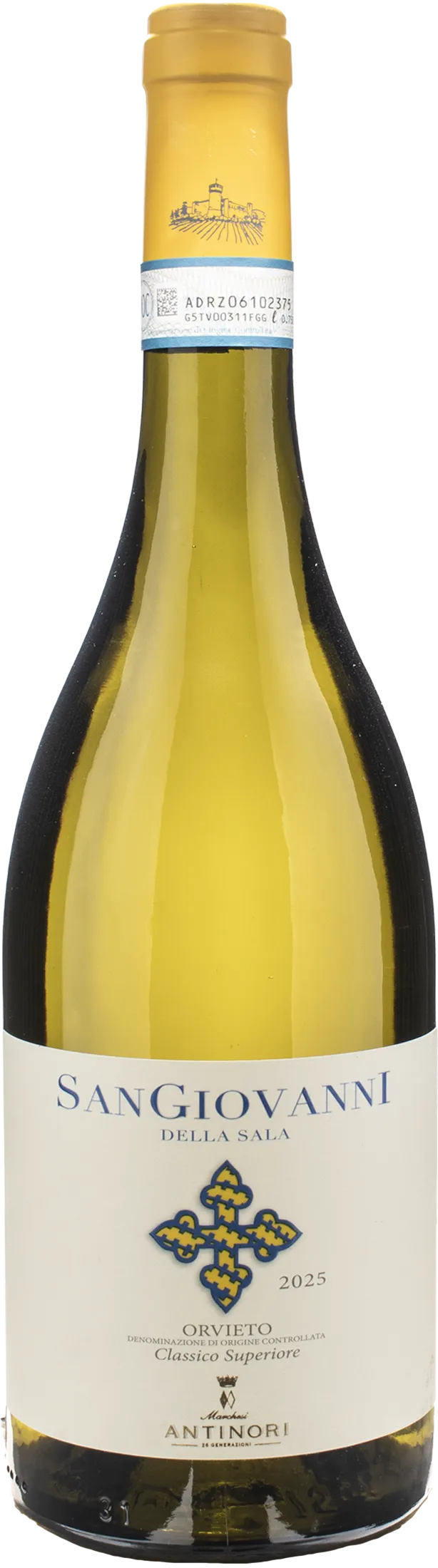
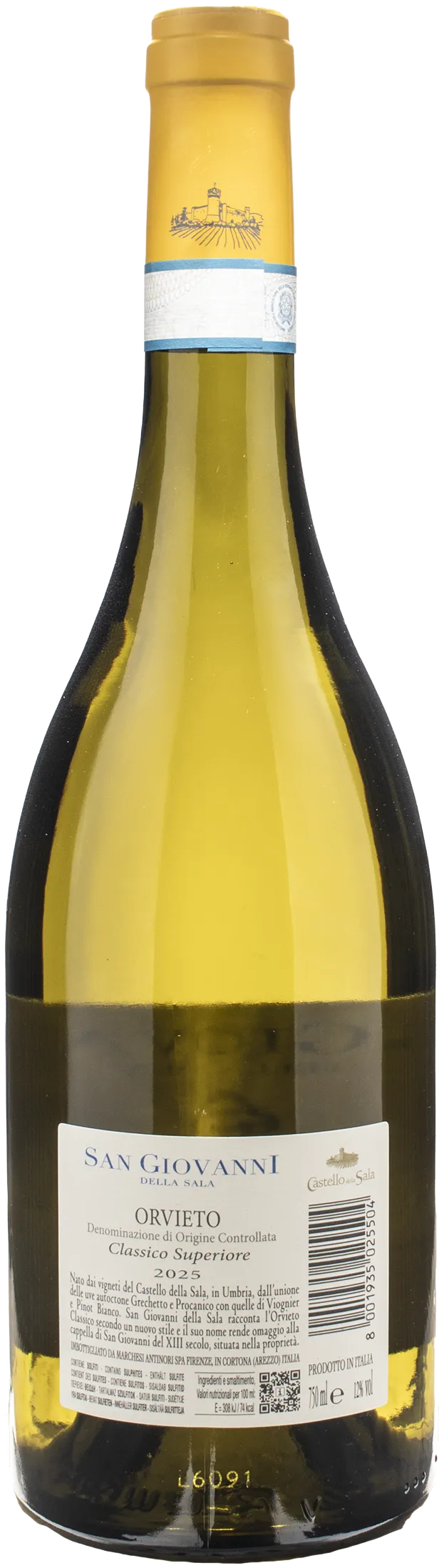
Orvieto Classico Superiore San Giovanni della Sala 2025
| Denomination | DOC Orvieto Classico Superiore |
|---|---|
| Size | 0,75 l |
| Alcohol content | 12.0% by volume |
| Area | Umbria (Italy) |
| Grape varieties | Grechetto, Pinot Bianco, Trebbiano Toscano, Viognier |
| Aging | The wine remained on its own lees for several months (ageing on the lees, in stainless steel) before blending and bottling. |
- Grape varieties: Blend of Grechetto, Procanico, Pinot Bianco and Viognier
- Vinification: Cold maceration on the skins for 6 hours and fermentation in stainless steel at 16°C
- Ageing: Maturation on the lees in stainless steel for several months for structure and elegance
- Aromas and taste: Notes of white flowers, peach and citrus; dry, fresh and mineral profile
- Pairings: Ideal as an aperitif, with seafood starters, risottos, fish and delicate white meats
Description
What kind of wine it is
San Giovanni della Sala from Castello della Sala is an Umbrian white wine that elegantly captures the essence of Orvieto Classico Superiore. This blend combines Grechetto and Procanico grapes with Pinot Blanc and Viognier, vinified in steel and matured on the lees, resulting in a dry and enveloping sip. It appears a straw yellow colour, revealing on the nose a clear bouquet of white flowers, ripe peach and citrus fruits. On the palate, the lively freshness harmonises with a soft structure, supported by a distinct mineral streak that gives the wine a pleasant and lingering finish.
Where it comes from
It originates from the Umbrian vineyards of Castello della Sala, a historic estate located near Orvieto. The vines grow on breezy slopes exposed to the morning sun, at an altitude between 220 and 470 metres, benefiting from a temperature range that defines the aromatic profile of the grapes. The terroir boasts marine-origin sediments, with clay and limestone soils rich in fossilised shells, key elements for the wine's savouriness. The estate is centred around an ancient fourteenth-century medieval fortress.
How it is produced
After harvesting, a separate vinification is carried out to enhance the character of each variety. Part of the must undergoes cold maceration on the skins for about six hours, then joins the juice obtained from gentle pressing. Fermentation takes place in stainless steel tanks at a controlled temperature. The subsequent maturation on the lees for several months is a crucial step, enriching the structure, aromatic elegance and overall balance before the final blending.
History and Curiosities
San Giovanni della Sala has been produced since 1990 on the land adjacent to Castello della Sala, an ancient medieval castle built in 1350 by supporters who came to Italy with Charlemagne with the aim of conquering Orvieto. In 1940, the Antinori family decided to purchase and restore the fortress, doing so without damaging the historic cellar, which had existed since the 16th century and is located in the underground chambers.
Tasting notes
Perfume

Color
Taste
Serve at:
08 - 10 °C
Longevity:
03 - 05 years
- Start up year: 1940
- Oenologist: Massimiliano Pasquini
- Bottles produced: 866.586
- Hectares: 229
The estate’s 229 hectares (566 acres) of vineyards are located at an altitude of 220 - 470 meters above sea level (722-1542 feet) and are planted with traditional varieties such as Procanico and Grechetto but also with Chardonnay, Sauvignon Blanc, Sèmillon, Pinot Blanc, Viognier and a small quantity of Traminer and Riesling.
The region is exceptional for producing white varieties with one exception, Pinot Noir, that has found ideal conditions in this terroir to best express its full potential. The vines grow in clay and calcareous based soils, rich in fossil shells, and they are well exposed to the rising of the sun with an excellent difference of temperature between day and night. Read more


| Name | Castello della Sala Orvieto Classico Superiore San Giovanni della Sala 2025 |
|---|---|
| Type | White still |
| Denomination | Orvieto DOC |
| Vintage | 2025 |
| Size | 0,75 l |
| Alcohol content | 12.0% by volume |
| Grape varieties | Grechetto, Pinot Bianco, Trebbiano Toscano, Viognier |
| Country | Italy |
| Region | Umbria |
| Vendor | Castello della Sala (Antinori) |
| Story | History and Curiosities San Giovanni della Sala has been produced since 1990 on the land adjacent to Castello della Sala, an ancient medieval castle built in 1350 by supporters who came to Italy with Charlemagne with the aim of conquering Orvieto. In 1940, the Antinori family decided to purchase and restore the fortress, doing so without damaging the historic cellar, which had existed since the 16th century and is located in the underground chambers. |
| Origin | Località Sala - Ficulle (TR), Umbria, Italia |
| Soil composition | Sediments of marine origin with clay infiltrations; generally clayey and calcareous soil, rich in fossil shells |
| Harvest | From late August to mid-September |
| Fermentation temperature | 16 °C |
| Production technique | Cold maceration on the skins, soft pressing, fermentation in temperature-controlled stainless steel tanks, ageing on the lees (sur lie) |
| Wine making | Upon arrival at the winery, the grapes were vinified separately by variety. Part of the must underwent cold maceration in contact with the skins for about 6 hours at 10°C, then was combined with the must obtained from gentle direct pressing. Alcoholic fermentation took place in stainless steel tanks at a controlled temperature of 16°C, followed by ageing on the lees for several months before blending and bottling. |
| Aging | The wine remained on its own lees for several months (ageing on the lees, in stainless steel) before blending and bottling. |
| Allergens | Contains sulphites |