


Myo (Zorzettig)
Pinot Bianco 2024
| Denomination | DOC Colli Orientali del Friuli Pinot Bianco |
|---|---|
| Size | 0,75 l |
| Alcohol content | 13.5% by volume |
| Area | Friuli-Venezia Giulia (Italy) |
| Grape varieties | 100% Pinot Bianco |
| Aging | Ageing on the lees for 6 months with weekly bâtonnage (90% in stainless steel, up to 10% in barrique), followed by 6 months of bottle ageing. |
- Type: Still white from 100% Pinot Bianco grapes, with an elegant profile
- Aromas and colour: Straw yellow colour; hints of yellow apple, white flowers and yellow peach
- Taste characteristics: Lively freshness, creamy savouriness and a crisp mineral finish
- Production area: Colli Orientali del Friuli DOC, ponca soils at 250 metres
- Vinification: 6 months on the lees and 6 months in bottle; 3 Glasses Gambero Rosso
Description
What type of wine it is
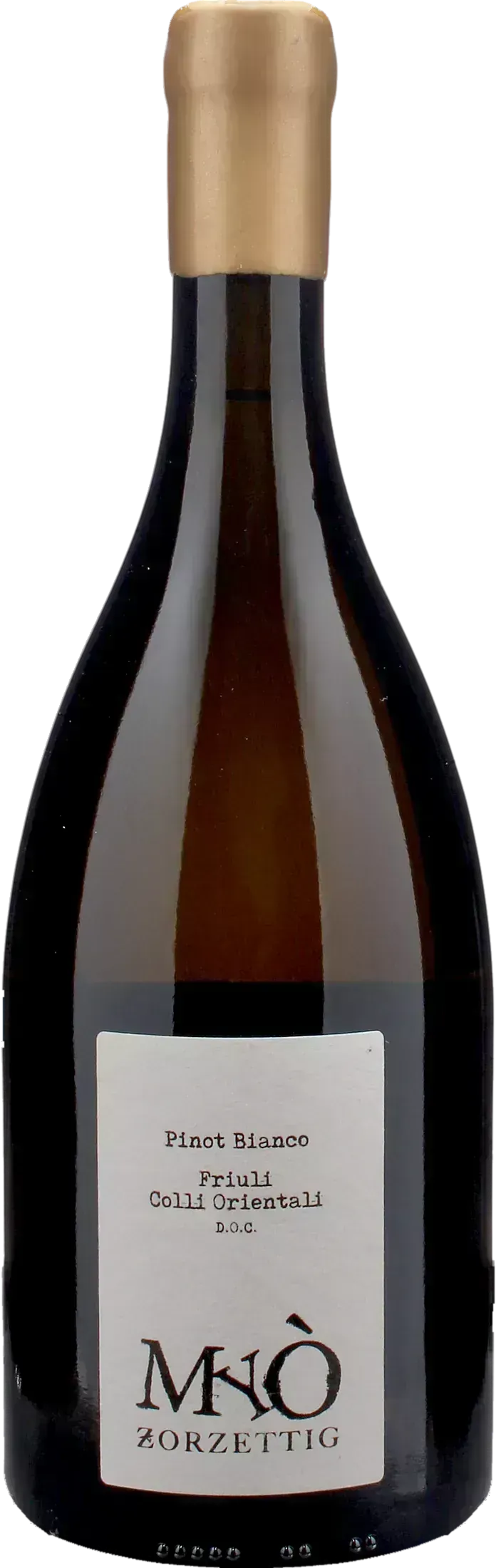
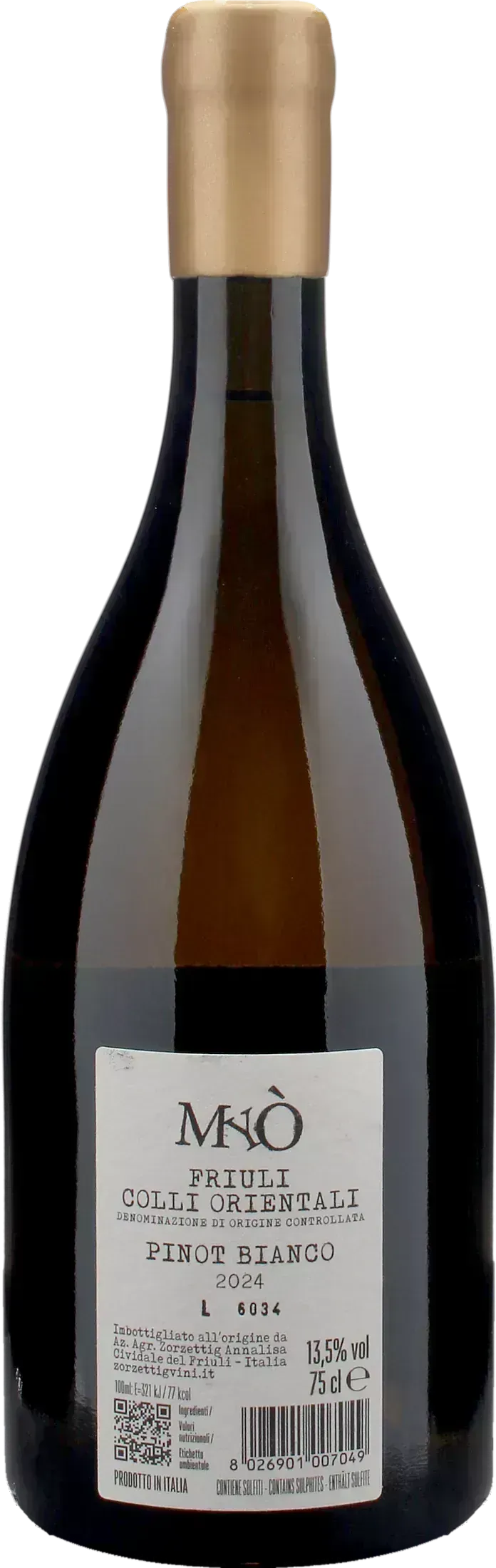
Zorzettig's Myo Pinot Bianco is an elegant still white wine from Friuli-Venezia Giulia. Produced from 100% Pinot Bianco grapes, this expression from the Colli Orientali del Friuli is distinguished by a crisp aromatic profile, dominated by notes of ripe Golden Delicious apple, delicate white flowers and yellow peach. On the palate, it is fresh and enveloping, offering a distinctly savoury and creamy sip, always supported by a strong mineral backbone. Its structured, complex and harmonious character is the result of careful vinification and targeted ageing divided between stainless steel tanks and a small percentage of wooden barrels.
Where it comes from
The grapes destined for this label come from vineyards situated at an altitude of approximately 250 metres in the historic sub-zones of Spessa and Ipplis, in the municipality of Premariacco. On this specific slope of the Colli Orientali del Friuli, the vines sink their roots into the characteristic ponca, a peculiar and ancient stratification of Eocene marl and sandstone mixed with clay soils. This mineral soil composition imparts its typical savouriness to the wine. The local ecosystem is protected as a biodiversity reserve, ensuring ideal ripening.
How it is produced
Vinification begins with a twelve-hour cold maceration, followed by alcoholic fermentation in stainless steel tanks. The subsequent maturation phase involves six months of ageing on the lees, enriched by constant weekly bâtonnage to increase volume and creaminess on the palate. This long rest is mainly divided into steel, with a small but fundamental portion placed in wooden barrels, enriched by a skilful blend of historic vintages to give the profile exceptional complexity. A final rest period of six months in the bottle seals the wine's aromatic and structural balance.
History and facts
The Zorzettig Myo Pinot Bianco originates in the Colli Orientali del Friuli DOC from the vineyards of Spessa and Ipplis, areas jealously guarded as authentic biodiversity reserves. The most fascinating feature of the label is its formula, enriched by a precious addition of historic past vintages aged in barriques. This journey of excellence has won over international critics, collecting coveted trophies: the renowned 3 Bicchieri by Gambero Rosso, the prestigious 5 Grappoli by Bibenda, an authoritative 92 points from James Suckling and a score of 91 points from Luca Maroni.
Tasting notes
Perfume

Color
Taste
Serve at:
12 - 14 °C
Longevity:
03 - 05 years
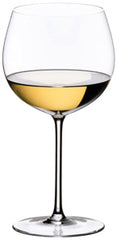
- Oenologist: Saverio Di Giacomo
This represents a new approach to viticulture, yielding wines that look to a sustainable future. From the great whites to the traditional Friulian reds, each wine embodies quality, selection, loving care and commitment. Commitment to a winegrowing area and its People. Our People. Read more


| Name | Zorzettig Myo Pinot Bianco 2024 |
|---|---|
| Type | White still |
| Denomination | Colli Orientali del Friuli DOC |
| Vintage | 2024 |
| Size | 0,75 l |
| Alcohol content | 13.5% by volume |
| Grape varieties | 100% Pinot Bianco |
| Country | Italy |
| Region | Friuli-Venezia Giulia |
| Vendor | Myo (Zorzettig) |
| Story | History and facts The Zorzettig Myo Pinot Bianco originates in the Colli Orientali del Friuli DOC from the vineyards of Spessa and Ipplis, areas jealously guarded as authentic biodiversity reserves. The most fascinating feature of the label is its formula, enriched by a precious addition of historic past vintages aged in barriques. This journey of excellence has won over international critics, collecting coveted trophies: the renowned 3 Bicchieri by Gambero Rosso, the prestigious 5 Grappoli by Bibenda, an authoritative 92 points from James Suckling and a score of 91 points from Luca Maroni. |
| Origin | Vineyards of Spessa and Ipplis in Premariacco (Udine) |
| Soil composition | Clayey; ponca (characteristic stratification of marl and sandstone of Eocene origin) |
| Cultivation system | Double upside-down |
| Plants per hectare | Four thousand |
| Yield per hectare | 50 quintals per hectare |
| Harvest | Mid-September |
| Production technique | 12-hour cold maceration; fermentation in stainless steel tanks; ageing on the lees for 6 months with weekly bâtonnage (90% in stainless steel, up to 10% in barriques); 6 months' ageing in bottle. |
| Wine making | 12-hour cold maceration; fermentation in stainless steel tanks; ageing on the lees for 6 months with weekly bâtonnage (90% in steel, up to 10% in barriques); bottling and ageing for 6 months in bottle. |
| Aging | Ageing on the lees for 6 months with weekly bâtonnage (90% in stainless steel, up to 10% in barrique), followed by 6 months of bottle ageing. |
| Total acidity | 5.3 gr/L |
| Residual sugar | 1.3 gr/L |
| Dry extract | 20.5 gr/L |
| Allergens | Contains sulphites |