


Myo (Zorzettig)
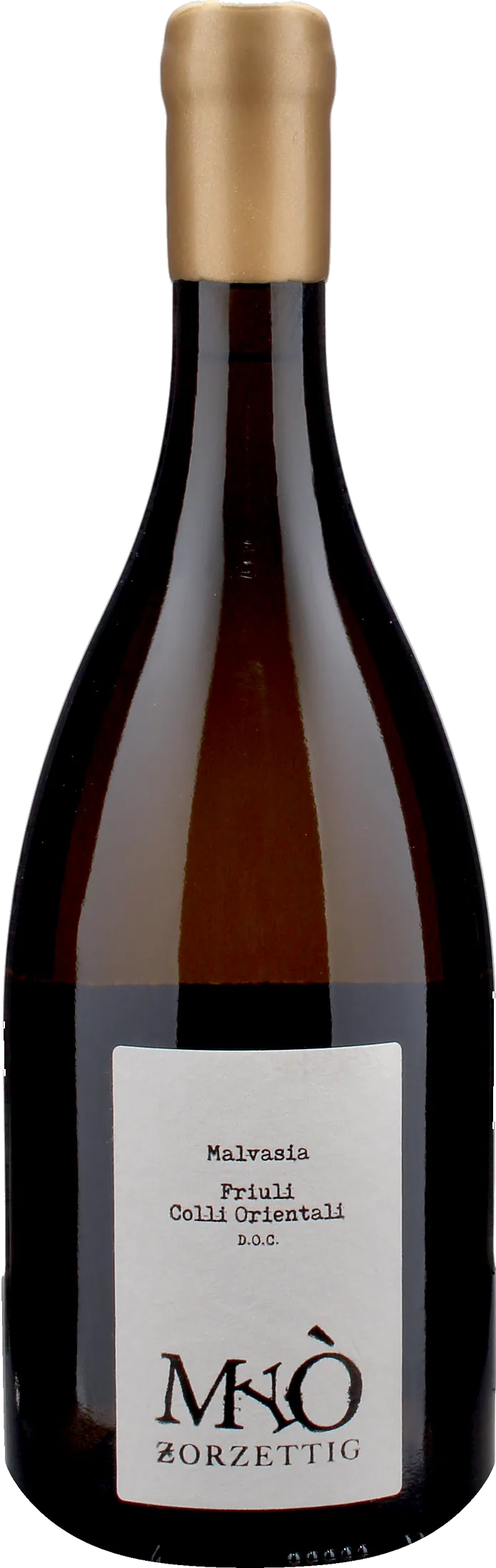
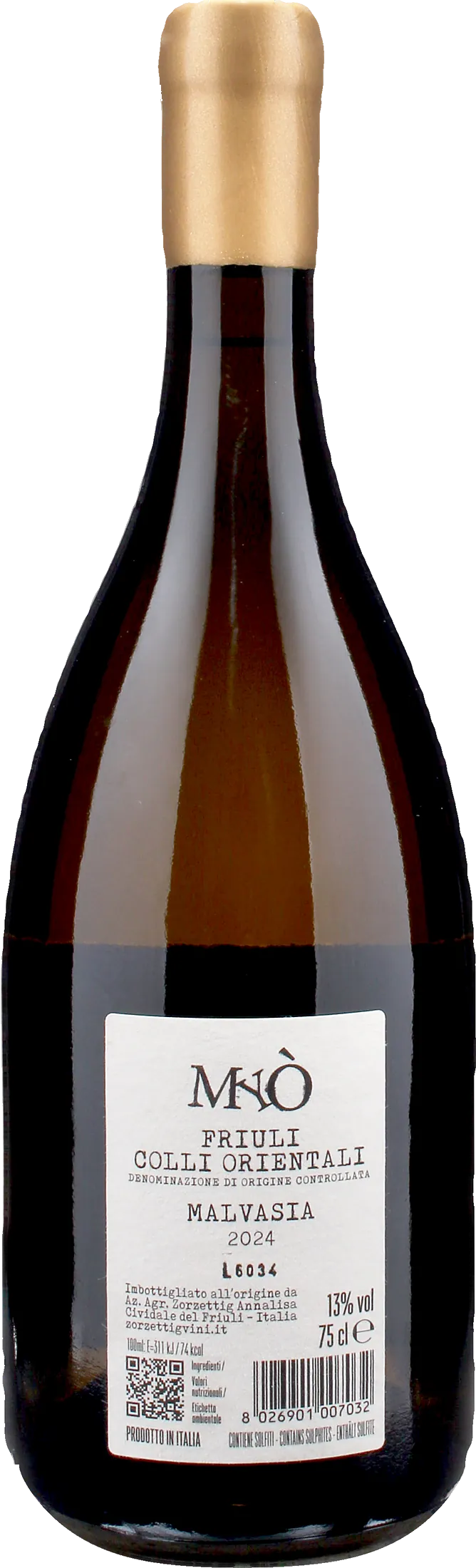
Friuli Colli Orientali Malvasia 2024
| Denomination | DOC Colli Orientali del Friuli Malvasia |
|---|---|
| Size | 0,75 l |
| Alcohol content | 13.0% by volume |
| Area | Friuli-Venezia Giulia (Italy) |
| Grape varieties | 100% Malvasia bianca |
| Aging | Ageing on the lees for 6 months with weekly bâtonnage (90% in stainless steel and up to 10% in barriques, with a selection of historical vintages); bottling and ageing in the bottle for 6 months. |
- Type and variety: Aromatic white wine from Malvasia Bianca grapes, harvested in 2024
- Olfactory characteristics: Notes of apricot, thyme, sea flowers and aromatic herbs
- Flavour and body: On the palate mineral, savoury, enveloping and with a long finish
- Origin and soil: From Ipplis di Premariacco (Udine), on marl soils at 210 metres
- Vinification and maturation: 12 hours of cold maceration; 6 months on the lees and 6 months in the bottle
Description
What type of wine it is
Friuli Colli Orientali Malvasia by Myo is an aromatic white wine made from Malvasia Bianca grapes in the Colli Orientali del Friuli, characterised by fermentation in steel and partial ageing in barrels. It appears straw-yellow in colour, anticipating a mineral and floral olfactory profile. Clear notes of apricot, thyme, salt flowers, and medicinal herbs emerge on the nose. On the palate, it expresses great elegance through a savoury and enveloping sip, supported by a strong mineral imprint and a prolonged finish, which perfectly reflects the freshness of the territory.
Where it comes from
The vineyards are located in Ipplis di Premariacco, in the province of Udine, at an altitude of approximately two hundred and ten metres. The wine's distinctive character stems from the ponca soils, the typical stratification of marls and sandstones of Eocene origin with a clay profile, capable of bestowing a marked minerality. The vines, trained using the double arched cane system, enjoy an optimal exposure for the aromatic ripening of the bunches. The agronomic management follows sustainable practices, making the rows an ideal ecosystem for the protection of biodiversity.
How it is produced
Production begins in late September with a rigorous manual harvest, followed by cold maceration for twelve hours. Fermentation takes place in stainless steel to preserve the varietal fragrance. Ageing continues on the lees for six months with weekly bâtonnage, taking place mainly in steel. A small part, however, matures in barrels, using a selection of vintages to enrich the blend and give it greater depth. The process concludes with six months of resting in the bottle, which consolidates its structure.
History and interesting facts
Born as part of the Myo di Zorzettig project, Malvasia comes to life in Ipplis on ponca soils with Eocene stratifications. The vineyards, situated at an altitude of 210 metres, are biodiversity reserves cultivated using sustainable practices. The six-month ageing on the lees is enriched by time spent in barriques from historic vintages. Awarded 92 points by James Suckling, the 2024 vintage confirms the excellence of the Colli Orientali.
Awards
-
2024
 92
92/100
James Suckling is an influential American wine critic and journalist who worked at Wine Spectator for 30 years. He left the magazine in 2010 to start his own website and guidebook (JamesSuckling.com). He specialises in Italian and Bordeaux wines.
Tasting notes

Perfume

Color

Taste
Serve at:
12 - 14 °C
Longevity:
03 - 05 years
- Oenologist: Saverio Di Giacomo
This represents a new approach to viticulture, yielding wines that look to a sustainable future. From the great whites to the traditional Friulian reds, each wine embodies quality, selection, loving care and commitment. Commitment to a winegrowing area and its People. Our People. Read more


| Name | Zorzettig Myo Friuli Colli Orientali Malvasia 2024 |
|---|---|
| Type | White still aromatic |
| Denomination | Colli Orientali del Friuli DOC |
| Vintage | 2024 |
| Size | 0,75 l |
| Alcohol content | 13.0% by volume |
| Grape varieties | 100% Malvasia bianca |
| Country | Italy |
| Region | Friuli-Venezia Giulia |
| Vendor | Myo (Zorzettig) |
| Story | History and interesting facts Born as part of the Myo di Zorzettig project, Malvasia comes to life in Ipplis on ponca soils with Eocene stratifications. The vineyards, situated at an altitude of 210 metres, are biodiversity reserves cultivated using sustainable practices. The six-month ageing on the lees is enriched by time spent in barriques from historic vintages. Awarded 92 points by James Suckling, the 2024 vintage confirms the excellence of the Colli Orientali. |
| Origin | Ipplis, Premariacco (Udine) |
| Soil composition | Clayey; ponca, stratification of marls and sandstones of Eocene origin |
| Cultivation system | Double upside-down |
| Plants per hectare | 4,500 |
| Yield per hectare | 50 quintals per hectare |
| Harvest | Late September |
| Production technique | Manual harvesting; cold maceration for 12 hours; fermentation in stainless steel tanks; ageing on the lees for 6 months with weekly bâtonnage (90% in steel and up to 10% in barriques, with a selection of historic vintages); bottle ageing for 6 months |
| Wine making | After manual harvesting, cold maceration for 12 hours; fermentation in stainless steel tanks; ageing on the lees for 6 months with weekly bâtonnage (90% in stainless steel and up to 10% in barriques, with a selection of historical vintages); bottling and bottle ageing for 6 months. |
| Aging | Ageing on the lees for 6 months with weekly bâtonnage (90% in stainless steel and up to 10% in barriques, with a selection of historical vintages); bottling and ageing in the bottle for 6 months. |
| Total acidity | 5.65 gr/L |
| Residual sugar | 1.45 gr/L |
| Dry extract | 20.5 gr/L |
| Allergens | Contains sulphites |