


Zenato
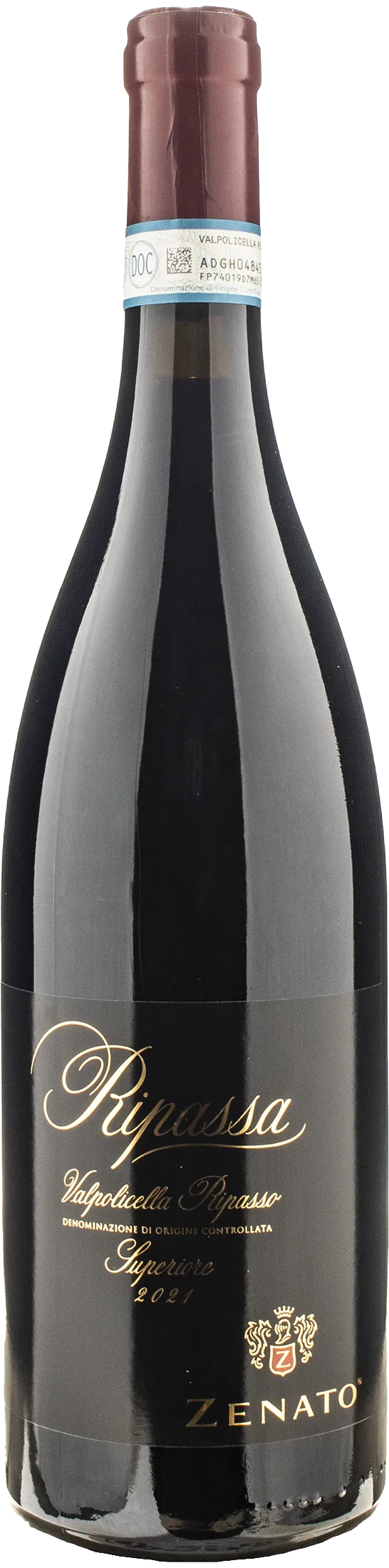
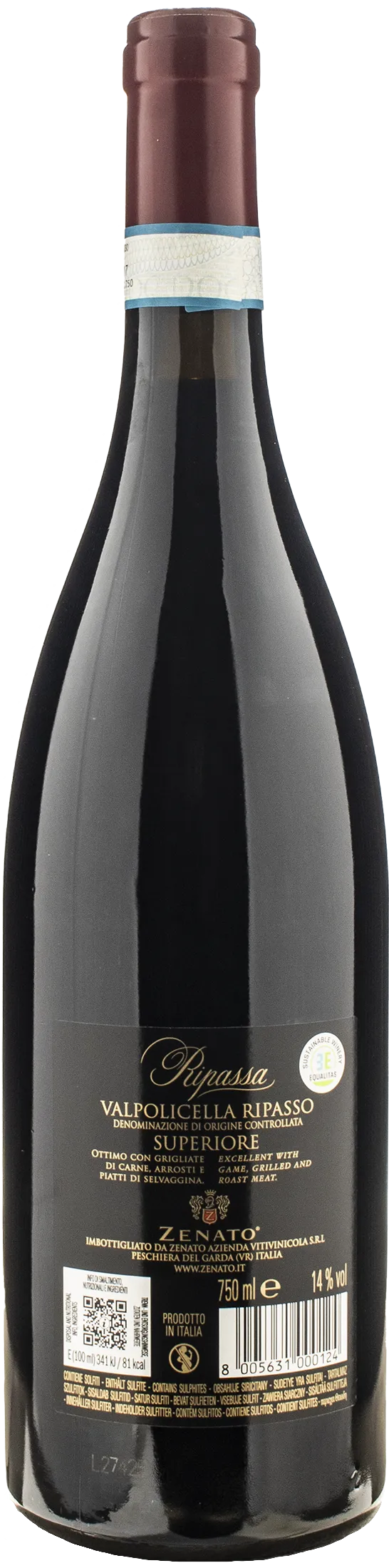
Valpolicella Ripasso Superiore Ripassa 2021
| Denomination | DOC Valpolicella Ripasso Superiore |
|---|---|
| Size | 0,75 l |
| Alcohol content | 14.0% by volume |
| Area | Veneto (Italy) |
| Grape varieties | 85% Corvina, 10% Rondinella, 5% Oseleta |
| Aging | Aged for 18 months in tonneaux, followed by 6 months of bottle ageing. |
- Ripasso Method: 7–8 days on Amarone pomace at 25–28 °C
- Blend and region: Corvina 85%, Rondinella 10%, Oseleta 5%; Valpolicella DOC
- Aromatic profile: ripe plum, cocoa, spices, balsamic notes; intense ruby colour
- Ageing and serving: 18 months in tonneaux and 6 in bottle; decant for 1 hour, serve at 16–18 °C
- Awards and alcohol content: 14% vol; 94/100 James Suckling, 93/100 Vinous (2021)
Description
What kind of wine it is
Zenato Valpolicella Ripasso Superiore Ripassa is a red wine with an enveloping character, created from a blend of Corvina Veronese, Rondinella and Oseleta grapes. In the glass, it reveals a deep ruby hue with violet reflections, opening up to a rich bouquet of ripe plum, cocoa and complex balsamic and spicy nuances. On the palate, it offers a velvety texture, supported by ultra-fine tannins and a pleasant savouriness that perfectly balances the richness of the sip.
Where it comes from
This red originates in the heart of Valpolicella. The Zenato winery tends its organically managed vineyards between the Costalunga Estate and the nearby shores of Lake Garda. Under the guidance of the Zenato family, sustainable practices encourage the ideal ripening of native varieties. The unique local microclimate imparts the wine with integrated freshness and excellent balanced savouriness.
How it is produced
The hand-picked grapes are initially macerated in steel fermenters. After a period of rest, production follows the traditional Ripasso technique, in which the wine undergoes a second fermentation in contact with the Amarone grape skins, thus acquiring greater structure and aromatic extracts. Ageing then continues for eighteen months in oak barrels, finishing with a period of rest in the bottle. To fully enhance the intensity of the bouquet, it is recommended to decant the wine for an hour before serving.
History and Curiosities
A cornerstone of the winery since 1960, this outstanding red wine is born in Valpolicella under the guidance of Alberto Zenato. Its refined character comes to life thanks to the traditional Ripasso method: refermentation on the prized Amarone grape skins enhances its colour and deep aromatic complexity. The result is a wine with a harmonious and velvety sip, awarded 94 points by James Suckling for the 2021 vintage.
Awards
-
2021
 94
94/100
James Suckling is an influential American wine critic and journalist who worked at Wine Spectator for 30 years. He left the magazine in 2010 to start his own website and guidebook (JamesSuckling.com). He specialises in Italian and Bordeaux wines.
-
2021
 93
93/100
Vinous is the online guide from Antonio Galloni, one of the world's leading wine connoisseurs.
Tasting notes

Perfume

Color

Taste
Serve at:
16 - 18 °C
Longevity:
05 - 10 years
Decanting time:
1 hour

- Start up year: 1960
- Oenologist: Alberto Zenato
- Bottles produced: 2.000.000
- Hectares: 95
1960 – San Benedetto di Lugana. It’s here that the heart of Sergio Zenato started to beat. His story is made of passion and hard work; a deep connection to his land and his people; entrepreneurial ability and openness to innovation and new vinification techniques and investment in native grape varieties.
A story that stretches from the banks of Lake Garda to the hills of nearby Valpolicella where the estate’s reds are born from sunny vineyards of Corvina and Rondinella in Costalunga in Sant’Ambrogio commune. Read more


| Name | Zenato Valpolicella Ripasso Superiore Ripassa 2021 |
|---|---|
| Type | Red green still |
| Denomination | Valpolicella Ripasso DOC |
| Vintage | 2021 |
| Size | 0,75 l |
| Alcohol content | 14.0% by volume |
| Grape varieties | 85% Corvina, 10% Rondinella, 5% Oseleta |
| Country | Italy |
| Region | Veneto |
| Vendor | Zenato |
| Story | History and Curiosities A cornerstone of the winery since 1960, this outstanding red wine is born in Valpolicella under the guidance of Alberto Zenato. Its refined character comes to life thanks to the traditional Ripasso method: refermentation on the prized Amarone grape skins enhances its colour and deep aromatic complexity. The result is a wine with a harmonious and velvety sip, awarded 94 points by James Suckling for the 2021 vintage. |
| Origin | Valpolicella (Verona), Veneto, Italia |
| Fermentation temperature | 25–28 °C |
| Fermentation | 10–12 days, plus 7–8 days of refermentation (Ripasso) |
| Production technique | Metodo Ripasso |
| Wine making | The grapes, harvested by hand, are crushed and destemmed, then macerated in stainless steel fermenters for 10–12 days. Once alcoholic fermentation is complete, the wine is separated from the skins using a gentle press and stored in steel tanks until January; it is then refermented on the Amarone pomace for 7–8 days at 25–28 °C according to the Ripasso method. |
| Aging | Aged for 18 months in tonneaux, followed by 6 months of bottle ageing. |
| Allergens | Contains sulphites |