


Vinosia
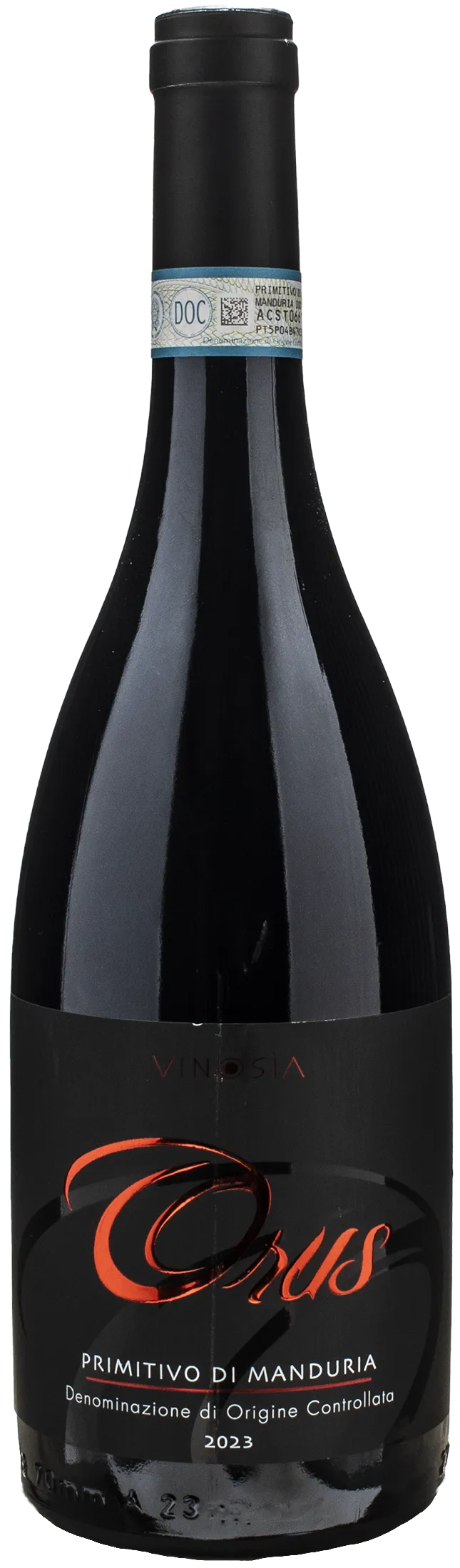
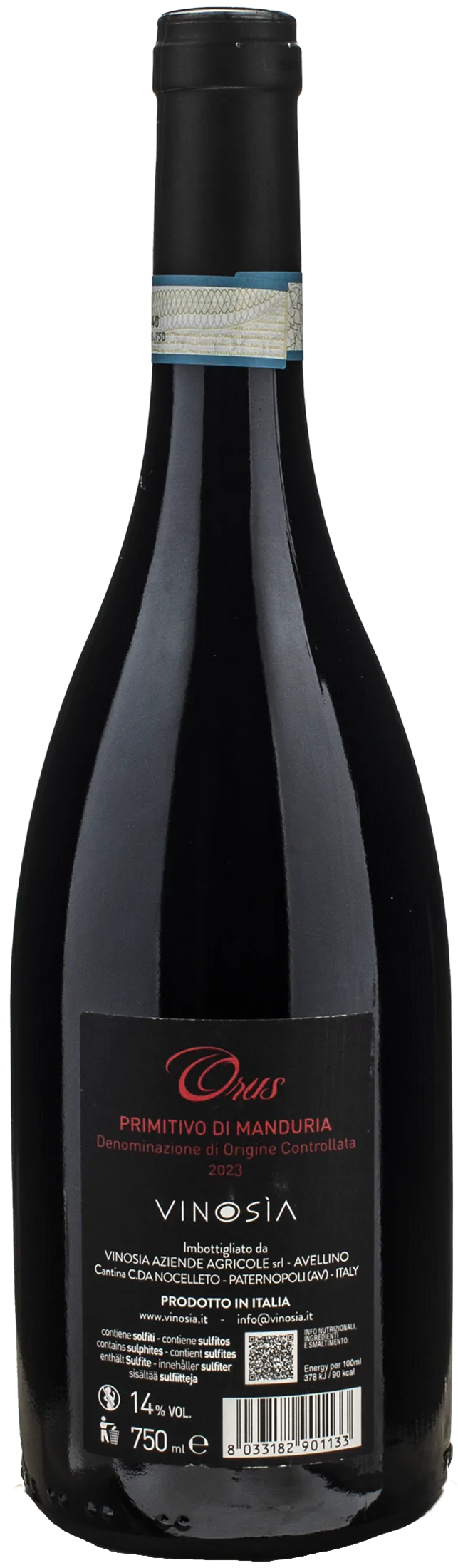
Primitivo di Manduria Orus 2023
| Denomination | DOC Primitivo di Manduria |
|---|---|
| Size | 0,75 l |
| Alcohol content | 14.0% by volume |
| Area | Apulia (Italy) |
| Grape varieties | 100% Primitivo |
| Aging | 14 months in French oak barriques |
- Vintage: DOC 2023, still red wine 14% vol in 750 ml bottle
- Grape variety: Primitivo from bush-trained vines on clay-limestone soils of Manduria
- Ageing: 7 days maceration with indigenous yeasts; 14 months in French oak barriques
- Aromatic profile: hints of blackberry and dark fruits, spicy notes; full, velvety and harmonious taste
- Serving: serve at 16-18°C, decant for 1 hour; ideal with red meats, game and cheeses
Description
What kind of wine it is
The Orus Primitivo di Manduria from Vinosia is a red wine from Apulia that embodies the authentic character of the Primitivo grape variety. On the nose, it reveals a powerful aroma of blackberry and small black fruits, enhanced by a pronounced spiciness. On the palate, it displays a medium-full body and high concentration, offering a pleasant velvety texture. The sip is harmonious, supported by balanced acidity and soft tannins, making it perfect to accompany red meats, game and blue cheeses.
Where it comes from
This red originates from the renowned area of Manduria, an excellent region for cultivating Primitivo, a variety named for its early ripening grapes. The vines are trained using the traditional bush vine system on medium-textured clay-limestone soils. The balance between the plant and the terroir, together with low yields, gives the wine a robust structure, a compact texture and an intense fruity profile, reflecting the warmth and vocation of Apulia.
How it is produced
The harvest is carried out by hand towards the end of September, with careful selection of the bunches in the vineyard. The vinification process includes a seven-day maceration to optimise extraction, followed by fermentation partly with indigenous yeasts. After malolactic fermentation, which helps to smooth the wine's rough edges, the wine is aged for fourteen months in French oak barrels. This stage allows the development of an elegant aromatic complexity before bottling.
History and Curiosities
The name Primitivo refers to the early ripening of these grapes, which arrived in Apulia from Dalmatia thousands of years ago and whose genetic link with Plavac Mali and Zinfandel has now been established. The winery Vinosia, founded in Irpinia in 2004 by Luciano Ercolino to continue the family tradition, combines ancient wisdom with modern techniques. The project enhances the region's grape varieties to offer a captivating regional expression, capable of releasing all the warmth of Apulia and intense black berry aromas in the glass.
Tasting notes

Perfume

Color

Taste
Serve at:
14 -16 °C
Longevity:
05 - 10 years
Decanting time:
1 hour

- Start up year: 2004
- Oenologist: Maio Ercolino, Nicola Tucci
- Bottles produced: 800.000
- Hectares: 50
We are in one of the most vocated and historical areas of Irpinia, where the 50 hectares cultivated with the native varieties, Fiano, Greco and Aglianico, insist. These serve as a solid basis for a project that aims to enhance the Irpinian wine tradition through a contemporary technical interpretation. Read more


| Name | Vinosia Primitivo di Manduria Orus 2023 |
|---|---|
| Type | Red still |
| Denomination | Primitivo di Manduria DOC |
| Vintage | 2023 |
| Size | 0,75 l |
| Alcohol content | 14.0% by volume |
| Grape varieties | 100% Primitivo |
| Country | Italy |
| Region | Apulia |
| Vendor | Vinosia |
| Story | History and Curiosities The name Primitivo refers to the early ripening of these grapes, which arrived in Apulia from Dalmatia thousands of years ago and whose genetic link with Plavac Mali and Zinfandel has now been established. The winery Vinosia, founded in Irpinia in 2004 by Luciano Ercolino to continue the family tradition, combines ancient wisdom with modern techniques. The project enhances the region's grape varieties to offer a captivating regional expression, capable of releasing all the warmth of Apulia and intense black berry aromas in the glass. |
| Origin | San Potito Ultra (AV) |
| Soil composition | Medium-textured and clay-calcareous |
| Cultivation system | Alberello |
| Yield per hectare | 50 q.li/ha |
| Harvest | Last ten days of September |
| Production technique | Maceration for about 7 days; fermentation partially carried out with indigenous yeast starters; malolactic fermentation fully completed; ageing for 14 months in French oak barriques |
| Wine making | Maceration for about 7 days; fermentation partially conducted also with indigenous yeast starters; malolactic fermentation fully completed. |
| Aging | 14 months in French oak barriques |
| Allergens | Contains sulphites |