


Villiera Wine (Stellenbosch)
Chenin Blanc 2024
| Denomination | N/A |
|---|---|
| Size | 0,75 l |
| Alcohol content | 13.0% by volume |
| Area | South Africa (South Africa) |
| Grape varieties | 100% Chenin Blanc |
| Aging | Ageing on the lees for 2 months before stabilisation and bottling; part of the wine ferments in oak and is removed immediately after fermentation. |
- Origin and grape: Still white from Stellenbosch, South Africa, 100% Chenin Blanc, 13% vol
- Tropical aromas: Pineapple, guava and citrus, with delicate spice from barrel fermentation
- Vinification: 4 hours maceration on the skins, gentle pressing and overnight settling
- Fermentation: Spontaneous at low temperature with indigenous yeasts, 2 months on fine lees
- Taste and pairings: Rich and fresh, mineral finish, ideal with oysters and shellfish
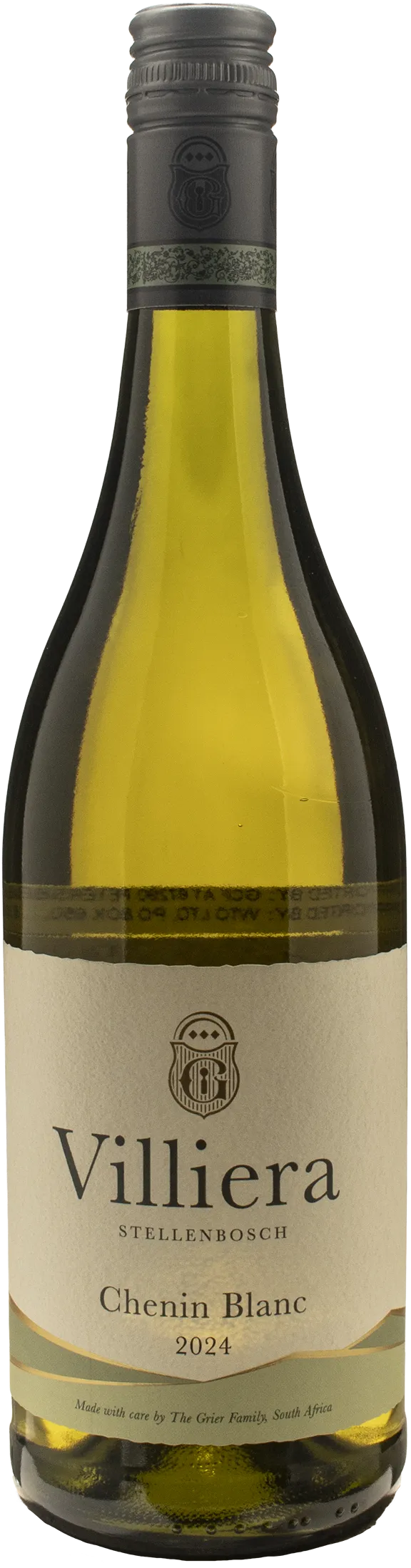
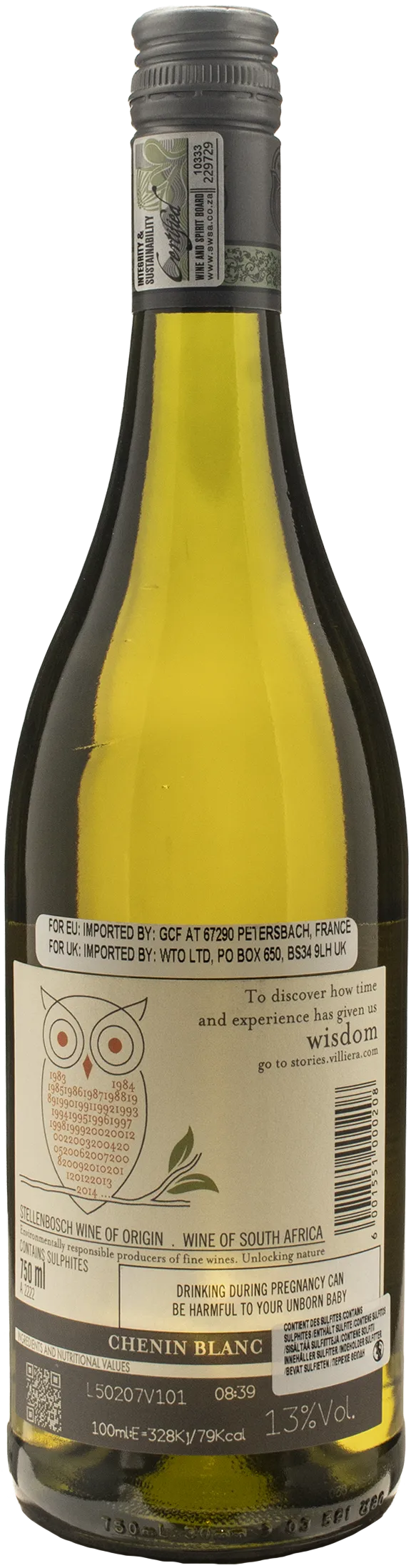
Description
What kind of wine it is
Villiera Chenin Blanc from Villiera is a South African white wine from Stellenbosch with a crisp aromatic profile, characterised by notes of pineapple, guava and citrus, enhanced by a subtle spicy hint from partial fermentation in oak. On the palate, Chenin Blanc reveals a soft entry and a pronounced concentration of fruit, supported by vibrant flavour tension. The sip finishes with a persistent mineral finish, offering an ideal balance for pairing with shellfish, oysters and sweet and sour Asian dishes. This off-dry style precisely highlights the versatility of the grape variety.
Where it comes from
This wine originates from Stellenbosch, in South Africa's Coastal Region. The grapes are selected from various plots, including old bush vines that provide intensity and density. The hand harvest takes place in several stages of ripeness to preserve a lively acidic backbone. The influence of the coastal climate ensures even ripening, resulting in a fresh and bright profile. Villiera captures the essence of this area, creating a wine with balanced structure, enjoyable to drink immediately but with good ageing potential.
How it is produced
Vinification begins with crushing and destemming, followed by a four-hour skin maceration. Gentle pressing is partly carried out with whole bunches. After overnight settling, spontaneous fermentation at low temperature is initiated by indigenous yeasts. A portion of the must ferments in oak barrels, from which it is promptly separated to moderate the wood's influence. The final blend completes its journey with two months' ageing on fine lees, a process that imparts roundness and depth to the palate before bottling.
History and Curiosities
Chenin Blanc represents the heart of South African viticulture, and the Grier family of the Villiera winery in Stellenbosch captures its most authentic essence. Awarded the prestigious Grand Gold medal at the South African Wine Index, this wine is made from hand-picked grapes, some of which come from ancient bush vines. Its vibrant character is expressed through spontaneous fermentation with indigenous yeasts and two months of ageing on fine lees, which impart impeccable balance and a lingering tropical freshness.
Tasting notes
Perfume
Color
Taste
Serve at:
10 - 12 °C
Longevity:
03 - 05 years
Cathy Brewer (née Grier) later joined the family team to head up the sales, marketing and export divisions. The introduction of hi-tech cellar facilities for the production of still wines as well as Cap Classique combined with a unique wine business philosophy has seen Villiera developing into one of the largest private wineries in the country. Read more


| Name | Villiera Chenin Blanc 2024 |
|---|---|
| Type | White still |
| Denomination | N/A |
| Vintage | 2024 |
| Size | 0,75 l |
| Alcohol content | 13.0% by volume |
| Grape varieties | 100% Chenin Blanc |
| Country | South Africa |
| Region | South Africa |
| Vendor | Villiera Wine (Stellenbosch) |
| Story | History and Curiosities Chenin Blanc represents the heart of South African viticulture, and the Grier family of the Villiera winery in Stellenbosch captures its most authentic essence. Awarded the prestigious Grand Gold medal at the South African Wine Index, this wine is made from hand-picked grapes, some of which come from ancient bush vines. Its vibrant character is expressed through spontaneous fermentation with indigenous yeasts and two months of ageing on fine lees, which impart impeccable balance and a lingering tropical freshness. |
| Origin | Stellenbosch, Coastal Region, South Africa |
| Climate | Coastal climate |
| Harvest | Mid-season |
| Fermentation temperature | At low temperature |
| Production technique | Crushing and destemming; contact with the skins for about 4 hours; gentle pressing (partly with whole bunches); overnight settling; spontaneous cold fermentation with indigenous yeasts; part of the wine fermented in oak barrels and removed immediately after fermentation; ageing on fine lees (sur lie) for 2 months |
| Wine making | After crushing and destemming, the grapes remain in contact with the skins for about 4 hours before gentle pressing (partly as whole bunches); the must settles overnight and ferments spontaneously at a low temperature with indigenous yeasts. Around 50% ferments in oak and is removed immediately after fermentation; this is followed by ageing on fine lees (sur lie) for 2 months before stabilisation and bottling. |
| Aging | Ageing on the lees for 2 months before stabilisation and bottling; part of the wine ferments in oak and is removed immediately after fermentation. |
| Total acidity | 6.1 gr/L |
| PH | 3.38 |
| Residual sugar | 3.0 gr/L |
| Allergens | Contains sulphites |