


Vajra
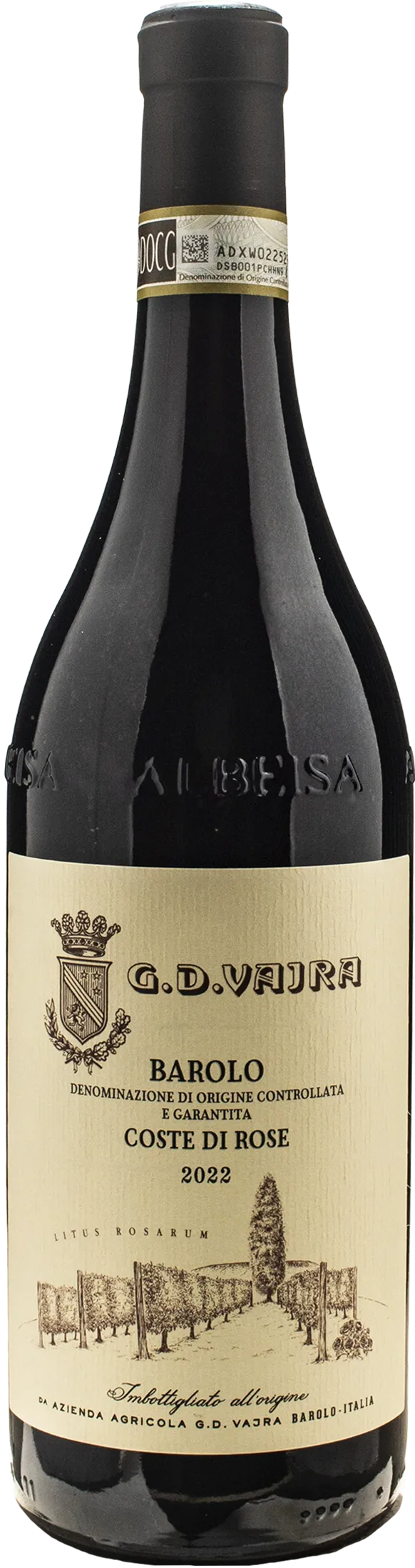
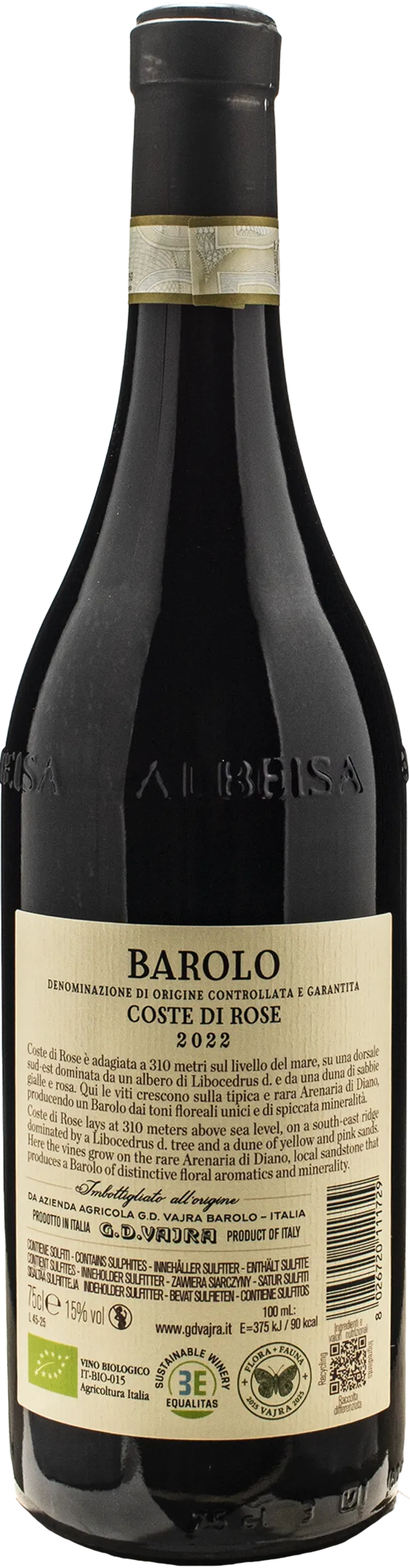
Barolo Coste di Rose 2022
| Denomination | DOCG Barolo |
|---|---|
| Size | 0,75 l |
| Alcohol content | 15.0% by volume |
| Area | Piedmont (Italy) |
| Grape varieties | 100% Nebbiolo |
| Aging | Aged for 26 months in large Slavonian oak barrels (25 and 40 hl) until bottling. |
- Name and details: Organic Barolo DOCG 2022, 100% Nebbiolo, 0.75 L, 15% vol
- Aromatic profile: rose, morello cherry, cherry, liquorice, mint and sweet spices
- Taste and finish: juicy and fresh, silky tannins, long, savoury and mineral finish
- Ageing: 26 months in large Slavonian oak barrels for elegance and structure
- Awards: 96 James Suckling, 96 Parker, 92 Decanter, 90 Vinous
Description
What kind of wine it is
Barolo Coste di Rose by G.D. Vajra is an organic red wine from Piedmont with Denomination of Controlled and Guaranteed Origin, expressing the authenticity of the Nebbiolo grape. Its sensory profile opens with nuances of rose petals, cherry and morello cherry, enriched by fresh hints of mint, liquorice and sweet spices. On the palate, it reveals a fine and silky tannic texture, supporting a persistent sip with a distinctly mineral and savoury finish, also thanks to ageing in oak barrels. This elegant structure makes the wine ideal for enhancing red meats, game and mature cheeses, ensuring a rewarding and complex tasting experience.
Where it comes from
This wine originates from the Coste di Rose geographical mention, within Barolo at 310 metres above sea level, on steep slopes descending towards Monforte d’Alba. The Nebbiolo vines sink their roots into sandy soils dominated by the imposing Diano Sandstone, a geological formation that imparts an unmistakable minerality to the sip. The agronomic management follows the strict principles of organic and sustainable agriculture, favouring careful manual work attentive to the ecosystem. The spontaneous grassing protects the vineyard’s biodiversity and prevents soil erosion, ensuring fruit of absolute excellence.
How it is produced
The production process begins with a rigorous manual selection of the grapes in several stages, both in the vineyard and on sorting tables. Alcoholic fermentation takes place in truncated conical vats with gentle punch-downs, followed by a prolonged maceration with a partially submerged cap to define the depth of flavour. After the spontaneous completion of malolactic fermentation in steel, slow maturation continues inside large Slavonian oak barrels. This patient ageing sculpts the tannins and enriches the aromatic profile, preserving the original elegance intact.
History and Curiosities
The Barolo Coste di Rose 2022 by G.D. Vajra originates from the steep sandy slopes characterised by the ancient Diano Sandstone dune. This exceptionally pure dune, formed during the Tortonian period and standing about five metres high, enriches the vineyard with its ancient sands, representing a fascinating geological peculiarity.
Awards
-
2022
 96
96/100
James Suckling is an influential American wine critic and journalist who worked at Wine Spectator for 30 years. He left the magazine in 2010 to start his own website and guidebook (JamesSuckling.com). He specialises in Italian and Bordeaux wines.
-
2022
 90
90/100
Vinous is the online guide from Antonio Galloni, one of the world's leading wine connoisseurs.
Tasting notes

Perfume

Color

Taste
Serve at:
18 - 20 °C
Longevity:
10 - 15 years
Decanting time:
1 hour
- Start up year: 1972
- Oenologist: Aldo e Giuseppe Vaira
- Bottles produced: 500.000
- Hectares: 80
A true family estate, G.D. Vajra blends tradition and innovation with heartfelt authenticity. Today, alongside founders Aldo and Milena Vaira, the new generation — Giovanni, Francesca, and Isidoro — carries the vision forward, also overseeing the historic Luigi Baudana estate in Serralunga d’Alba since 2009.
Every bottle reflects the family’s artisanal spirit and deep-rooted connection to the land, offering wines with soul, identity, and a timeless elegance. Read more


| Name | Vajra G.D. Barolo Coste di Rose 2022 |
|---|---|
| Type | Red organic still |
| Denomination | Barolo DOCG |
| Vintage | 2022 |
| Size | 0,75 l |
| Alcohol content | 15.0% by volume |
| Grape varieties | 100% Nebbiolo |
| Country | Italy |
| Region | Piedmont |
| Vendor | Vajra |
| Story | History and Curiosities The Barolo Coste di Rose 2022 by G.D. Vajra originates from the steep sandy slopes characterised by the ancient Diano Sandstone dune. This exceptionally pure dune, formed during the Tortonian period and standing about five metres high, enriches the vineyard with its ancient sands, representing a fascinating geological peculiarity. |
| Origin | Municipality of Barolo (CN) |
| Soil composition | Sandy slopes with sandstone dune (Diano Sandstone) |
| Harvest | October (12–18 October) |
| Fermentation | 54–55 days |
| Production technique | Fermentation in truncated conical vats with gentle punching down and pumping over; prolonged maceration with a partially submerged cap; spontaneous malolactic fermentation in stainless steel; ageing for 26 months in large Slavonian oak casks. |
| Wine making | Manual selection of the grapes in several stages; destemming; fermentation in truncated conical vats with gentle punching down and pumping over; prolonged maceration with the cap partially submerged (vinification lasts about 54–55 days, of which around 20 are with the cap submerged); spontaneous malolactic fermentation in stainless steel in the following spring; ageing for 26 months in large Slavonian oak casks (25 and 40 hl) until bottling. |
| Aging | Aged for 26 months in large Slavonian oak barrels (25 and 40 hl) until bottling. |
| Allergens | Contains sulphites |