


Vajra
G.D. Barolo Bricco delle Viole 2022
| Denomination | DOCG Barolo |
|---|---|
| Size | 0,75 l |
| Alcohol content | 15.0% by volume |
| Area | Piedmont (Italy) |
| Grape varieties | 100% Nebbiolo |
| Aging | Between 30 and 42 months in large Slavonian oak barrels (25–50 hectolitres), with two rackings usually in the first and second summer of ageing; bottled after maturation. |
- Name and grape: Organic Barolo DOCG, 100% Nebbiolo, 2022 harvest
- Ageing: matured for 24–42 months in large Slavonian oak barrels
- Aroma: hints of violet, black cherry, wild red berries, incense and pine notes
- Flavour and structure: deep and vibrant taste, silky tannins, persistent mineral finish
- Ratings and serving: 97 points Suckling/Parker, 95 Decanter; decant for 1 hour, serve at 18–20 °C
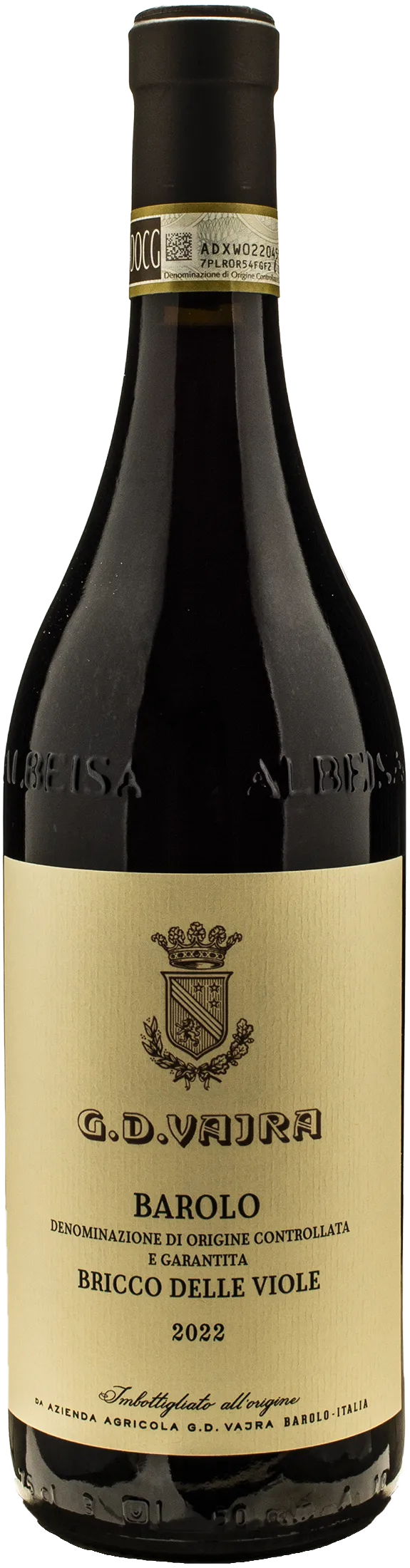
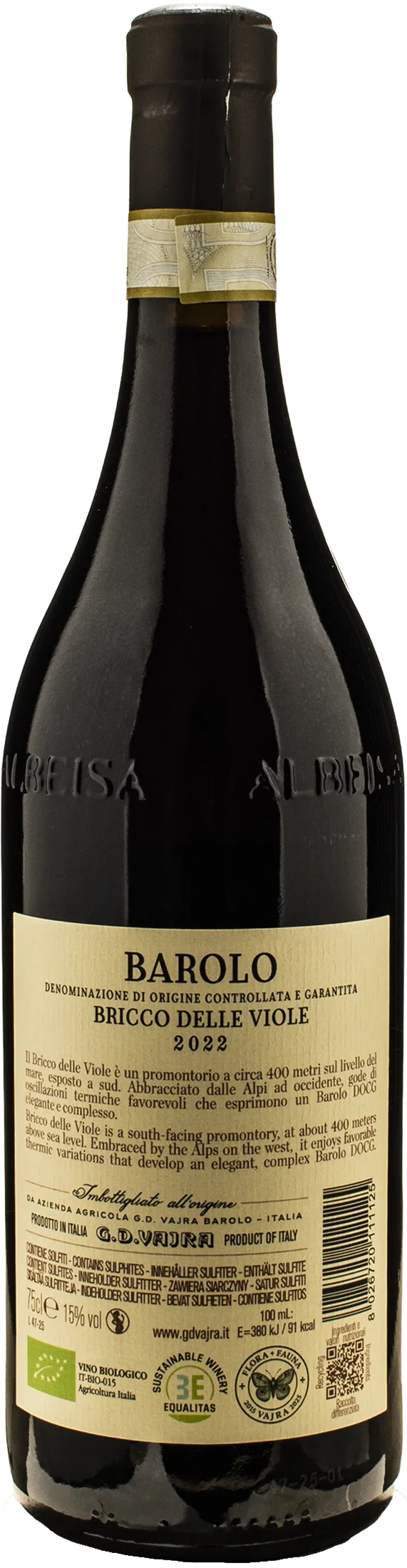
Description
What kind of wine it is
Bricco delle Viole by Vajra is an organic Barolo made from Nebbiolo grapes, a true expression of the Piedmont region. On the palate, it is deep and vibrant, characterised by very refined tannins and a silky texture. The bouquet offers floral aromas, black cherry and wild red berries, enriched by balsamic notes, incense and violet petals. The sip finishes with a long mineral persistence, making this wine perfect to pair with roasts or mature cheeses.
Where it comes from
The grapes come from the Bricco delle Viole hill, located in the municipality of Barolo. The vineyards stretch across west-facing slopes, immersed in a bright and breezy microclimate influenced by the proximity of the Alps. The high altitude gives the wine marked finesse and a distinct territorial character. Vajra employs strict organic practices in caring for these historic vines, preserving ancient stocks that embody the deepest identity of the area.
How it is produced
The creation of the wine begins with a careful manual harvest, followed by a triple selection of the bunches. Vinification takes place in vertical vats with gentle punch-downs, followed by a long and patient submerged cap maceration for gradual aromatic extraction. Maturation continues in large Slavonian oak casks for a period ranging from twenty-four to forty-two months, ensuring slow development and perfect balance before bottling.
History and Curiosities
Bricco delle Viole has taught the Vajra family patience, shaping their style since 1972. This estate combines artisanal expertise and innovation, cultivating organic vineyards for nearly half a century. Situated on the western heights, it represents the highest cru of the denomination, a proud guardian of vines planted in 1931, 1949, and 1968. A meticulous manual harvest with triple selection and ageing between 30 and 42 months in Slavonian oak barrels give rise to an absolute excellence, celebrated by scores of 97/100 from James Suckling and Robert Parker.
Awards
-
2022
 96
96/100
James Suckling is an influential American wine critic and journalist who worked at Wine Spectator for 30 years. He left the magazine in 2010 to start his own website and guidebook (JamesSuckling.com). He specialises in Italian and Bordeaux wines.
-
2022
 92
92/100
Vinous is the online guide from Antonio Galloni, one of the world's leading wine connoisseurs.
Tasting notes

Perfume

Color

Taste
Serve at:
18 - 20 °C
Longevity:
10 - 15 years
Decanting time:
1 hour
- Start up year: 1972
- Oenologist: Aldo e Giuseppe Vaira
- Bottles produced: 500.000
- Hectares: 80
A true family estate, G.D. Vajra blends tradition and innovation with heartfelt authenticity. Today, alongside founders Aldo and Milena Vaira, the new generation — Giovanni, Francesca, and Isidoro — carries the vision forward, also overseeing the historic Luigi Baudana estate in Serralunga d’Alba since 2009.
Every bottle reflects the family’s artisanal spirit and deep-rooted connection to the land, offering wines with soul, identity, and a timeless elegance. Read more


| Name | Vajra G.D. Barolo Bricco delle Viole 2022 |
|---|---|
| Type | Red organic still |
| Denomination | Barolo DOCG |
| Vintage | 2022 |
| Size | 0,75 l |
| Alcohol content | 15.0% by volume |
| Grape varieties | 100% Nebbiolo |
| Country | Italy |
| Region | Piedmont |
| Vendor | Vajra |
| Story | History and Curiosities Bricco delle Viole has taught the Vajra family patience, shaping their style since 1972. This estate combines artisanal expertise and innovation, cultivating organic vineyards for nearly half a century. Situated on the western heights, it represents the highest cru of the denomination, a proud guardian of vines planted in 1931, 1949, and 1968. A meticulous manual harvest with triple selection and ageing between 30 and 42 months in Slavonian oak barrels give rise to an absolute excellence, celebrated by scores of 97/100 from James Suckling and Robert Parker. |
| Origin | Bricco delle Viole, municipality of Barolo (Cuneo), Piedmont, Italy |
| Harvest | Usually around mid-October |
| Fermentation | 51 days |
| Production technique | Traditional vinification in vertical vats with delicate punching down and rinsing of the submerged cap, followed by long maceration under submerged cap (51 days) and malolactic fermentation in stainless steel |
| Wine making | Traditional vinification in vertical vats with gentle punching down and rinsing of the submerged cap, followed by a long maceration under the submerged cap (51 days); malolactic fermentation in stainless steel the following spring. |
| Aging | Between 30 and 42 months in large Slavonian oak barrels (25–50 hectolitres), with two rackings usually in the first and second summer of ageing; bottled after maturation. |
| Allergens | Contains sulphites |