


Tommaso Bussola
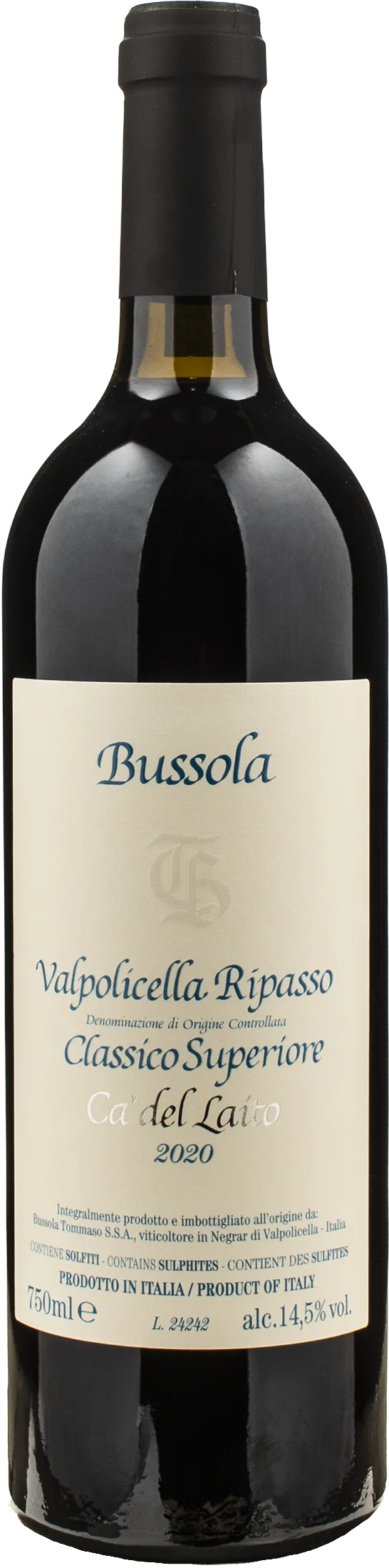
Valpolicella Ripasso Classico Superiore Ca' del Laito 2020
| Denomination | DOC Valpolicella Ripasso Classico Superiore |
|---|---|
| Size | 0,75 l |
| Alcohol content | 14.5% by volume |
| Area | Veneto (Italy) |
| Grape varieties | 45% Rondinella, Corvina, Corvinone, Molinara |
| Aging | In March, 80% of the wine undergoes a week-long refermentation on Amarone pomace; after racking, it is blended with the remaining 20% and aged in 700-litre Styria oak tonneaux. It matures for 36 months in barrel and, after bottling, a further 3 months before being released for sale. |
- Name and vintage: Valpolicella Ripasso DOC Classico Superiore, 2020 harvest
- Grape varieties and origin: Corvina, Corvinone, Rondinella, Molinara grown in Negrar and San Peretto
- Ripasso technique: one week refermentation on Amarone pomace for greater complexity
- Maturation: 36 months in 700-litre Styria oak barrels and 3 months in bottle
- Alcohol content and characteristics: 14.5% vol; intense ruby colour, notes of overripe fruit
Description
What kind of wine it is
Tommaso Bussola Valpolicella Ripasso Classico Superiore Ca’ del Laito is a red wine with a deep and intense ruby colour. This blend is created from the union of Corvina, Corvinone, Rondinella and Molinara varieties. On the nose, it offers a distinct aroma of overripe fruit, leading to an enveloping, savoury and flavoursome palate. Ideal if decanted an hour before serving, this Valpolicella Ripasso Classico Superiore pairs perfectly with red meats, pork, game and mature cheeses.
Where it comes from
The origin of this wine is in Negrar, at the heart of the Valpolicella Classica wine region, from vineyards located between Negrar and San Peretto. The hilly Veronese landscape gives the glass a concentrated and well-defined expression. The Tommaso Bussola estate, family-run since 1978, tends to every agricultural practice with dedication. Through meticulous management, the company constantly seeks elegance and balance, enhancing the extractive richness of the grapes to best express the identity of the Classico subzone.
How it is produced
After harvesting in mid-October, fermentation takes place at room temperature. The wine is racked off the coarse lees, leaving a slight residual sugar. In spring, the Ripasso Method is applied, refermenting the mass for a week on the Amarone pomace. Once blended, the wine matures for thirty-six months in Styrian oak barrels, a crucial stage in defining its structure. The process ends with a further period of rest before release.
History and Curiosities
Founded in 1978 in the heart of Valpolicella, the family-run Tommaso Bussola winery produces Ca’ del Laito 2020 using the Ripasso Method, refermenting on the prized Amarone grape skins to enrich it with intense aromas and a full-bodied structure. Its captivating complexity develops over 36 months in Styria oak tonneaux, before being perfected with careful bottle ageing. Awarded 92 points by James Suckling, this excellent Venetian red is a true artisanal masterpiece.
Awards
-
2020
 4
4Italian Sommelier Foundation (FIS) guide This has been one of the most prestigious wine guides in Italy for over 10 years.
-
2020
 92
92/100
James Suckling is an influential American wine critic and journalist who worked at Wine Spectator for 30 years. He left the magazine in 2010 to start his own website and guidebook (JamesSuckling.com). He specialises in Italian and Bordeaux wines.
-
2020
 3
3One of the most prestigious wine guides in Italy.
-
2020
 90
90/100
Vinous is the online guide from Antonio Galloni, one of the world's leading wine connoisseurs.
-
2020
 3
3Italian Sommelier Association (AIS) guide
Tasting notes

Perfume

Color

Taste
Serve at:
16 - 18 °C
Longevity:
10 - 15 years
Decanting time:
1 hour

- Start up year: 1978
- Oenologist: Paolo e Tommaso Bussola
- Bottles produced: 70.000
- Hectares: 14
From the beginning he was able to impose his will to enhance the absolute quality of the wines produced, through careful and careful practices both in the vineyard and in the cellar, so much so that he became a great interpreter, as well as a point of reference for the appellation.
With a very personal style of combining precision and elegance with the extraction richness and management of ageing woods, today, assisted by his sons Paolo and Giuseppe, he always continues to amaze, imposing himself with products of absolute and very high value. Read more


| Name | Tommaso Bussola Valpolicella Ripasso Classico Superiore Ca' del Laito 2020 |
|---|---|
| Type | Red still |
| Denomination | Valpolicella Ripasso DOC |
| Vintage | 2020 |
| Size | 0,75 l |
| Alcohol content | 14.5% by volume |
| Grape varieties | 45% Rondinella, Corvina, Corvinone, Molinara |
| Country | Italy |
| Region | Veneto |
| Vendor | Tommaso Bussola |
| Story | History and Curiosities Founded in 1978 in the heart of Valpolicella, the family-run Tommaso Bussola winery produces Ca’ del Laito 2020 using the Ripasso Method, refermenting on the prized Amarone grape skins to enrich it with intense aromas and a full-bodied structure. Its captivating complexity develops over 36 months in Styria oak tonneaux, before being perfected with careful bottle ageing. Awarded 92 points by James Suckling, this excellent Venetian red is a true artisanal masterpiece. |
| Origin | Between Negrar and San Peretto (Verona) |
| Harvest | Mid-October |
| Fermentation temperature | Room temperature |
| Fermentation | 10-day fermentation; refermentation for one week on Amarone pomace |
| Production technique | Ripasso method: refermentation for one week on Amarone pomace |
| Wine making | Fermentation at room temperature; racking after ten days with a residual sugar content of 20 g/l; transferred from the coarse lees. In March, 80% of the wine undergoes a second fermentation for one week on Amarone pomace; after racking, it is blended with the remaining 20% and placed in 700-litre Styria oak tonneaux; aged for 36 months in cask and, after bottling, a further 3 months before release. |
| Aging | In March, 80% of the wine undergoes a week-long refermentation on Amarone pomace; after racking, it is blended with the remaining 20% and aged in 700-litre Styria oak tonneaux. It matures for 36 months in barrel and, after bottling, a further 3 months before being released for sale. |
| Total acidity | 5.91 gr/L |
| Dry extract | 37.1 gr/L |
| Year production | 70000 bottles |
| Allergens | Contains sulphites |