


Orestiadi
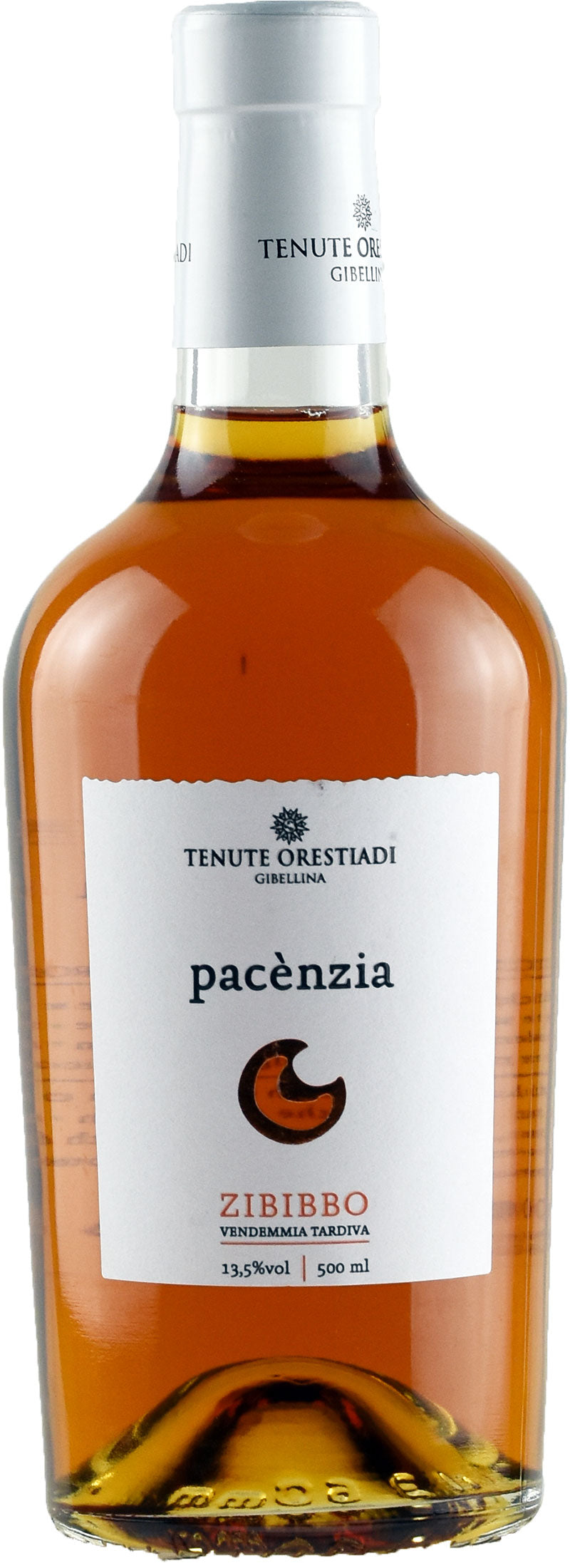
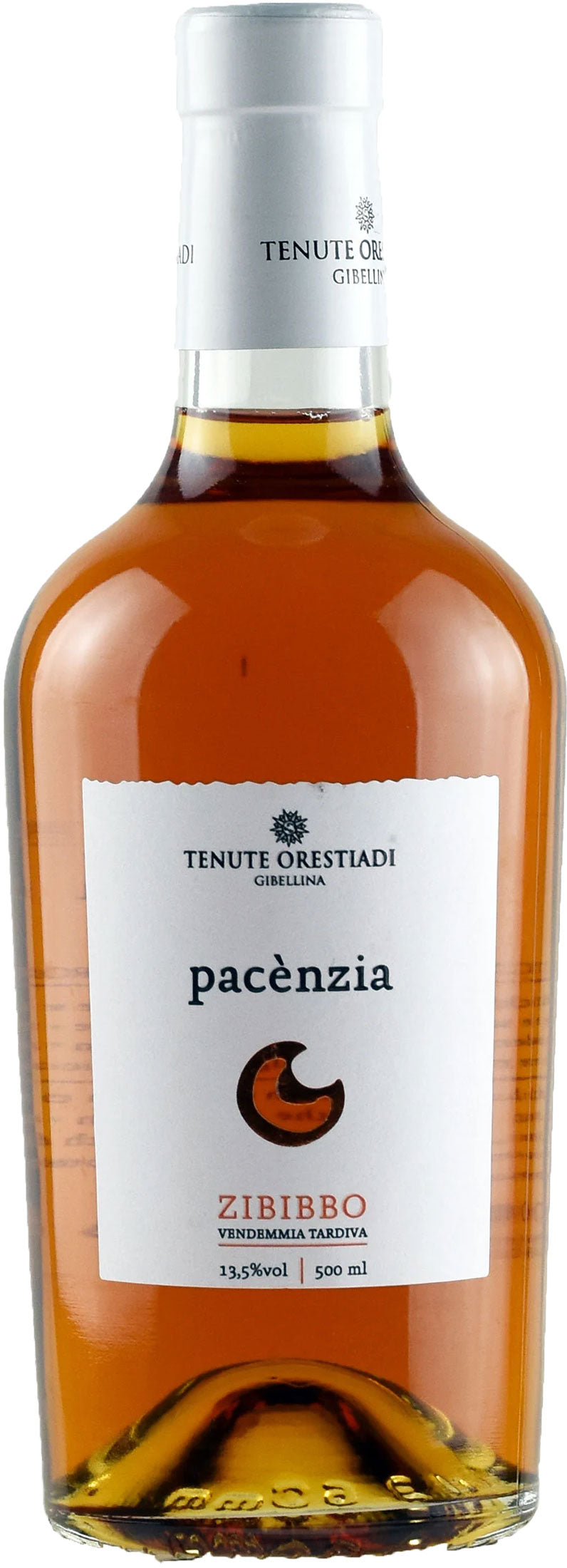
Pacenzia Zibibbo Vendemmia Tardiva 0.5L
| Denomination | IGT Terre Siciliane |
|---|---|
| Size | 0,50 l |
| Alcohol content | 13.5% by volume |
| Area | Sicily (Italy) |
| Grape varieties | 100% Zibibbo |
- Wine and grape variety: Aromatic white Passito Terre Siciliane IGT made from 100% Zibibbo grapes
- Vinification: Drying of the grapes in the vineyard, cold maceration and fermentation at controlled temperature
- Aroma and colour: Intense golden yellow colour with notes of candied citrus, honey and ripe fruit
- Taste: Moderately sweet flavour, soft, harmonious, enveloping and well balanced
- Format and notes: 0.50 l bottle, 13.5% vol; ideal with desserts and cheeses; contains sulphites
Description
What kind of wine it is
Pacenzia Zibibbo by Tenute Orestiadi is a sweet aromatic white dessert wine that fully expresses the character of the Zibibbo grape. An expression of the Sicilian Lands, it is produced through careful natural drying of the grapes in the vineyard. On the nose, it reveals clear notes of candied citrus, honey and ripe fruit, creating an inviting aromatic profile. On the palate, it is moderately sweet, enveloping and characterised by an excellent balance that makes it harmonious and pleasant. It pairs beautifully with fruit-based desserts, blue cheeses or semi-mature cheeses.
Where it comes from
This wine has its roots in Gibellina, in the heart of the Valle del Belìce, in Sicily. The vineyards are cultivated at an altitude of about seventy metres above sea level, immersed in a typical Mediterranean climate. The vines grow on distinctive black clay soil, a unique terrain that gives the grapes a pronounced aromatic personality. The interaction between the soil and climate and the territory gives the wine a bright intense golden yellow colour and a well-balanced sweetness. The Tenute Orestiadi winery works to enhance the Sicilian landscape and convey authenticity through viticulture.
How it is produced
Production begins with the gradual dehydration of the grape bunches directly on the vine, a method designed to concentrate sugars and aromatic potential. After harvesting and destemming, the must undergoes a cold maceration and begins a slow fermentation at a controlled temperature. This process is naturally halted by cold, a key technique to preserve the smoothness on the palate and the natural sweetness of the fruit. To best enhance the structure and clean profile of the wine, it is recommended to serve at a temperature of 10–12 °C.
History and Curiosities
Produced in Gibellina, in the Belìce Valley, the Pacenzia Zibibbo Late Harvest from Tenute Orestiadi combines the fragrances of the Mediterranean with the story of the region's rebirth after 1968. Its name celebrates “pacènzia”, the Sicilian virtue of knowing how to wait for the sun’s warmth to shape the grapes. Thanks to a patient natural drying process in the vineyard, the grapes concentrate elegant honeyed notes, giving rise to an aromatic dessert wine that envelops the senses and encapsulates both the artistic soul and the most authentic essence of the island.
Awards
-
 2
2This guide is highly respected and offers the most comprehensive review of Italian wines. It has a long tradition and is based on blind tastings carried out by over 100 experts.
-
 90
90/100
One of the most prestigious wine guides in Italy.
-
 2
2One of the most prestigious wine guides in Italy.
Tasting notes

Perfume

Color

Taste
Serve at:
10 - 12 °C
Longevity:
05 - 10 years

- Start up year: 2008
- Oenologist: Giuseppe Clementi
- Bottles produced: 1.000.000
- Hectares: 140


| Name | Tenute Orestiadi Pacenzia Zibibbo Vendemmia Tardiva 0.5L |
|---|---|
| Type | White dessert wine dessert wine aromatic |
| Denomination | Terre Siciliane IGT |
| Size | 0,50 l |
| Alcohol content | 13.5% by volume |
| Grape varieties | 100% Zibibbo |
| Country | Italy |
| Region | Sicily |
| Vendor | Orestiadi |
| Story | History and Curiosities Produced in Gibellina, in the Belìce Valley, the Pacenzia Zibibbo Late Harvest from Tenute Orestiadi combines the fragrances of the Mediterranean with the story of the region's rebirth after 1968. Its name celebrates "pacènzia", the Sicilian virtue of knowing how to wait for the sun’s warmth to shape the grapes. Thanks to a patient natural drying process in the vineyard, the grapes concentrate elegant honeyed notes, giving rise to an aromatic dessert wine that envelops the senses and encapsulates both the artistic soul and the most authentic essence of the island. |
| Origin | Gibellina (province of Trapani), Belice Valley, Sicily |
| Climate | Altitude: 70 00 m a.s.l. |
| Soil composition | Black clay soil |
| Harvest | Vendemmia tardiva |
| Production technique | Natural drying on the vine (passito), then destemming, cold maceration, temperature-controlled fermentation and natural halting of the fermentation by cold |
| Wine making | The grapes undergo a natural drying process in the vineyard, followed by destemming and cold maceration with temperature-controlled fermentation; this is followed by a natural halt to fermentation using cold. |
| Allergens | Contains sulphites |