


Orestiadi
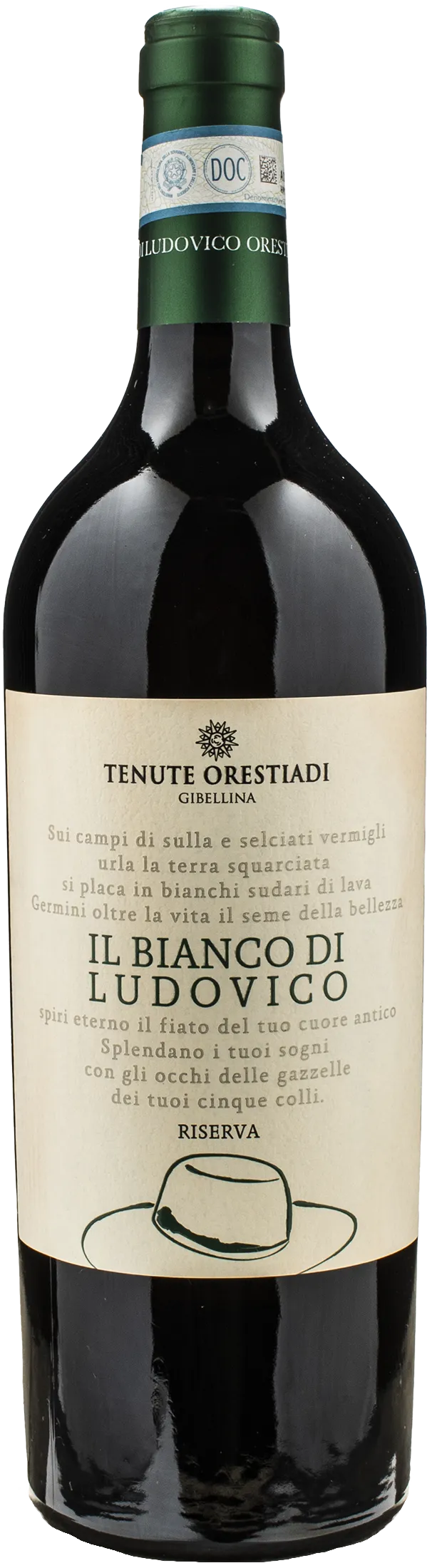
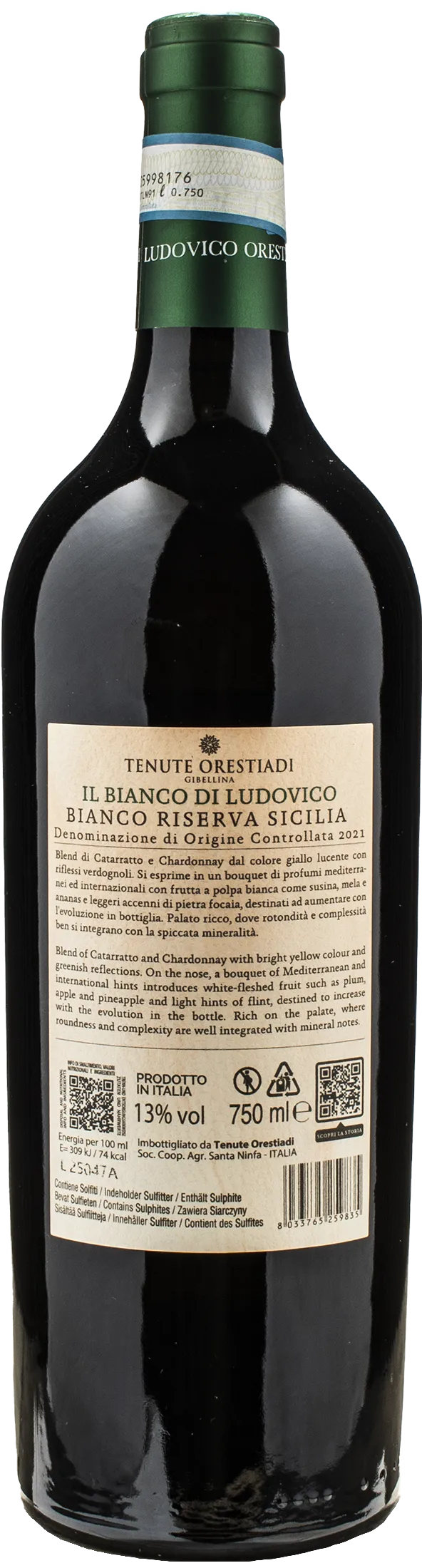
Gibellina Il Bianco di Ludovico Riserva 2021
| Denomination | DOC Sicilia Bianco Riserva |
|---|---|
| Size | 0,75 l |
| Alcohol content | 13.0% by volume |
| Area | Sicily (Italy) |
| Grape varieties | 90% Catarratto Bianco Comune, 10% Chardonnay |
| Aging | 6 months of ageing on the lees with 2 bâtonnage per week; followed by 6 months during which half of the wine matures in French oak tonneaux and half in stainless steel; after blending, a further 6 months in stainless steel on the lees and at least 4 months in bottle |
- Name and vintage: Sicilia DOC Bianco Riserva 2021, 13% vol, 0.75 l
- Grape variety: 90% Catarratto Bianco Comune and 10% Chardonnay
- Vinification: gentle pressing and fermentation with indigenous yeasts
- Ageing: 6 months on the lees, then 6 months in French oak and steel, finally in bottle
- Pairings: notes of white fruit and flint, ideal with fish and shellfish
Description
What kind of wine it is
Tenute Orestiadi Il Bianco di Ludovico Riserva is an elegant still wine, an expression of Sicily. Born from a blend of Catarratto and Chardonnay, it combines the character of the native grape with the elegance that distinguishes Chardonnay. On the nose, it offers notes of white-fleshed fruit, including plum, apple and pineapple, enriched by hints of flint. On the palate, it is enveloping, delivering a pleasant roundness perfectly balanced by a vibrant mineral freshness.
Where it comes from
The grapes grow in Gibellina, in the heart of the Valle del Belìce, at around five hundred metres above sea level. This location favours an optimal microclimate for preserving aromatic tension. The vines sink their roots into a black silty-clay soil, compact and highly resistant to drought. This dark soil imparts a distinct mineral character to the plant, defining the clear territorial identity curated by Tenute Orestiadi.
How it is produced
Vinification begins with a four-hour cold cryomaceration and gentle pressing, followed by a twenty-day fermentation at controlled temperature conducted by indigenous yeasts. The delicate maturation involves six months on the lees with two bâtonnage per week. Afterwards, the batch is divided: half rests in French oak barrels and the other half in steel for six months. The blend then takes place, with a further six months in steel on the lees and a final period of rest to achieve complete harmony.
History and Curiosities
Born in the heart of the Valle del Belìce, Il Bianco di Ludovico Riserva celebrates the artistry and vision of Tenute Orestiadi. Founded in Gibellina in 2008, the company weaves Mediterranean myth with local identity in this tribute to Ludovico, remembered for his iconic white hat. This fine cuvée, crafted by oenologist Giuseppe Clementi by harmonising Catarratto and Chardonnay, evokes the solemn beauty of the Cretto, transforming grapes grown at an altitude of 500 metres into a true Sicilian excellence.
Tasting notes

Perfume

Color

Taste
Serve at:
12 - 14 °C
Longevity:
03 - 05 years

- Start up year: 2008
- Oenologist: Giuseppe Clementi
- Bottles produced: 1.000.000
- Hectares: 140


| Name | Tenute Orestiadi Gibellina Il Bianco di Ludovico Riserva 2021 |
|---|---|
| Type | White still |
| Denomination | Sicilia DOC |
| Vintage | 2021 |
| Size | 0,75 l |
| Alcohol content | 13.0% by volume |
| Grape varieties | 90% Catarratto Bianco Comune, 10% Chardonnay |
| Country | Italy |
| Region | Sicily |
| Vendor | Orestiadi |
| Story | History and Curiosities Born in the heart of the Valle del Belìce, Il Bianco di Ludovico Riserva celebrates the artistry and vision of Tenute Orestiadi. Founded in Gibellina in 2008, the company weaves Mediterranean myth with local identity in this tribute to Ludovico, remembered for his iconic white hat. This fine cuvée, crafted by oenologist Giuseppe Clementi by harmonising Catarratto and Chardonnay, evokes the solemn beauty of the Cretto, transforming grapes grown at an altitude of 500 metres into a true Sicilian excellence. |
| Origin | Gibellina (Trapani), Valle del Belìce, Sicilia, Italia |
| Soil composition | Black earth, rich in silty-clay substances, compact and drought-resistant |
| Fermentation | 20 days |
| Production technique | Cryomaceration at 4 °C for 4 hours; soft pressing; temperature-controlled fermentation with spontaneous yeasts; ageing on the lees with 2 batonnage per week; ageing in French oak tonneaux and in steel; further ageing on the lees in steel; ageing in bottle |
| Wine making | After a cryomaceration at 4 degrees for 4 hours, gentle pressing is carried out; this is followed by fermentation with wild yeasts for 20 days at a controlled temperature. Only at this point are Catarratto and Chardonnay blended together. |
| Aging | 6 months of ageing on the lees with 2 bâtonnage per week; followed by 6 months during which half of the wine matures in French oak tonneaux and half in stainless steel; after blending, a further 6 months in stainless steel on the lees and at least 4 months in bottle |
| Allergens | Contains sulphites |