


Tenuta Ammiraglia - Frescobaldi
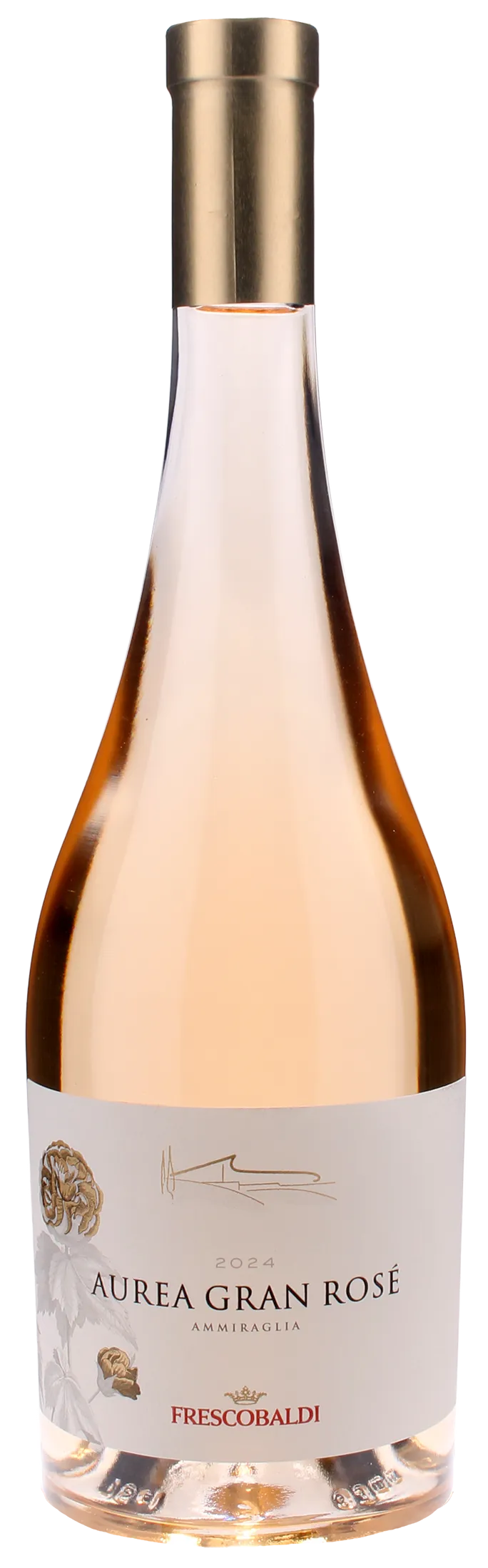
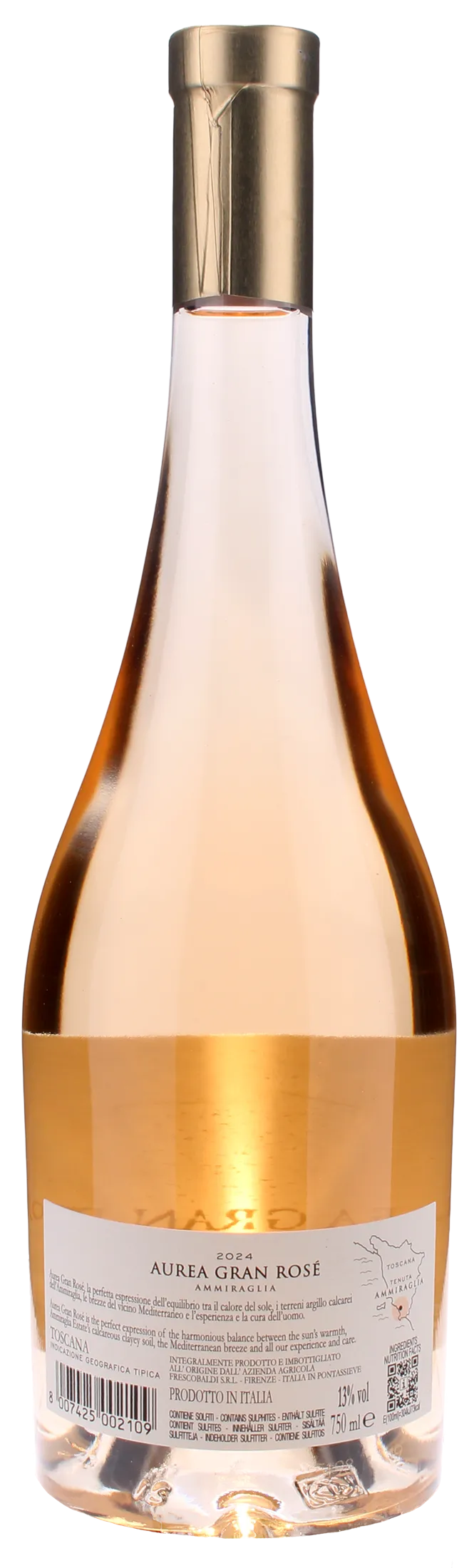
Aurea Gran Rosé 2024
| Denomination | IGT Toscana |
|---|---|
| Size | 0,75 l |
| Alcohol content | 13.0% by volume |
| Area | Tuscany (Italy) |
| Grape varieties | Syrah, Vermentino |
| Aging | Following the blending of the two varieties, the wine is aged on the fine fermentation lees for 8 months; subsequently, a small selection of Syrah vinified as white wine from the previous harvest (reserve wine), aged in barriques for 20 months, is added. |
- Type: Dry Rosé IGT Toscana 2024, made from Syrah and Vermentino grapes.
- Origin: Maremma, Tenuta Ammiraglia. Hills overlooking the Tyrrhenian Sea and sea breezes.
- Vinification: Oxygen-free pressing, fermentation at 16°C in oak.
- Ageing: 8 months on fine lees; includes Syrah Riserva aged for 20 months in barriques.
- Characteristics: Notes of red berries and citrus, savoury. 93 James Suckling points.
Description
What type of wine it is
Aurea Gran Rosé by Frescobaldi is a Tuscan rosé wine with a dry and structured profile, obtained from a blend of Syrah and Vermentino that expresses remarkable aromatic precision. The bouquet opens with hints of small red fruits, citrus, and floral notes, accompanied by Mediterranean herbs and a spicy touch. On the palate, it reveals a smooth texture, supported by elegant acidity and a distinct sapidity. Ageing on the fine lees provides a full mouthful, characterised by marked minerality and a long, complex finish.
Where it comes from
The grapes grow at the Ammiraglia Estate in Maremma, on hills facing the Tyrrhenian coast. The constant sea breezes create an ideal climate to balance fruit ripeness and freshness. The south-facing vineyards thrive on clay soils with a strong limestone base and the presence of stones, at an altitude of approximately 150 metres above sea level. This terroir conveys a clear mineral footprint and a pleasant sapidity to the wine, supported by balanced acidity that fully enhances the coastal identity of the Magliano area.
How it is produced
Production begins with a manual harvest during the coolest hours and a rigorous selection of the clusters. In the cellar, a gentle pressing of the whole clusters takes place in the absence of oxygen, followed by a decantation of the musts to remove vegetable fractions. Fermentation takes place at a controlled temperature inside medium-toasted French oak barrels. After the blend is created, the wine is aged on the fine lees for eight months. The structure is finally enriched with the addition of a Syrah reserve, vinified as a white wine and matured in further barrels for twenty months.
History and curiosities
Born from the vision of Lamberto Frescobaldi at the Ammiraglia Estate, Aurea Gran Rosé embodies the essence of the Maremma. This wine is created through a careful white vinification of Syrah and Vermentino. Its elegance is enhanced by the addition of a Syrah reserve, aged for twenty months in barriques. An excellence awarded by Bibenda, Veronelli, and Luca Maroni, with 93 James Suckling points and a gold medal from The Drinks Business.
Awards
-
2024
 93
93/100
James Suckling is an influential American wine critic and journalist who worked at Wine Spectator for 30 years. He left the magazine in 2010 to start his own website and guidebook (JamesSuckling.com). He specialises in Italian and Bordeaux wines.
Tasting notes

Perfume

Color

Taste
Serve at:
10 - 12 °C
Longevity:
05 - 10 years
It is in this land of Tuscany warmed by the sun and mitigated by the sea breeze that the Tenuta Ammiraglia of the Frescobaldi family was born. It is home to an area of great potential for the production of high quality wines, as well as undoubted natural beauty, so fascinating and still unspoilt.
The estate's signature wine cellar originates from a project by Piero Sartogo and Nathalie Grenon and today represents a temple of design at the service of wine production of the highest quality, with an eye always turned towards respect for the surrounding environment.
Tenuta Ammiraglia in fact means Tuscan wine known throughout the world and produced with great respect for the Tuscan wine-making tradition, without ever forgetting innovation and attention to the future of the sector. Read more


| Name | Frescobaldi Tenuta Ammiraglia Aurea Gran Rosè 2024 |
|---|---|
| Type | Rosé still |
| Denomination | Toscana IGT |
| Vintage | 2024 |
| Size | 0,75 l |
| Alcohol content | 13.0% by volume |
| Grape varieties | Syrah, Vermentino |
| Country | Italy |
| Region | Tuscany |
| Vendor | Tenuta Ammiraglia - Frescobaldi |
| Story | History and curiosities Born from the vision of Lamberto Frescobaldi at the Ammiraglia Estate, Aurea Gran Rosé embodies the essence of the Maremma. This wine is created through a careful white vinification of Syrah and Vermentino. Its elegance is enhanced by the addition of a Syrah reserve, aged for twenty months in barriques. An excellence awarded by Bibenda, Veronelli, and Luca Maroni, with 93 James Suckling points and a gold medal from The Drinks Business. |
| Origin | Maremma, Tuscany (Tenuta Ammiraglia, near the Tyrrhenian coast, close to Magliano) |
| Climate | Mediterranean (coastal, with maritime influence) |
| Soil composition | Clay-limestone soil |
| Fermentation temperature | 16 degrees Celsius |
| Production technique | Soft pressing of whole bunches in the absence of oxygen; decantation of the musts for at least 12 hours; fermentation at a controlled temperature (approx. 16 °C) in medium-toasted French oak tonneaux; ageing on fine lees for 8 months; addition of a selection of Syrah vinified as a white wine from the previous harvest and aged in barriques for 20 months. |
| Wine making | After the harvest, the grapes are quickly transported to the cellar; the whole bunches are pressed in the absence of oxygen using very gentle pressure, with selection of the musts and decanting for at least 12 hours to remove any plant components. This is followed by fermentation at a controlled temperature (approx. 16 °C) in 600-litre medium-toasted French oak tonneaux (20% new). After blending, ageing on the fine lees for 8 months; then the addition of a small selection of Syrah vinified as a white wine from the previous harvest, aged in barriques for 20 months. |
| Aging | Following the blending of the two varieties, the wine is aged on the fine fermentation lees for 8 months; subsequently, a small selection of Syrah vinified as white wine from the previous harvest (reserve wine), aged in barriques for 20 months, is added. |
| Total acidity | 5.7 gr/L |
| Residual sugar | 3.2 gr/L |
| Allergens | Contains sulphites |