


Casa Sartori 1898
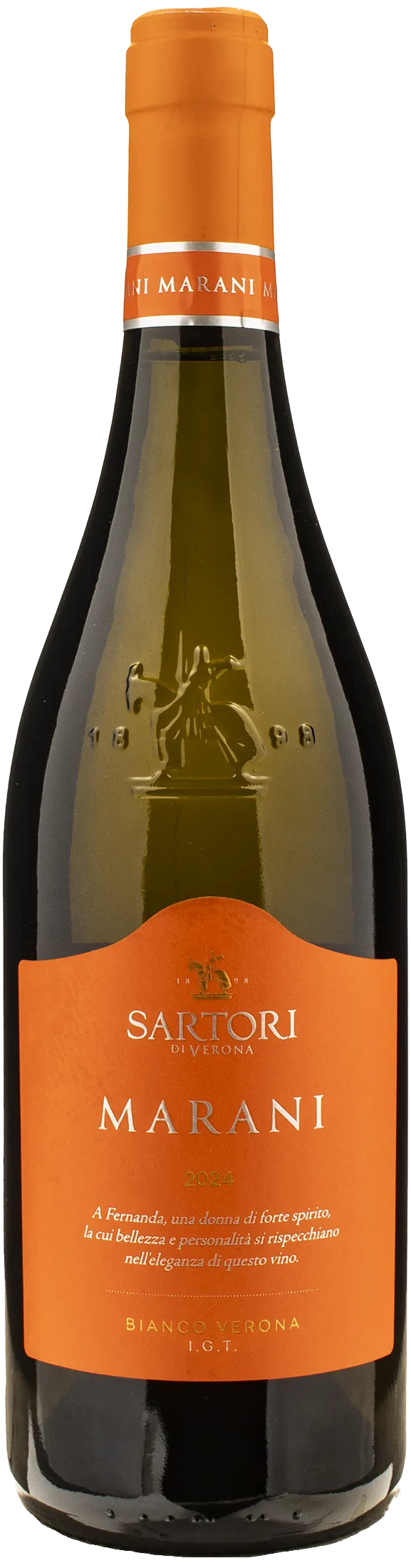
Marani Bianco Veronese 2024
| Denomination | IGT Verona |
|---|---|
| Size | 0,75 l |
| Alcohol content | 13.0% by volume |
| Area | Veneto (Italy) |
| Grape varieties | 100% Garganega |
| Aging | Ageing for 6–7 months on fine lees (50% in stainless steel and 50% in wood) |
- Grape variety and vintage: 100% Garganega, Bianco Veronese IGT Veneto, 2024, 0.75 l bottle
- Method: hand-picked grapes, dried for 30–40 days; fermentation in steel and oak
- Aromas: notes of ripe fruit with honey, apple and pear; floral hints and spicy nuances
- Taste: dry, full and creamy; high, well-balanced acidity, long and harmonious finish
- Serving and pairings: temperature 10–12 °C; ideal with creamy pasta dishes, grilled fish; suitable for vegans
Description
What kind of wine it is
Marani, an expression of Bianco Veronese by Casa Sartori 1898, is a wine with an intense golden yellow colour made from Garganega grapes. Its aromatic profile opens with fragrances of ripe fruit, enriched by clear hints of honey. On the palate, it reveals a glass with a full-bodied structure, characterised by a pleasant creamy texture and well-balanced acidity. The sip offers a persistent aftertaste, with an ideal harmony to accompany pasta with rich sauces, structured fish dishes and medium-aged cheeses.
Where it comes from
This wine originates from the steep slopes of the province of Verona, in a territory situated between the Soave area and the region of Colognola ai Colli. Here, the vines sink their roots into rocky soils, characterised by an abundant white calcareous skeleton and volcanic components that impart a distinct mineral imprint. The presence of clay, sand and tuff further enriches the complexity of the terroir. In these places, the vine benefits from a mild climate, in constant balance between Mediterranean and continental influences, favouring optimal ripening of the grapes.
How it is produced
Production begins with manual harvesting, followed by a drying of the grapes for about forty days, a crucial step to concentrate aromas and sugars. After pressing, the cooled must undergoes a brief maceration in contact with the skins to extract substance without losing clarity. Fermentation takes place by dividing the batches between stainless steel tanks and oak barrels. The process concludes with ageing on fine lees, split between steel and wood, an essential practice to give the wine its typical opulence on the palate.
History and Curiosities
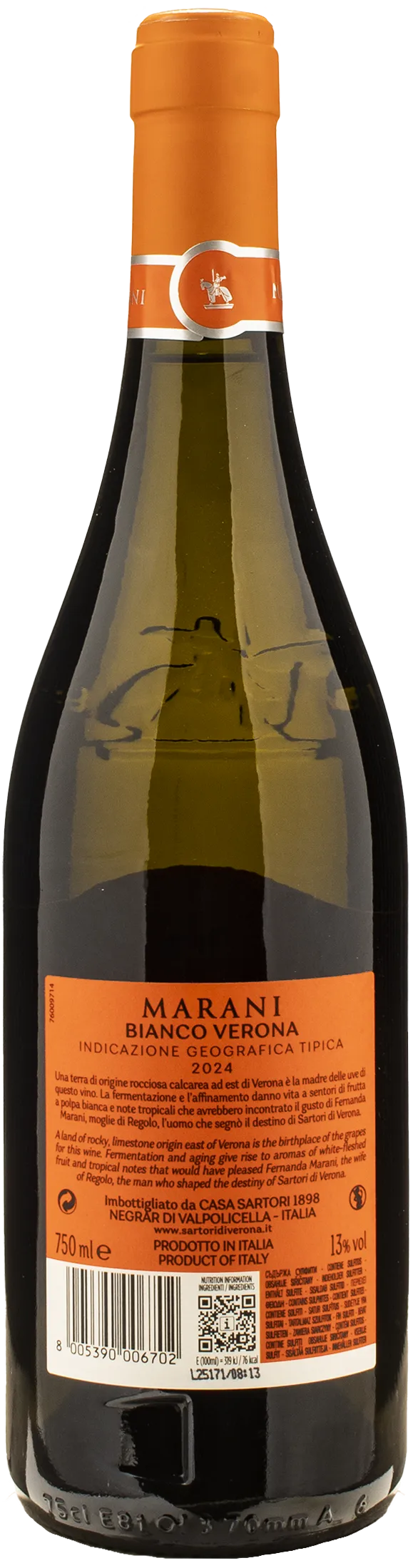
Casa Sartori 1898 has its roots in Negrar, where it was founded thanks to Pietro Sartori’s intuition to supply the family’s historic trattoria. This wine pays tribute to the figure of great-aunt Fernanda Marani, a woman of great charisma whose elegance is reflected in the glass. Celebrated as Amarone Bianco, this Venetian masterpiece is born from a meticulous drying of the grapes for forty days, a technique that concentrates the aromas and offers an enveloping sip. The label skilfully combines tradition and innovation, offering a fresh and elegant profile.
Tasting notes

Perfume

Color

Taste
Serve at:
10 - 12 °C
Longevity:
03 - 05 years

- Start up year: 1898
- Oenologist: Marco Dell'Eva, Franco Bernabei consulente
- Bottles produced: 15.000.000
- Hectares: 2.040
The heir, endowed with a superfine palate, like a tailor, was able to 'sew' with extreme care the wines to propose to his clientele, which grew year after year.
After the Second World War, numbers also soared. Then, in 1952, when Regolo passed away, his two sons took over the business, opening it up to the foreign market.
The 1990s marked a turning point in the management of Casa Vinicola Sartori, which saw the entry of the Sartori family into the Board of Directors of the Colognola ai Colli winery to implement an ambitious growth project in the production and distribution of wines at a worldwide level. A goal successfully achieved. Read more


| Name | Sartori Marani Bianco Verona 2024 |
|---|---|
| Type | White still |
| Denomination | Verona IGT |
| Vintage | 2024 |
| Size | 0,75 l |
| Alcohol content | 13.0% by volume |
| Grape varieties | 100% Garganega |
| Country | Italy |
| Region | Veneto |
| Vendor | Casa Sartori 1898 |
| Story | History and Curiosities Casa Sartori 1898 has its roots in Negrar, where it was founded thanks to Pietro Sartori’s intuition to supply the family’s historic trattoria. This wine pays tribute to the figure of great-aunt Fernanda Marani, a woman of great charisma whose elegance is reflected in the glass. Celebrated as Amarone Bianco, this Venetian masterpiece is born from a meticulous drying of the grapes for forty days, a technique that concentrates the aromas and offers an enveloping sip. The label skilfully combines tradition and innovation, offering a fresh and elegant profile. |
| Origin | Soave area, north of the municipality of Colognola ai Colli (Veneto) |
| Climate | Mild climate between Mediterranean and continental |
| Soil composition | Calcareous rocky origin, rich in white calcareous skeleton |
| Production technique | Appassimento (grapes lightly dried for 30–40 days after harvest) |
| Wine making | Hand-picked grapes, slightly dried for 40 days; pressing with brief maceration on the skins in contact with the cooled must; fermentation of the must partly in oak barrels; ageing for 6–7 months on fine lees (50% in stainless steel and 50% in wood). |
| Aging | Ageing for 6–7 months on fine lees (50% in stainless steel and 50% in wood) |
| Residual sugar | 6.0 gr/L |
| Allergens | Contains sulphites |