


Ruggeri
Prosecco Argeo Brut Magnum
| Denomination | DOC Prosecco Treviso Spumante Brut |
|---|---|
| Size | 1,50 l |
| Alcohol content | 11.0% by volume |
| Area | Veneto (Italy) |
| Grape varieties | 100% Glera |
| Aging | After fermentation, it is bottled and ready for consumption. |
- DOC Treviso origin: hills of Treviso between the Dolomites and the Adriatic breezes
- Grapes and style: 100% Glera, Prosecco DOC Brut dry (6–12 g/l of sugar)
- Sparkling method: Charmat-Martinotti refermentation in autoclave at 14–15 °C
- Tasting notes: hints of acacia, green apple and citrus; fine and creamy perlage
- Serving and pairings: serve at 6–8 °C in a flute glass; ideal with oysters and shellfish
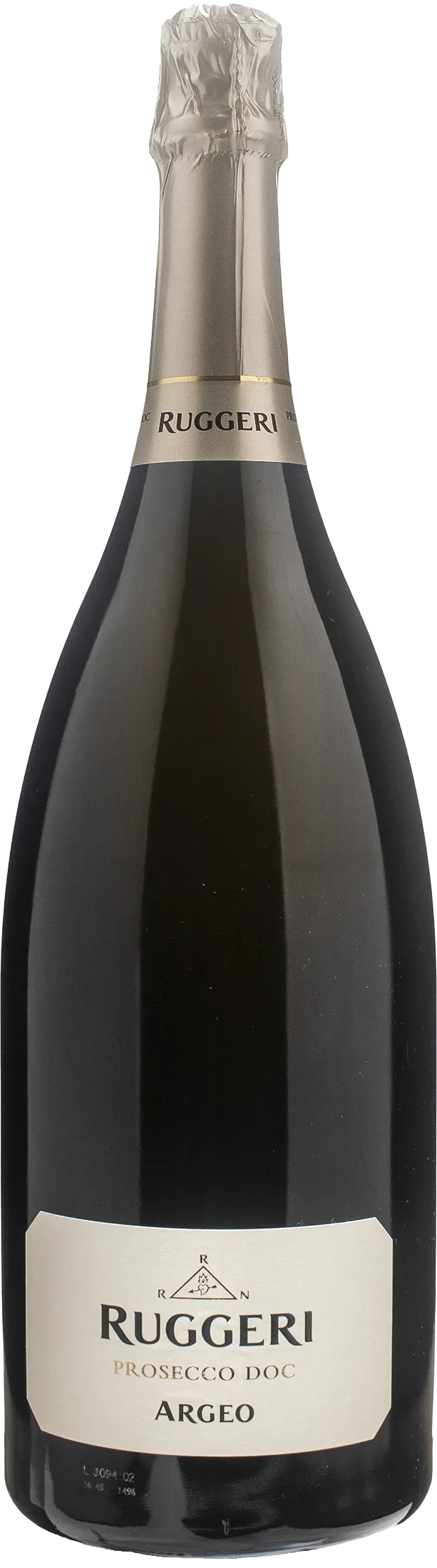
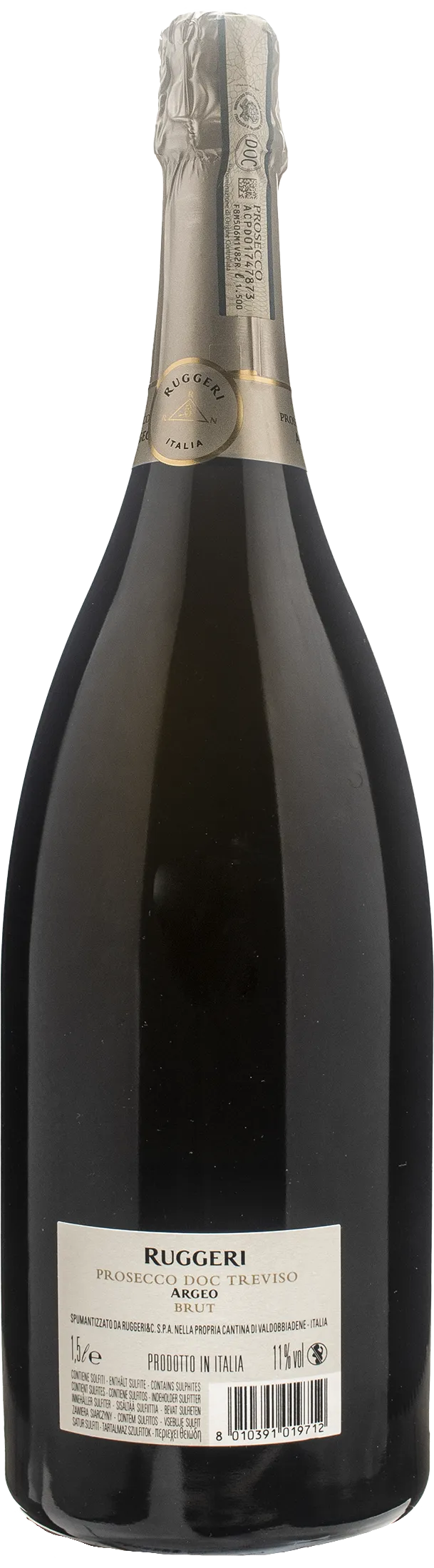
Description
What kind of wine is it
Ruggeri Prosecco Argeo Brut is a sparkling wine from the Prosecco region, made from Glera grapes. Its aromatic profile reveals notes of acacia flowers, green apple and citrus fruits. On the palate, it is fresh and harmonious, enhanced by a fine and persistent perlage that provides a pleasant creamy texture. The lively acidity and minerality lead the sip towards a long and refreshing finish.
Where does it come from
This sparkling wine originates from the hills of Treviso, at the foothills of the first Dolomite outcrops. The vineyards benefit from an ideal continental-Mediterranean climate, influenced by the proximity of the Dolomites and breezes from the Adriatic Sea. The temperature variations and regular rainfall create perfect conditions for vine cultivation. The clay and limestone soils, rich in minerals, ensure optimal natural drainage. In this environment, the grapes retain a pronounced acidic tension, a key element for the structure and elegance of the wine.
How is it produced
Production begins in September with the manual harvesting of the grapes, followed by gentle pressing. The must ferments at a controlled temperature without skins to preserve the varietal aromas. The secondary fermentation takes place in a pressurised tank according to the Charmat-Martinotti method, with a slow re-fermentation at low temperatures. This rigorous process lasts several months and defines a balanced flavour profile, resulting in a clean and bright aromatic expression.
History and Curiosities
Founded in 1950, the historic family-run Ruggeri winery in Valdobbiadene produces this renowned Prosecco DOC from Glera grapes grown on the slopes of the Treviso hills, refreshed by the breezes from the Dolomites. Under the guidance of oenologist Fabio Roversi, production follows the Charmat-Martinotti method, with a slow refermentation in autoclave that ensures a fine, rich and persistent perlage. The quality of these bubbles is confirmed by 90 points from James Suckling and the Due Bicchieri award from Gambero Rosso.
Awards
-
 90
90/100
James Suckling is an influential American wine critic and journalist who worked at Wine Spectator for 30 years. He left the magazine in 2010 to start his own website and guidebook (JamesSuckling.com). He specialises in Italian and Bordeaux wines.
-
 90
90/100
Wine spectator is the most influential wine guide on the internet.
Tasting notes

Perlage

Perfume

Color

Taste
Serve at:
06 - 08 °C
Longevity:
03 - 05 years
- Start up year: 1950
- Oenologist: Fabio Roversi
- Bottles produced: 1.700.000
- Hectares: 28
Ruggeri’s roots stretch far back to the nineteenth century, to Eliseo Bisol, who, along with his son Luigi was one of the first winemakers in Valdobbiadene. The business’s significant growth began in 1950 when Giustino Bisol founded the current winery with his cousin, and it was his surname, Ruggeri, that was chosen as the company name. The unswerving commitment to excellence continued with the work of Giustino’s son, Paolo, and granddaughter Isabella.
Since 2017, Ruggeri has been part of the Rotkäppchen-Mumm Group, a highly fruitful partnership which has paired our shared visions, trust in common values and a mutual commitment to ever higher quality standards. Read more


| Name | Ruggeri Prosecco Argeo Brut Magnum |
|---|---|
| Type | White charmat method sparkling wine brut |
| Denomination | Prosecco DOC |
| Size | 1,50 l |
| Alcohol content | 11.0% by volume |
| Grape varieties | 100% Glera |
| Country | Italy |
| Region | Veneto |
| Vendor | Ruggeri |
| Story | History and Curiosities Founded in 1950, the historic family-run Ruggeri winery in Valdobbiadene produces this renowned Prosecco DOC from Glera grapes grown on the slopes of the Treviso hills, refreshed by the breezes from the Dolomites. Under the guidance of oenologist Fabio Roversi, production follows the Charmat-Martinotti method, with a slow refermentation in autoclave that ensures a fine, rich and persistent perlage. The quality of these bubbles is confirmed by 90 points from James Suckling and the Due Bicchieri award from Gambero Rosso. |
| Origin | On the slopes of the first Dolomite foothills, in the northern part of the province of Treviso |
| Climate | Continental-Mediterranean climate, with mild winters and hot summers, influenced by the Dolomites and the Adriatic Sea, with abundant rainfall |
| Soil composition | Clayey and mineral-rich soils, with the presence of limestone |
| Harvest | Settembre |
| Fermentation temperature | 14–15 °C |
| Fermentation | From 1 to 6 months |
| Production technique | Charmat-Martinotti method (refermentation in autoclave) |
| Wine making | White vinification, without skins, at a controlled temperature (around 18–20°C) for about 8 days; then secondary fermentation with slow refermentation in a pressurised tank according to the Martinotti/Charmat method at 14–15°C for 1–6 months; filtered and bottled under pressure. |
| Aging | After fermentation, it is bottled and ready for consumption. |
| Residual sugar | 12.0 gr/L |
| Allergens | Contains sulphites |