
The House of Suntori
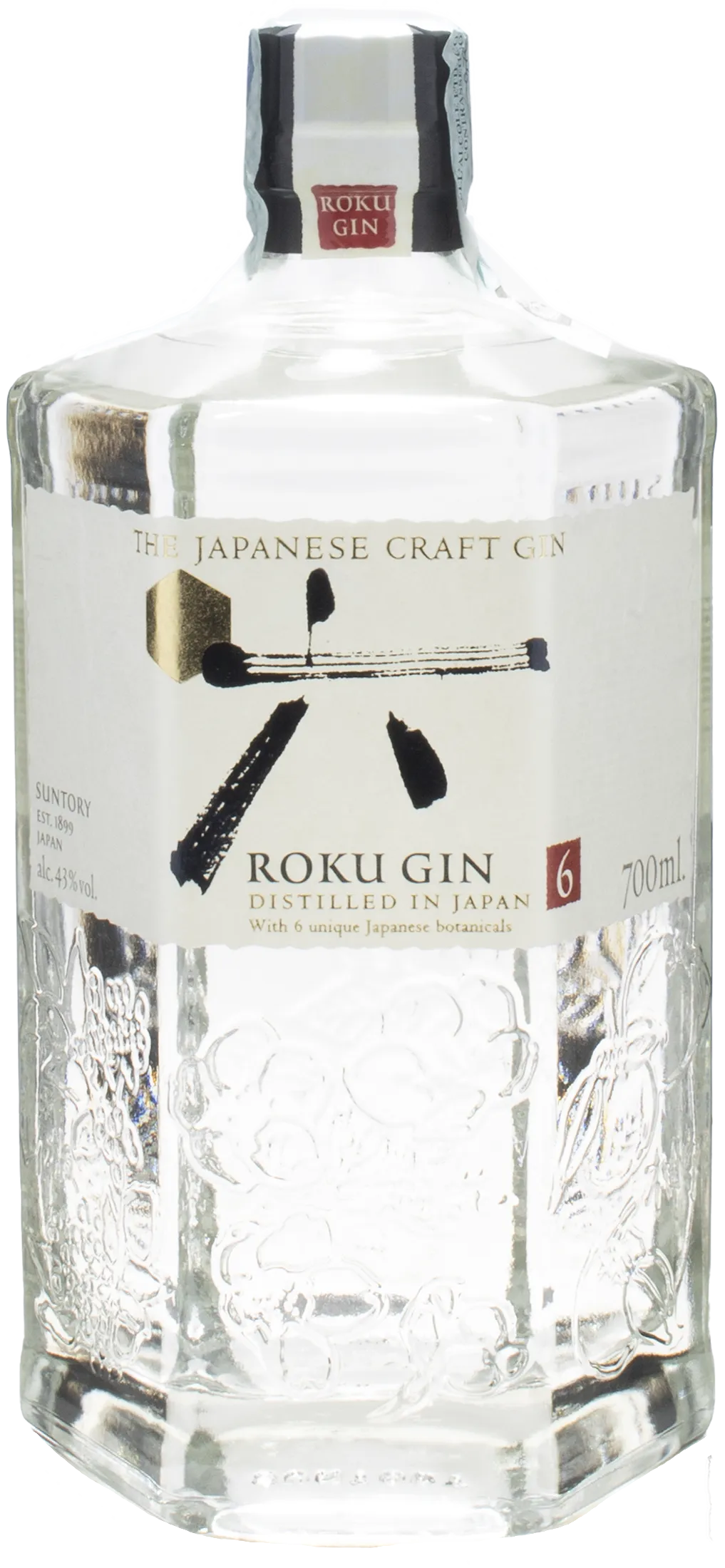
Gin Suntory 0.7L
| Size | 0,70 l |
|---|---|
| Alcohol content | 43.0% by volume |
| Area | Japan (Japan) |
- Origin: Artisan gin distilled in Japan by the House of Suntory
- Strength and format: 43% alcohol in a 700 ml bottle
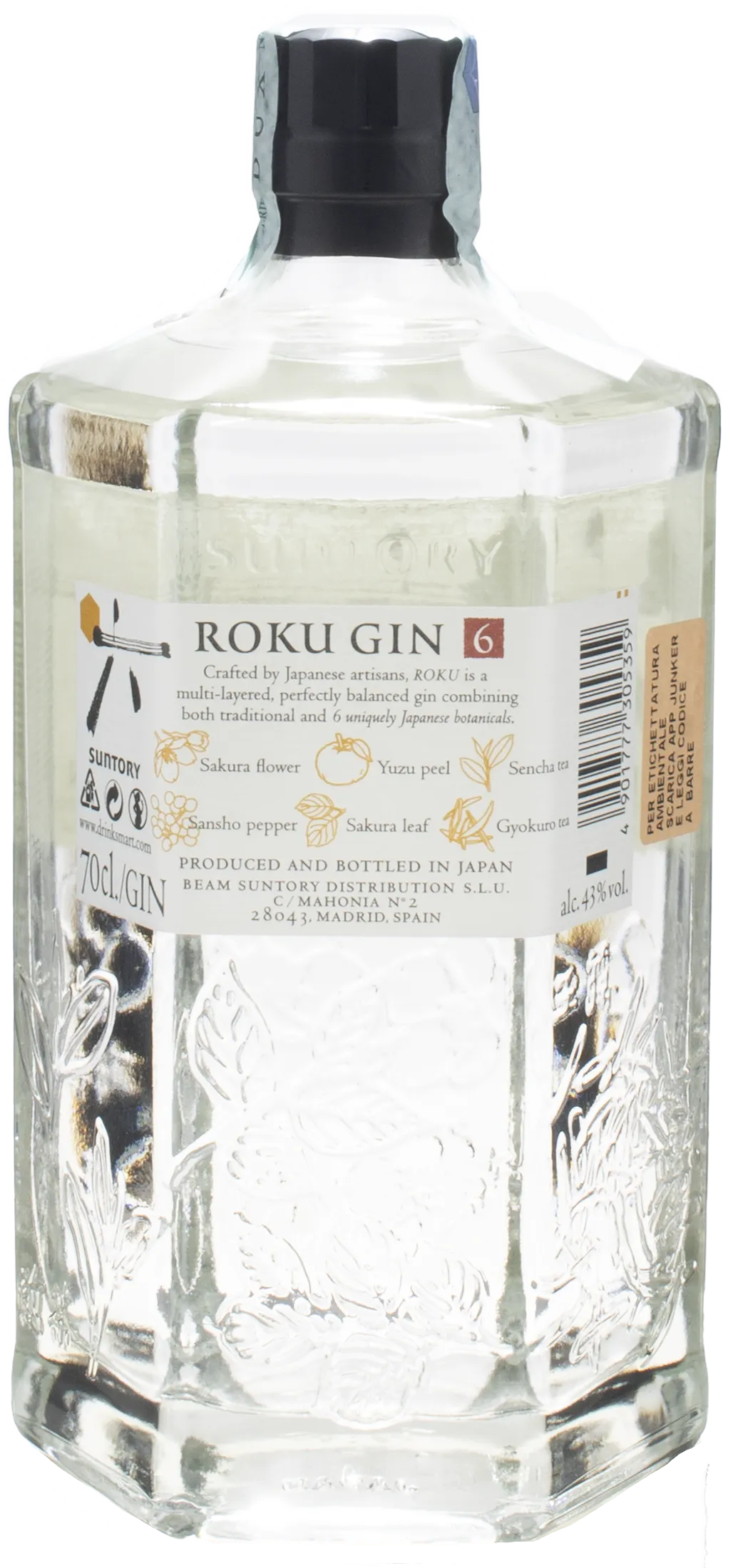
- Shun botanicals: cherry blossom, Sencha and Gyokuro tea, Sanshō pepper, Yuzu peel
- Aromatic profile: floral and green tea notes, Yuzu citrus, spicy Sanshō finish
- Bottle design: hexagonal shape with floral embossing, representing the six botanicals
Description
What type of spirit it is
Roku Gin Suntory is a craft Gin that highlights the excellence of Japanese botanicals. Its aromatic profile is created through a multiple distillation process, designed to harmonise six carefully selected local ingredients. On tasting, lively floral notes of Sakura emerge, followed by the sweetness of Sencha and Gyokuro teas and the citrus freshness of Yuzu. The sip finishes in perfect balance, enhanced by the subtle spiciness of Sanshō pepper.
Where it comes from
Created by Suntory, this Gin expresses a deep connection with the Japanese territory. Production follows the principle of Shun, which involves harvesting the botanicals at the peak of their aromatic expression. Thanks to the selection of seasonal ingredients at different times of the year, the spirit offers a consistent and authentic sensory profile. This strong territorial identity ensures excellent flavour harmony, with clear and well-defined aromas.
How it is produced
Roku Gin Suntory is made through multiple distillation. This rigorous production method creates a harmonious spirit.
History and Curiosities
Produced by The House of Suntory following a Zen tradition, Roku Gin celebrates the Japanese concept of “Shun”, the art of appreciating seasonal flavours at their peak. The iconic hexagonal bottle symbolises the six local botanicals harvested at the height of their freshness: Sakura flowers and leaves in spring, Sencha and Gyokuro tea in summer, Sanshō pepper in autumn, and Yuzu peel in winter.
Tasting notes

Perfume

Taste
Serve at:
12 - 14 °C



| Name | Roku Gin Suntory 0.7L |
|---|---|
| Type | Gin |
| Size | 0,70 l |
| Alcohol content | 43.0% by volume |
| Country | Japan |
| Region | Japan |
| Vendor | The House of Suntori |
| Story | History and Curiosities Produced by The House of Suntory following a Zen tradition, Roku Gin celebrates the Japanese concept of "Shun", the art of appreciating seasonal flavours at their peak. The iconic hexagonal bottle symbolises the six local botanicals harvested at the height of their freshness: Sakura flowers and leaves in spring, Sencha and Gyokuro tea in summer, Sanshō pepper in autumn, and Yuzu peel in winter. |
| Origin | Japan |
| Production technique | Multiple distillation with six Japanese botanicals harvested at the peak of freshness ("Shun") |
| Allergens | Contains sulphites |