


Rocca di Montemassi
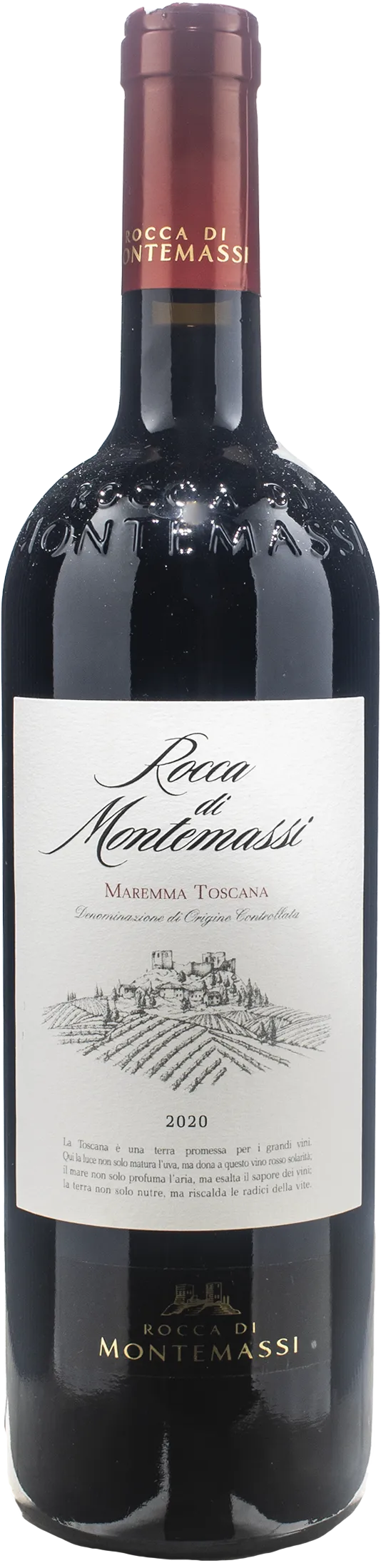
Rocca di Montemassi 2020
| Denomination | DOC Maremma Toscana Rosso |
|---|---|
| Size | 0,75 l |
| Alcohol content | 14.0% by volume |
| Area | Tuscany (Italy) |
| Grape varieties | 50% Cabernet Sauvignon, 25% Syrah, 15% Merlot |
| Aging | Aged for 14 months in 350-litre French tonneaux (first and second fill), followed by 10 months in the bottle. |
- Appellation and grape varieties: Maremma Toscana Rosso DOC; Cabernet, Petit Verdot, Syrah
- Intense aromas: black fruit, forest floor, violet, eucalyptus, vanilla, tobacco
- Ageing: 14 months in French oak tonneaux and 10 months in bottle
- Palate: concentrated and enveloping structure, soft tannins, long mineral and toasted finish
- Temperature and food pairings: serve at 16–18°C after 1 hour of decanting; ideal with meats and game

Description
What kind of wine it is
Rocca di Montemassi by Rocca di Montemassi is a still red wine from the Tuscan Maremma with a Controlled Designation of Origin, born from a careful blend of Cabernet Sauvignon, Petit Verdot and Syrah and aged in oak barrels. On the nose, it releases aromas of black fruit, undergrowth and violets, enriched by delicate nuances of eucalyptus, vanilla and sweet tobacco. On the palate, it is concentrated and enveloping, supported by soft, full tannins leading to a long, persistent finish, characterised by elegant mineral and toasted notes. This solid structure makes it ideal for pairing with red meats and game, balancing and enhancing the most intense and bold flavours.
Where it comes from
The grapes come from vineyards cultivated on the slopes of Rocca di Montemassi, in the historic Colline Metallifere of the Maremma. This area of southern Tuscany enjoys a Mediterranean climate, tempered by the proximity of the sea and protected by the surrounding woods. The vines grow on clay-loam soils, formed from the erosion of the highlands and particularly rich in precious minerals. The meeting of the soil composition and the maritime microclimate gives the wine a clear territorial character, ensuring structural freshness and excellent natural sapidity.
How it is produced
Production involves a careful manual harvest to select only perfectly ripe bunches. The varieties ferment separately in temperature-controlled steel tanks, with a prolonged maceration of thirty days aimed at best extracting colour and structure. Once malolactic fermentation is complete, the wine ages for fourteen months in French oak barrels, before resting further for another ten months. The entire viticultural management respects the principles of certified organic farming, through meticulous manual interventions on the canopy.
History and interesting facts
Born among the Metalliferous Hills of the Maremma, this red wine combines ancient Etruscan echoes with an exquisitely contemporary taste. The Rocca di Montemassi estate embraces a virtuous philosophy, based on the principles of permaculture and EQUALITAS-certified sustainability. In addition to organic viticulture, the winery protects local biodiversity by cultivating ancient grains across its hundred hectares of land. This dedication is reflected in an elegance awarded 91 points by James Suckling and 4 AIS Vines.
Awards
-
2020
 4
4Italian Sommelier Foundation (FIS) guide This has been one of the most prestigious wine guides in Italy for over 10 years.
-
2020
 2
2This guide is highly respected and offers the most comprehensive review of Italian wines. It has a long tradition and is based on blind tastings carried out by over 100 experts.
-
2020
 91
91/100
James Suckling is an influential American wine critic and journalist who worked at Wine Spectator for 30 years. He left the magazine in 2010 to start his own website and guidebook (JamesSuckling.com). He specialises in Italian and Bordeaux wines.
-
2020
 3
3One of the most prestigious wine guides in Italy.
-
2020
 4
4Italian Sommelier Association (AIS) guide
Tasting notes

Perfume

Color

Taste
Serve at:
16 - 18 °C
Longevity:
10 - 15 years
Decanting time:
1 hour

- Start up year: 2000
- Oenologist: Alessandro Gallo
- Bottles produced: 500.000
- Hectares: 174
A Wine Farm that tells of an irreverent and daring Tuscany, where emotions have the fire of the earth and the purity of the sea.
From Vermentino to the Blends of Maremma, Rocca di Montemassi represents a new milestone in Tuscan wine and proof of the excellence of a territory that allows creativity to run free.
It is here that Tuscany's first Wine Farm was born, a new model founded on the principles of environmental, ethical and economic sustainability. Read more


| Name | Rocca di Montemassi Rocca di Montemassi 2020 |
|---|---|
| Type | Red green still |
| Denomination | Maremma Toscana DOC |
| Vintage | 2020 |
| Size | 0,75 l |
| Alcohol content | 14.0% by volume |
| Grape varieties | 50% Cabernet Sauvignon, 25% Syrah, 15% Merlot |
| Country | Italy |
| Region | Tuscany |
| Vendor | Rocca di Montemassi |
| Story | History and interesting facts Born among the Metalliferous Hills of the Maremma, this red wine combines ancient Etruscan echoes with an exquisitely contemporary taste. The Rocca di Montemassi estate embraces a virtuous philosophy, based on the principles of permaculture and EQUALITAS-certified sustainability. In addition to organic viticulture, the winery protects local biodiversity by cultivating ancient grains across its hundred hectares of land. This dedication is reflected in an elegance awarded 91 points by James Suckling and 4 AIS Vines. |
| Origin | First Metalliferous Hills overlooking the sea, Maremma (southern Tuscany), Montemassi Castle |
| Climate | Mediterranean climate |
| Soil composition | Clay-loam texture with weathered rock rich in minerals, formed by the erosion of the surrounding hills |
| Plants per hectare | 4,500 vines/ha |
| Yield per hectare | 60 quintals per hectare |
| Harvest | Merlot and Syrah: 10 5 September; Petit Verdot and Cabernet Sauvignon: early October |
| Fermentation | 30 days |
| Production technique | Separate fermentation for each grape variety in temperature-controlled stainless steel tanks with prolonged maceration (approximately 30 days); malolactic fermentation after racking; ageing for 14 months in 350-litre French oak tonneaux (first and second fill), followed by 10 months in bottle. |
| Wine making | Vinification takes place separately for each individual variety in stainless steel at a controlled temperature, with prolonged maceration (approximately 30 days). Drawing off is followed by malolactic fermentation. |
| Aging | Aged for 14 months in 350-litre French tonneaux (first and second fill), followed by 10 months in the bottle. |
| Allergens | Contains sulphites |