


Pierre Mignon
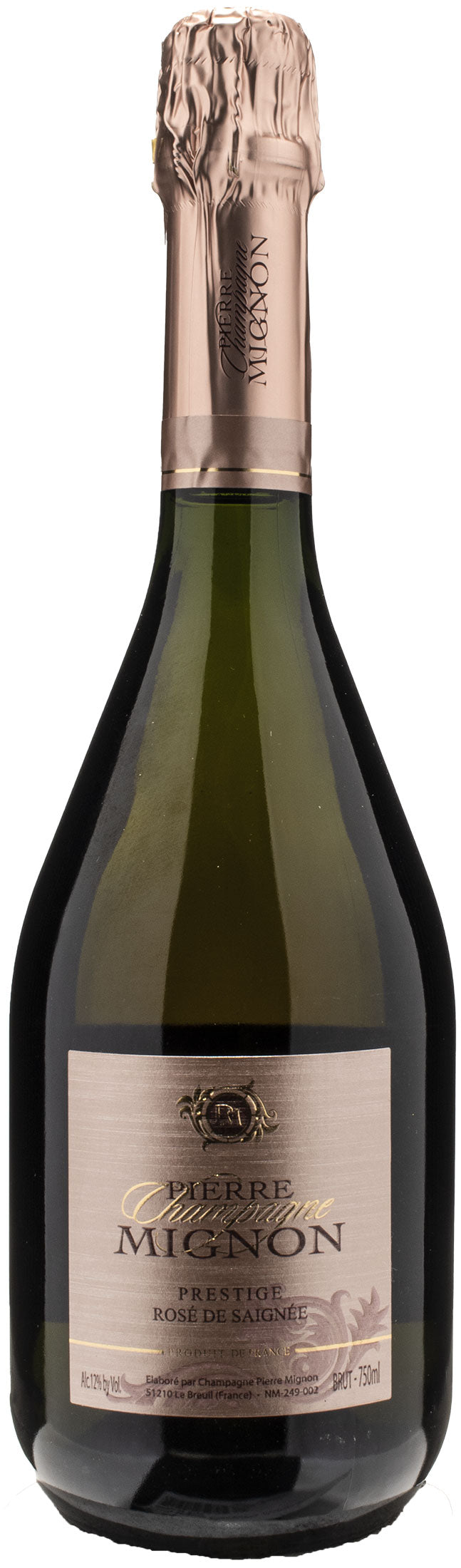
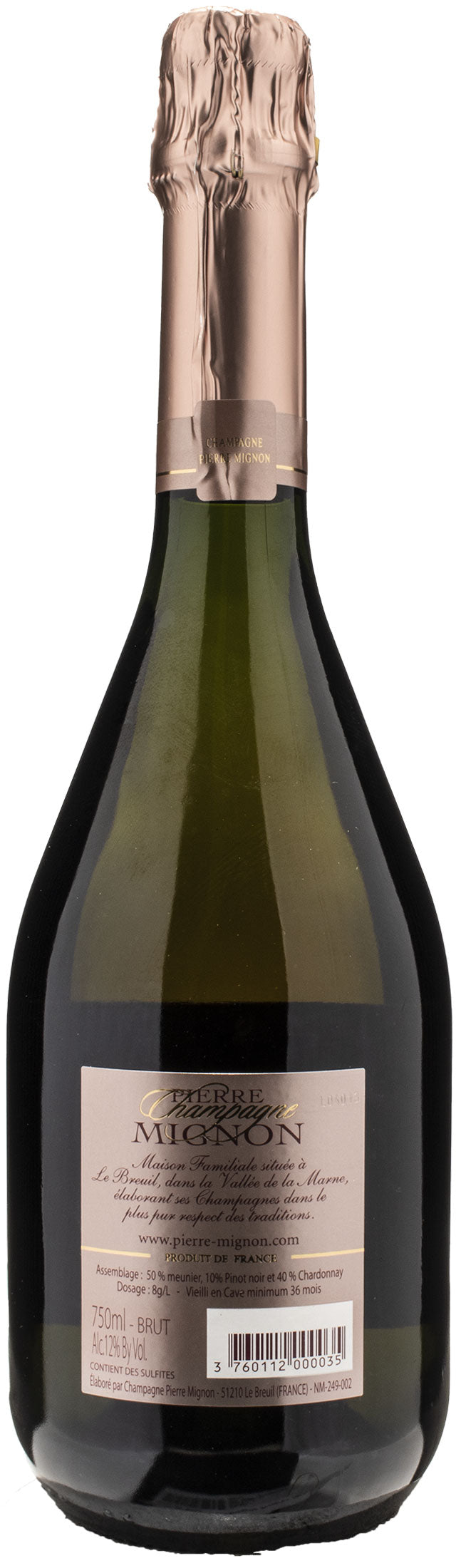
Champagne Prestige Rosé de Saignée Brut
| Denomination | AOC Champagne Rosè Brut |
|---|---|
| Size | 0,75 l |
| Alcohol content | 12.0% by volume |
| Area | Champagne region (France) |
| Grape varieties | 50% Pinot Meunier, 40% Chardonnay, 10% Pinot Nero |
| Aging | Ageing on the lees for 48 months; maturation in the cellar for 5 years: 18 months in oak barrels and the remainder in bottle. |
- Champagne AOC Origin: From Le Breuil, Marne Valley, France
- Vinification method: Rosé de saignée and Traditional Method; malolactic fermentation
- Ageing: 48 months on the lees and 18 months in oak; 5 years total in the cellar
- Aroma and taste: Strawberry, redcurrant and blood orange; full and fresh palate, long finish
- Gift box: Matte black case with gold details, 1 bottle + 2 glasses
Description
What kind of wine it is
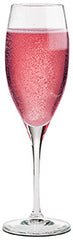
Pierre Mignon Prestige Rosé de Saignée Brut is a structured sparkling wine, produced using the Traditional Method. This blend combines Pinot Meunier, Chardonnay and Pinot Noir, revealing an intense pink colour with salmon highlights. On the nose, it offers clear notes of ripe fruit such as strawberry, redcurrant and blood orange, enriched by delicate floral nuances. On the palate, it is opulent and fresh, enhanced by a fine and creamy perlage that leads to a long and persistent finish.
Where it comes from
This wine is produced in Le Breuil, in the heart of the Marne Valley. The Pierre Mignon winery cultivates its own vineyards with a focus on the expressive purity of the grapes. The specific vocation of the soil provides a solid structure and a clear wine character, features that have always defined the Champagne from this region. The result excellently balances the warmth of red fruit with the mineral identity of its area of origin.
How it is produced
Production takes place using the saignée technique, which involves precise maceration of the must in contact with the skins to extract colour and body, followed by malolactic fermentation. The blend matures for five years, spending eighteen months in oak barrels before bottling. The careful ageing on the lees for forty-eight months, a fundamental step of the Traditional Method, ensures excellent structural integration and enhances the dry profile of the Brut dosage.
History and Curiosities
Founded in 1935 in Le Breuil, Maison Pierre Mignon expresses its excellent winemaking tradition through this majestic Champagne Prestige Rosé. The meticulous rosé de saignée technique, based on the delicate maceration of the grapes, gives this champagne an intense and captivating character. The pursuit of absolute finesse is crowned by a masterful 48-month maturation on the lees and a total cellar ageing of five years, enhanced by a period in oak barrels. A label of great elegance, ideal for celebrating special occasions.
Tasting notes
Perlage

Perfume
Color
Taste
Serve at:
06 - 08 °C
Longevity:
05 - 10 years
- Start up year: 1892
- Hectares: 16
The story begins in 1892, when Octave Mignon installed the first presses, laying the foundations of what was to become a renowned Maison de Champagne. Over the decades, each generation has contributed to shaping its identity, combining ancestral know-how with a constant quest for quality.
It was Pierre Mignon, however, who marked a decisive turning point in the company's development. Thanks to his vision and commitment, he firmly established Maison Pierre Mignon as one of the most prestigious names on the Champagne scene.
Today, the story continues with Céline and Jean-Charles Mignon, worthy heirs to this family passion, who carry on the work of their forebears, upholding the values and excellence of the House. Read more


| Name | Pierre Mignon Champagne Prestige Rosè de Saignee Brut |
|---|---|
| Type | Rosé classic method sparkling wine brut |
| Denomination | Champagne AOC |
| Size | 0,75 l |
| Alcohol content | 12.0% by volume |
| Grape varieties | 50% Pinot Meunier, 40% Chardonnay, 10% Pinot Nero |
| Country | France |
| Region | Champagne region |
| Vendor | Pierre Mignon |
| Story | History and Curiosities Founded in 1935 in Le Breuil, Maison Pierre Mignon expresses its excellent winemaking tradition through this majestic Champagne Prestige Rosé. The meticulous rosé de saignée technique, based on the delicate maceration of the grapes, gives this champagne an intense and captivating character. The pursuit of absolute finesse is crowned by a masterful 48-month maturation on the lees and a total cellar ageing of five years, enhanced by a period in oak barrels. A label of great elegance, ideal for celebrating special occasions. |
| Origin | Le Breuil, Marne Valley, Champagne, France |
| Fermentation | 48 months on the lees |
| Production technique | Classic method (traditional method), rosé de saignée with maceration of must and grapes |
| Wine making | Classic method (traditional method) rosé de saignée with maceration of must and grapes during the harvest; malolactic fermentation carried out; ageing on the lees for 48 months; maturation in the cellar for 5 years with 18 months in oak barrels and the remainder in bottle. |
| Aging | Ageing on the lees for 48 months; maturation in the cellar for 5 years: 18 months in oak barrels and the remainder in bottle. |
| Residual sugar | 7.0 gr/L |
| Allergens | Contains sulphites |