


Nino Negri
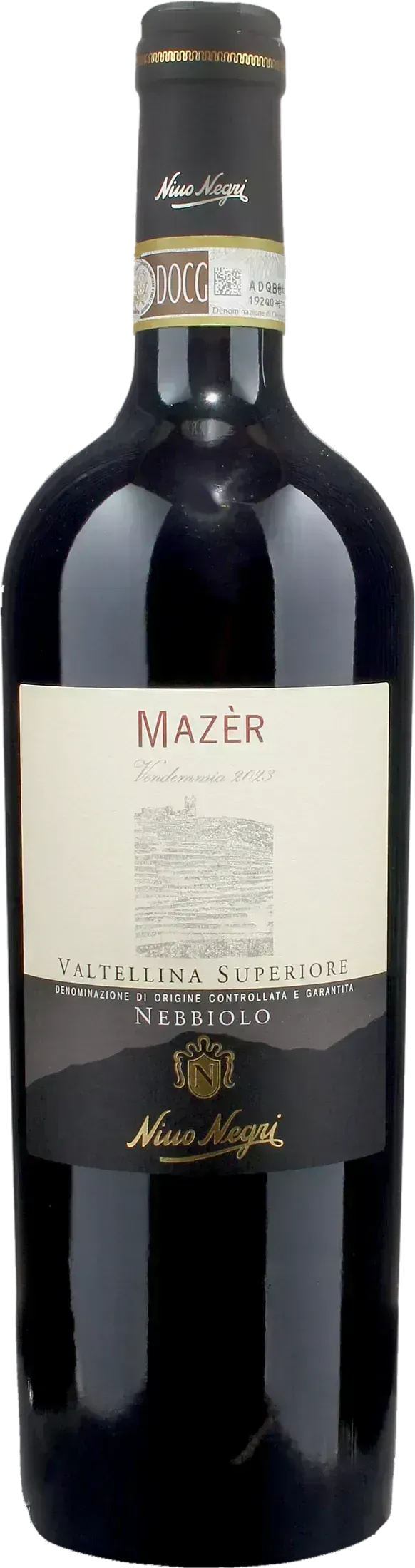
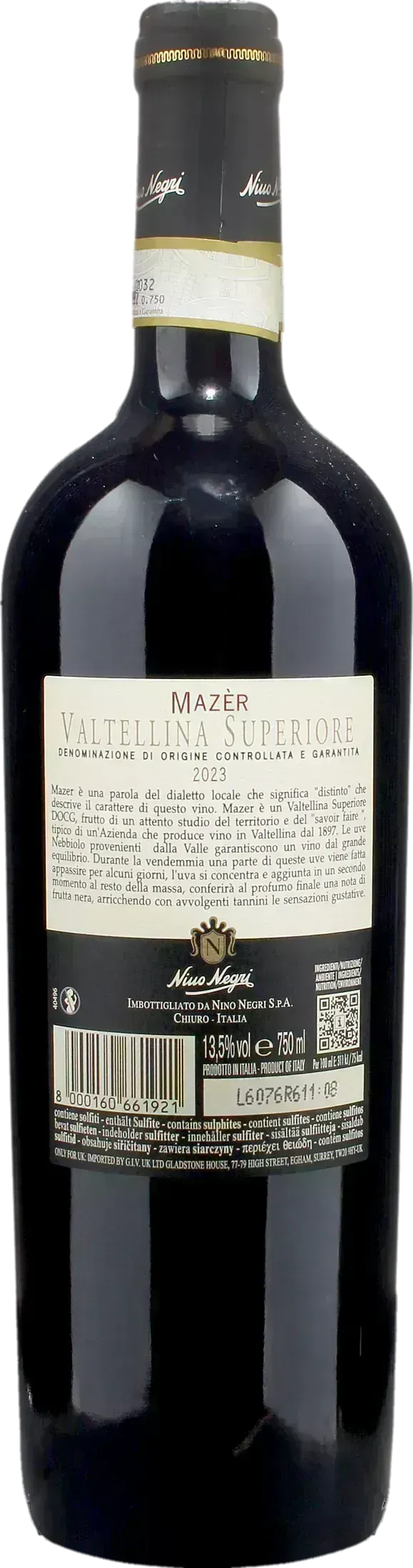
Valtellina Superiore Nebbiolo Mazer 2023
| Denomination | DOCG Valtellina Superiore |
|---|---|
| Size | 0,75 l |
| Alcohol content | 13.5% by volume |
| Area | Lombardy (Italy) |
| Grape varieties | 100% Nebbiolo |
| Aging | Total ageing of approximately 20 months in wood, split equally between second-fill French oak barriques and large wooden casks. |
- Grape variety and appellation: 100% Nebbiolo (Chiavennasca), Valtellina Superiore DOCG
- Aromatic profile: hints of redcurrant, rhubarb, tamarind, dried flowers, bitter spices and liquorice
- Palate: dry and savoury, slender body, soft tannins and a citrusy finish with toasted notes
- Vinification: manual harvest, light drying and 20 months in barriques and barrels
- Food pairings: decant for 1 hour; serve at 16-18°C with roasts, game and aged cheeses
Description
Type of wine
Nino Negri Mazèr is a still red wine that expresses the authenticity of Nebbiolo, locally known as Chiavennasca, produced in Lombardy. This expression of Valtellina Superiore stands out for its intense aromatic profile, with notes of blackberry, blueberry, spices, liquorice, and pot-pourri. On the palate, it is dry, savoury, and slender-bodied, supported by velvety and elegant tannins, leading to a persistent finish with citrus hints. The winemaking involves a slight drying of a portion of the grapes, followed by fermentation in steel and ageing in oak barrels, which lends structure and complexity to the wine.
Origin
The grapes for Mazèr come from the terraced vineyards of Valtellina Superiore, located in the province of Sondrio. The vineyards are situated at an altitude between 300 and 500 metres above sea level, with a favourable south-facing exposure. The sandy-loam soils, shallow and moderately acidic, rest on sandstone rocks and are supported by traditional dry-stone walls. The Alpine climate of this mountain area deeply influences the ripening of the grapes, ensuring aromatic freshness and a well-defined structure.
How it is produced
Production begins with a manual harvest, carefully selecting the bunches. A small percentage of the grapes undergoes a light drying in a drying room to concentrate sugars and aromas. Winemaking takes place at a controlled temperature, keeping the fresh grapes separate from the dried ones. Subsequently, the blending is carried out to create the final blend. Ageing lasts for about twenty months in wood, combining second-passage French oak barriques and large oak casks. This meticulous process shapes the structure of the wine, preparing it for bottling and evolution over time.
History and interesting facts
Founded in 1897, the glorious Nino Negri winery celebrates Lombard tradition through precious heroic viticulture. The name of this excellent label derives from the local dialect term Mazèr, which means distinguished, testifying to its noble Alpine identity. A historical peculiarity concerns Nebbiolo, known here as Chiavennasca, carefully cultivated on steep terraces supported by ancient dry-stone walls. What makes its profile unique is a slight drying of a small portion of the grapes, a fascinating detail that enriches its deep bouquet.
Tasting notes

Perfume

Color

Taste
Serve at:
16 - 18 °C
Longevity:
05 - 10 years
Decanting time:
1 hour

- Start up year: 1897
- Oenologist: Danilo Drocco
- Bottles produced: 700.000
- Hectares: 160
All this, together with several estate vineyards located in the heart of the leading wine sub-regions of Valtellina. Read more


| Name | Nino Negri Valtellina Superiore Nebbiolo Mazer 2023 |
|---|---|
| Type | Red still |
| Denomination | Valtellina Superiore DOCG |
| Vintage | 2023 |
| Size | 0,75 l |
| Alcohol content | 13.5% by volume |
| Grape varieties | 100% Nebbiolo |
| Country | Italy |
| Region | Lombardy |
| Vendor | Nino Negri |
| Story | History and interesting facts Founded in 1897, the glorious Nino Negri winery celebrates Lombard tradition through precious heroic viticulture. The name of this excellent label derives from the local dialect term Mazèr, which means distinguished, testifying to its noble Alpine identity. A historical peculiarity concerns Nebbiolo, known here as Chiavennasca, carefully cultivated on steep terraces supported by ancient dry-stone walls. What makes its profile unique is a slight drying of a small portion of the grapes, a fascinating detail that enriches its deep bouquet. |
| Origin | Vineyards of Valtellina Superiore (Lombardy), in the municipality of Chiuro (province of Sondrio), Italy |
| Climate | Alpine climate |
| Soil composition | Sandy loam soils |
| Cultivation system | Modified arched Guyot |
| Plants per hectare | 3,500 vines/ha |
| Yield per hectare | 10,000 kg/ha |
| Harvest | End of September |
| Fermentation | 5 days (dried grapes) and 6 days (fresh grapes) |
| Production technique | Manual harvest; light drying of a portion of the grapes in a drying room; red wine fermentation at a controlled temperature; ageing in wood (second-fill French oak barriques and large casks). |
| Wine making | Manual harvest at the end of September; a small portion of the bunches rests in the drying room for light withering. Fermentation (separate for fresh and dried grapes) with red vinification at a controlled temperature and variable post-fermentation macerations. Final blending and overall ageing for approximately 20 months in wood, split equally between second-fill French oak barriques and large oak barrels/vats, with subsequent integration before bottling. |
| Aging | Total ageing of approximately 20 months in wood, split equally between second-fill French oak barriques and large wooden casks. |
| Total acidity | 5.1 gr/L |
| PH | 3.67 |
| Dry extract | 28.3 gr/L |
| Allergens | Contains sulphites |