


Mousse Fils
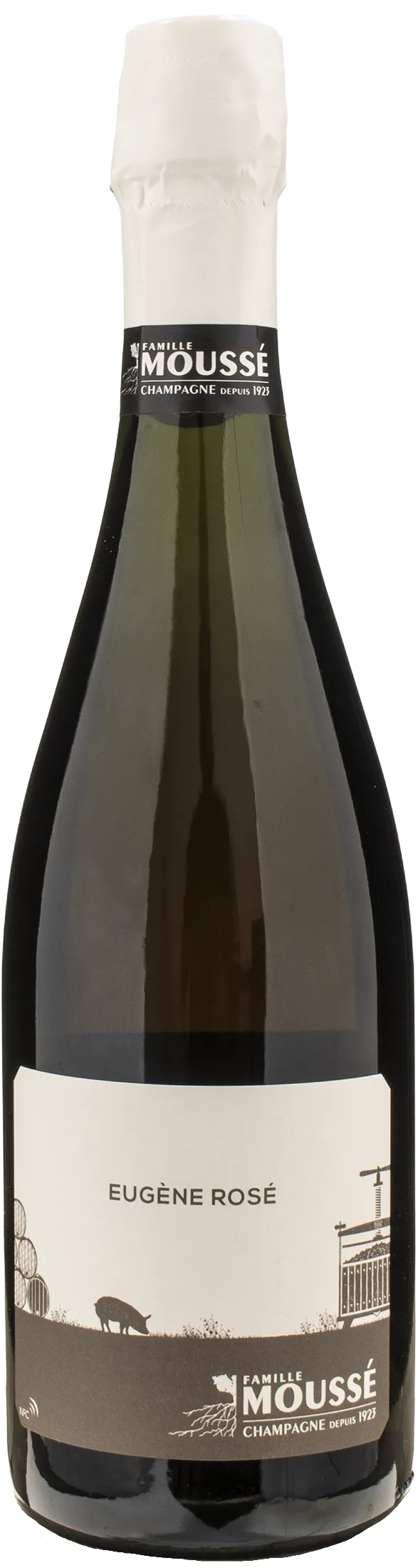
Champagne Rosè Eugene Extra Brut
| Denomination | AOC Champagne Rosè |
|---|---|
| Size | 0,75 l |
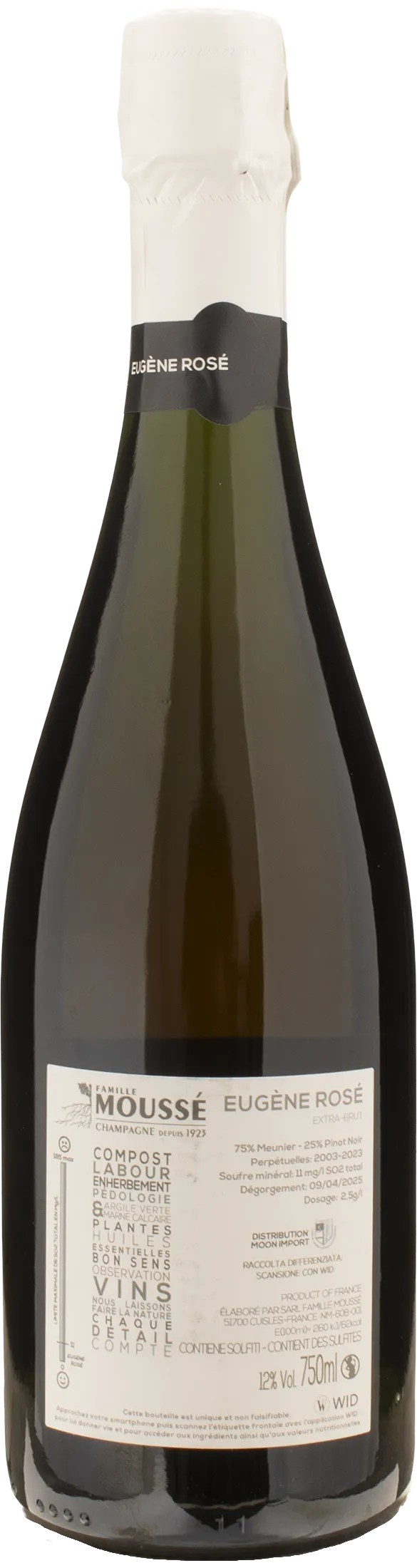
| Alcohol content | 12.0% by volume |
| Area | Champagne region (France) |
| Grape varieties | 75% Pinot Meunier, 25% Pinot Nero |
| Aging | Aged on the lees for an average of 18 months before disgorgement; red wine aged in barrels that are at least 8 years old (old barrels to encourage oxidation). |
- Composition: 75% Pinot Meunier and 25% Pinot Noir for a rosé with a distinctive personality
- Technique: blending of two perpetual reserves in solera style, with a refined oxidative character
- Flavour profile: Extra Brut dosage at 2.5 g/l, with a precise and vertical finish
- Maturation: 18 months on the lees; red component aged in ancient barrels of at least 8 years
- Origin and pairings: Marne Valley; suitable for selected cured meats, cheeses and fish
Description
What kind of wine it is
Mousse Fils Champagne Rosé Eugene Extra Brut is a rigorous Traditional Method sparkling wine produced in the renowned Champagne region. This sparkling wine is created from a skilful blend of Pinot Meunier and Pinot Noir grapes, resulting in a dry and exceptionally clean flavour profile. The palate reveals the pronounced character of Pinot Meunier and the complexity of a blend of perpetual reserves aged in partially filled barrels. Thanks to the gentle oxidative influence of the wood and careful lees ageing for around eighteen months, the Champagne acquires a precise and well-defined structure. The finish is crisp and dry, making it an excellent companion for quality cured meats, cheeses, and fish-based dishes.
Where it comes from
This wine originates in the Marne Valley, at the heart of Champagne, from vineyards spread across the villages of Cuisles, Jonquery, and Châtillon-sur-Marne. The vines are rooted in soils characterised by green clays and calcareous marls, a geological matrix ideal for imparting freshness and a clear varietal expression to the fruit. The depth of the blend is enhanced by a portion of red wine obtained from a single plot of Pinot Meunier located in Cuisles. The Mousse Fils winery, a member of the Club Trésor de Champagne, has been faithfully interpreting the nuances of this specific terroir for four generations.
How it is produced
Production begins with a strictly manual harvest. For the rosé component, the Pinot Meunier grapes undergo a cold maceration to gently extract the primary aromas. The backbone of the cuvée comes from the union of two perpetual reserves managed in the solera style: one part white wine and one part red wine. The latter matures in old barrels at least eight years old, a deliberate choice to encourage an elegant oxidative evolution. After malolactic fermentation and a controlled addition of their own mineral sulphur, the wine rests in bottle before being finished with a measured Extra Brut dosage.
History and Curiosities
Founded in 1923 in the Marne Valley, the Mousse Fils maison produces exceptional products that enhance the uniqueness of the region. This refined Champagne Rosé Extra Brut is created from the union of two perpetual reserves in the solera style, enriched by a red wine aged in old barrels to impart alluring oxidative nuances. Thanks to the long cold maceration of the Pinot Meunier and 18 months of ageing on the lees, it offers unparalleled complexity and a pleasantly dry sip, ideal for enhancing fine cured meats, cheeses, and fish dishes.
Tasting notes

Color
Taste
Serve at:
06 - 08 °C
Longevity:
05 - 10 years
- Start up year: 1923


| Name | Mousse Fils Champagne Rosè Eugene Extra Brut |
|---|---|
| Type | Rosé classic method sparkling wine extra brut |
| Denomination | Champagne AOC |
| Size | 0,75 l |
| Alcohol content | 12.0% by volume |
| Grape varieties | 75% Pinot Meunier, 25% Pinot Nero |
| Country | France |
| Region | Champagne region |
| Vendor | Mousse Fils |
| Story | History and Curiosities Founded in 1923 in the Marne Valley, the Mousse Fils maison produces exceptional products that enhance the uniqueness of the region. This refined Champagne Rosé Extra Brut is created from the union of two perpetual reserves in the solera style, enriched by a red wine aged in old barrels to impart alluring oxidative nuances. Thanks to the long cold maceration of the Pinot Meunier and 18 months of ageing on the lees, it offers unparalleled complexity and a pleasantly dry sip, ideal for enhancing fine cured meats, cheeses, and fish dishes. |
| Origin | Cuisles, Jonquery, Châtillon-sur-Marne |
| Soil composition | 90% green clays on calcareous marls |
| Production technique | Traditional method (blending of perpetual reserves, solera style) |
| Wine making | Malolactic fermentation; use of homemade mined sulphur (< 10 mg/l H2SO4); blending of 2 perpetual reserves (one of white wine and one of red wine); long, cold pre-fermentation macerations for Meunier grapes; red wine vinified and aged in old barrels (at least 8 years) to encourage oxidation; ageing on the lees for an average of 18 months before disgorgement; sugar added at disgorgement 2.5 g/l. |
| Aging | Aged on the lees for an average of 18 months before disgorgement; red wine aged in barrels that are at least 8 years old (old barrels to encourage oxidation). |
| Residual sugar | 2.5 gr/L |
| Allergens | Contains sulphites |