


Monsupello
Nature Metodo Classico
| Denomination | VSQ |
|---|---|
| Size | 0,75 l |
| Alcohol content | 13.0% by volume |
| Area | Lombardy (Italy) |
| Grape varieties | 90% Pinot Nero, 10% Chardonnay |
| Aging | The Pinot Noir and Chardonnay cuvée undergoes protein stabilisation and filtration; during tirage, it is bottled in Champagne bottles together with a liqueur de tirage made of wine, sugar and selected yeasts. The bottles are sealed with a bidule and crown cap and stacked in the cellar to undergo secondary fermentation at a constant temperature of 12°C. |
- Pas Dosé blend: 90% Pinot Noir, 10% Chardonnay; no sugar dosage
- Traditional Method: gentle pressing, fermentation at 18°C, secondary fermentation at 12°C
- Tasting: extremely dry flavour, fine and persistent perlage, very soft mousse
- Aromas: bread crust, blackcurrant, bitter almond and toasted hazelnut
- Origin and awards: Oltrepò Pavese; Tre Bicchieri and platinum medal at the Merano Wine Festival
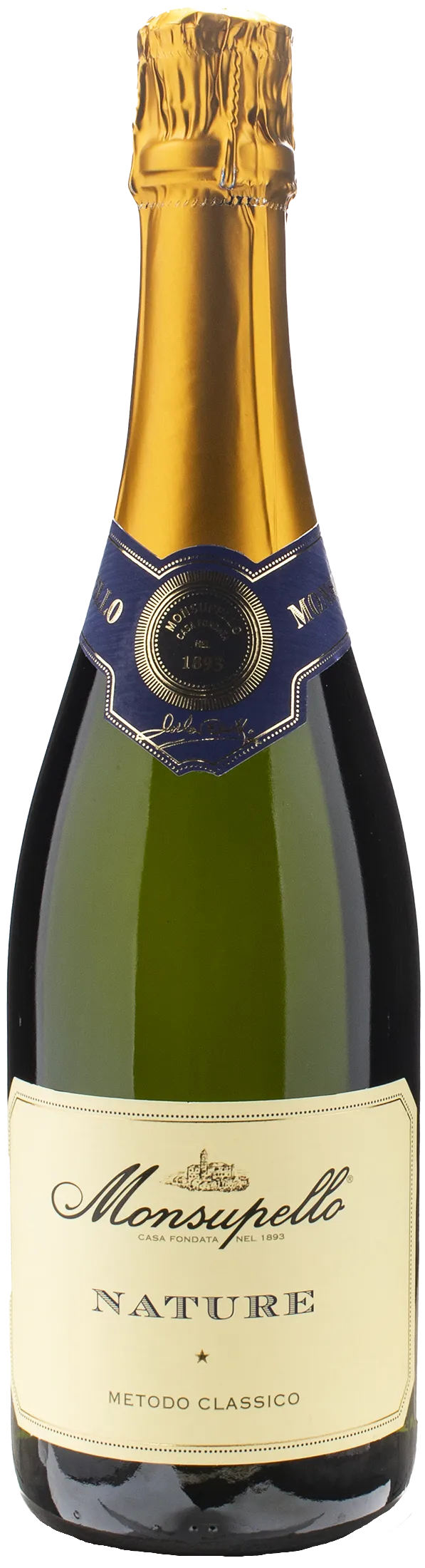
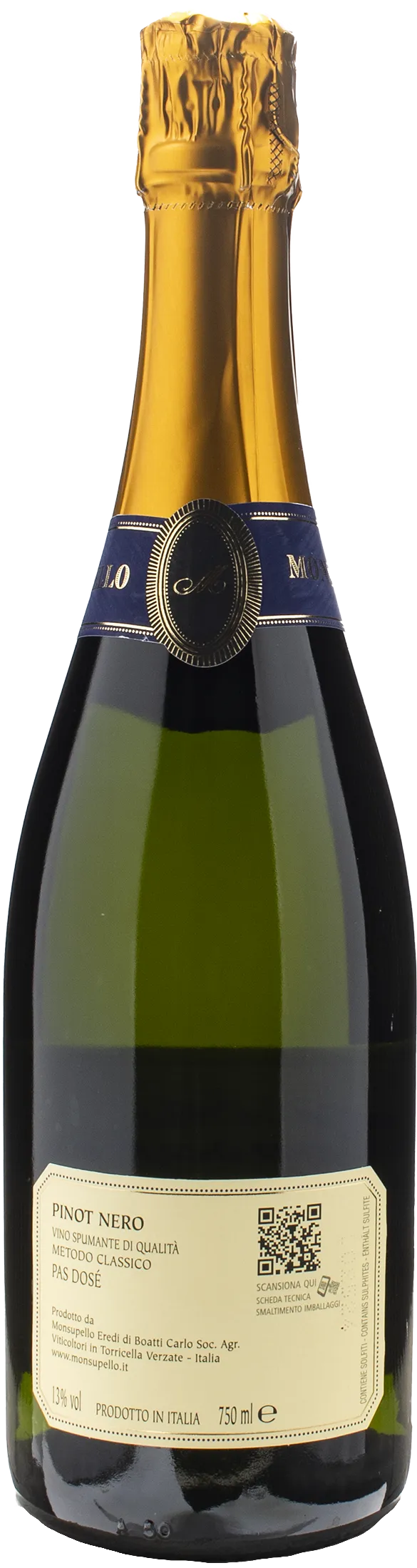
Description
What kind of wine it is
Monsupello Nature is a pas dosé sparkling wine that encapsulates the soul of Oltrepò Pavese. The result of a refined blend of Pinot Noir and Chardonnay, it is produced according to the principles of the Traditional Method. To the eye, it displays an intense straw yellow colour, enhanced by a fine and persistent perlage and a soft mousse. On the palate, it is extremely dry, characterised by a crystalline purity due to the absence of sugar dosage. The bouquet is dominated by hints of bread crust, enriched with notes of blackcurrant, bitter almond and toasted hazelnut.
Where it comes from
The vineyards are located in the hilly areas of Oltrepò Pavese, specifically between Torricella Verzate and Oliva Gessi, with an optimal south-east exposure. The vines sink their roots into clay-limestone soils rich in sandy sedimentary rocks, elements that provide solidity and structure. The area's climate, characterised by excellent sunshine and significant temperature variations, promotes perfect ripening. In this environment, Monsupello cultivates grapes of excellent quality, capable of giving the wine an extraordinary freshness.
How it is produced
Harvesting is done by hand in August, preceded by meticulous thinning in the vineyard. The vinification process begins with a gentle pressing of whole bunches to obtain only the free-run must. Primary fermentation takes place in stainless steel tanks at a controlled temperature. This is followed by the blending of the cuvée, stabilisation and filtration. The crucial stage of the Traditional Method is the prise de mousse, achieved through refermentation in the bottle. The subsequent maturation and long ageing on the lees define the aromatic profile and velvety texture of this sparkling wine.
History and Curiosities
Founded in 1893 in the Oltrepò Pavese, the Monsupello winery is a symbol of oenological excellence. From its finest vineyards, including the renowned cru Cà del Tava, comes the Nature Metodo Classico, a true emblem of the estate. The meticulous care devoted to this elegant pas dosé sparkling wine has won over critics, placing it at the very top of the industry. This prestigious label boasts highly significant accolades such as the Tre Bicchieri and the “Sparkling Wine of the Year” award from Gambero Rosso, as well as the coveted Platinum Medal at the Merano Wine Festival.
Awards
-
 3
3This guide is highly respected and offers the most comprehensive review of Italian wines. It has a long tradition and is based on blind tastings carried out by over 100 experts.
-
 4
4Italian Sommelier Association (AIS) guide
Tasting notes

Perlage
Perfume

Color
Taste
Serve at:
06 - 08 °C
Longevity:
05 - 10 years

- Start up year: 1893
- Oenologist: Stefano Torre, Federico Fermini
- Bottles produced: 320.000
- Hectares: 50
Daring what is new, dreaming it, imagining it, and making it real: in the name of the father, Carlo Boatti, and today with his children Pierangelo and Laura. With different sensitivities and attitudes, they are interpreters of future horizons, in the contemporaneity of their sparkling wines. Read more


| Name | Monsupello Nature Metodo Classico |
|---|---|
| Type | White classic method sparkling wine pas dosé |
| Denomination | VSQ |
| Size | 0,75 l |
| Alcohol content | 13.0% by volume |
| Grape varieties | 90% Pinot Nero, 10% Chardonnay |
| Country | Italy |
| Region | Lombardy |
| Vendor | Monsupello |
| Story | History and Curiosities Founded in 1893 in the Oltrepò Pavese, the Monsupello winery is a symbol of oenological excellence. From its finest vineyards, including the renowned cru Cà del Tava, comes the Nature Metodo Classico, a true emblem of the estate. The meticulous care devoted to this elegant pas dosé sparkling wine has won over critics, placing it at the very top of the industry. This prestigious label boasts highly significant accolades such as the Tre Bicchieri and the "Sparkling Wine of the Year" award from Gambero Rosso, as well as the coveted Platinum Medal at the Merano Wine Festival. |
| Origin | First hills of Oltrepò Pavese, between the municipalities of Oliva Gessi and Torricella Verzate |
| Climate | Microclimate with significant temperature ranges and abundant daytime sunshine |
| Soil composition | Clay-calcareous; sandy and clayey sedimentary rocks; rich in limestone |
| Cultivation system | Guyot |
| Plants per hectare | 4,500 |
| Yield per hectare | 9.000 |
| Harvest | Early August |
| Fermentation temperature | 18 °C (first fermentation); 12 °C (bottle refermentation) |
| Production technique | Traditional method (bottle fermentation) |
| Wine making | White vinification begins with gentle pressing of the whole grapes, separating the must from the skins and distinguishing between the free-run must (the first 50% of the juice) and the must from the second pressing; the free-run must is clarified, racked after about a day, and fermented in stainless steel tanks at a controlled temperature of 18°C. This is followed by the preparation of the cuvée and the prise de mousse through refermentation in the bottle according to the Traditional Method, with the addition of liqueur de tirage (wine, sugar, and selected yeasts) and maturation on the lees at a constant temperature of 12°C. |
| Aging | The Pinot Noir and Chardonnay cuvée undergoes protein stabilisation and filtration; during tirage, it is bottled in Champagne bottles together with a liqueur de tirage made of wine, sugar and selected yeasts. The bottles are sealed with a bidule and crown cap and stacked in the cellar to undergo secondary fermentation at a constant temperature of 12°C. |
| Total acidity | 6.8 gr/L |
| PH | 3.12 |
| Residual sugar | 2.9 gr/L |
| Dry extract | 24.0 gr/L |
| Year production | 320000 bottles |
| Allergens | Contains sulphites |