


Casa E. di Mirafiore
Vermouth di Torino Rosso Superiore 0.75L
| Size | 0,75 l |
|---|---|
| Alcohol content | 17.0% by volume |
| Area | Piedmont (Italy) |
- Origin: Produced in Piedmont by Casa E. di Mirafiore, founded in 1878
- Organic grapes: Estate-grown organic Nebbiolo and Moscato grapes, fortified to 17% ABV
- Botanical blend: Contains 46 natural extracts of herbs, flowers, roots, fruits and spices
- Flavour profile: Smooth, structured sweet red vermouth with herbal, floral and spiced notes
- Serving suggestions: Serve over ice with orange, or use in a Negroni or Manhattan
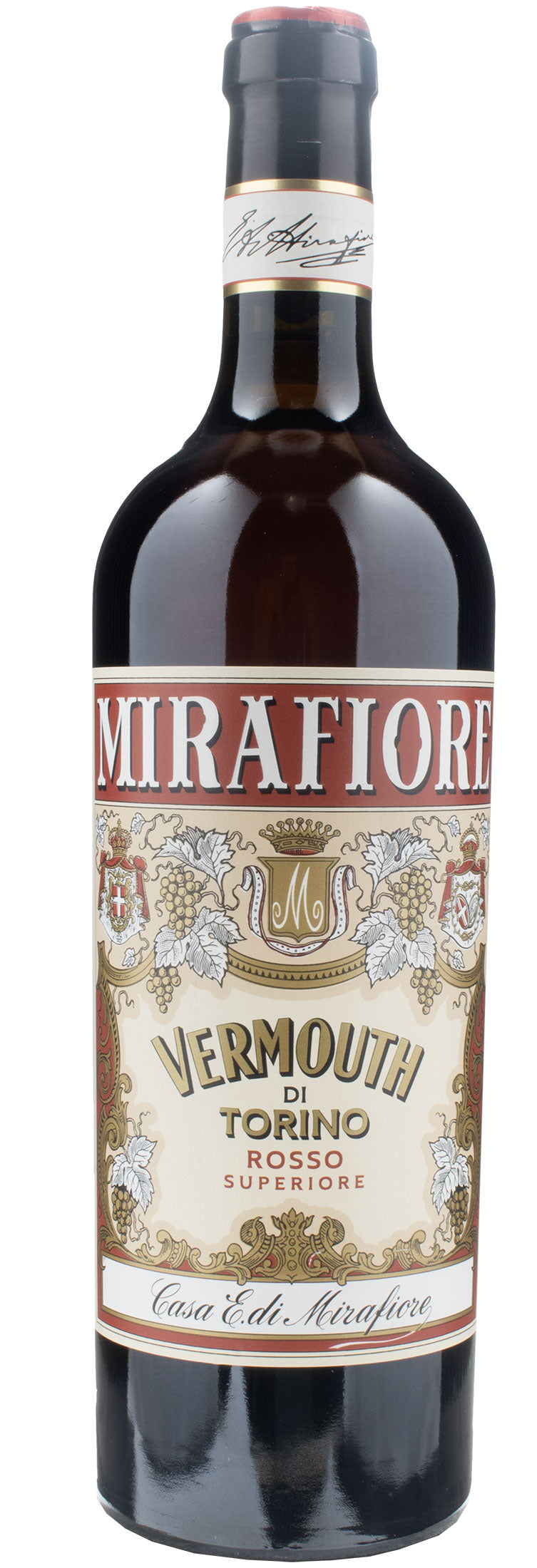
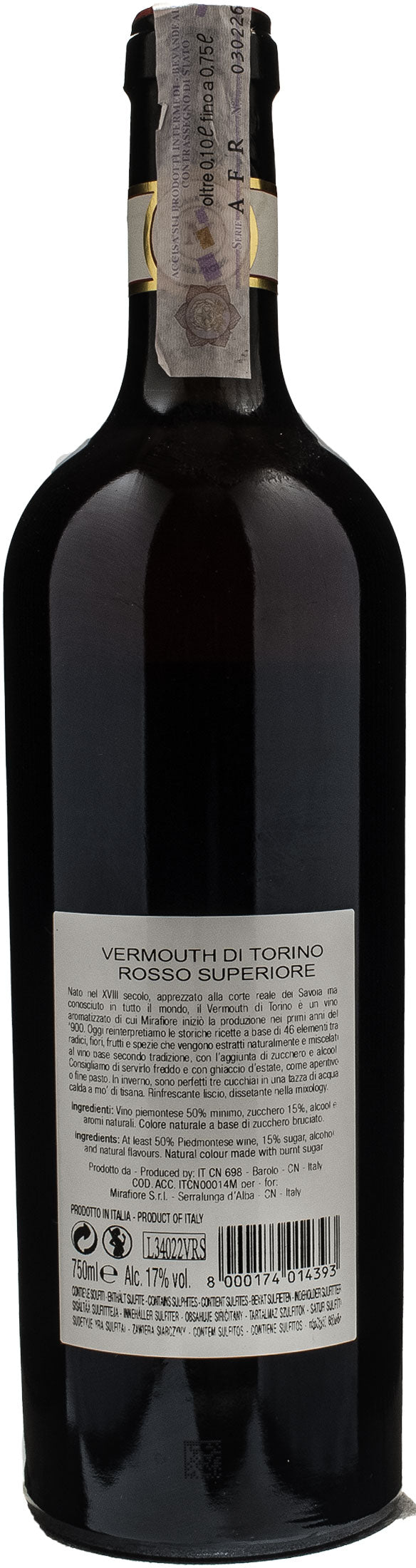
Description
What kind of spirit is it
Vermouth di Torino Rosso Superiore by Mirafiore is a structured and well-balanced sweet red Vermouth crafted in Piedmont from organically grown Nebbiolo and Moscato grapes sourced directly from the vineyards, fortified to reach a 17% ABV. The distinctive character emerges from the natural extraction of 46 botanicals, creating a complex profile of aromatic herbs, flowers, roots, and spices. On the palate, it delivers a smooth experience with prominent floral and spiced notes. This intensely herbal spirit is perfect for sipping neat over ice with a slice of orange or for elevating classic cocktails such as the Negroni and Manhattan.
Where it comes from
This classic spirit originates in Piedmont, reflecting the rich history of north-west Italy. Crafted by Mirafiore, a historic estate founded in 1878 by Emanuele Alberto, the winery is recognised as one of the earliest producers of Barolo. The cellars expanded their expertise to create this style of Vermouth at the beginning of the twentieth century. A profound connection to the region is evident in the exclusive use of organic estate grapes, ensuring agricultural authenticity. By applying a meticulous approach to blending local herbs and spices, the producer creates a Piedmontese Vermouth that embodies a clear identity and a controlled, sweet and spiced balance.
How it is made
The production process begins with a careful vinification of the organic base wine, ensuring the primary characteristics of the Nebbiolo and Moscato grapes remain intact. Simultaneously, the aromatic compounds are captured through the natural extraction of a diverse selection of herbs, flowers, roots, fruits, and spices. These precise botanical extracts are seamlessly integrated into the wine alongside alcohol and sugar, establishing the final strength and defining the sweet red style. The resulting spirit maintains a smooth, rich structure and a complex herbal and floral profile, providing an ideal foundation for mixed drinks or an engaging sip on its own.
History and Heritage
Rooted in the heritage of the House of Savoy, this Vermouth di Torino celebrates the legacy of a historic Piedmontese estate founded in 1878. Established by Emanuele Alberto, Count of Mirafiore, the estate was notably one of the first wineries to produce Barolo. The cellars began crafting this style of vermouth at the dawn of the twentieth century, maintaining a profound connection to the rigorous Piedmontese liqueur-making school.
Tasting notes

Perfume

Color

Taste
Serve at:
14 -16 °C

- Start up year: 1878
- Oenologist: Andrea Conti
- Bottles produced: 200.000
- Hectares: 25
Since 1878, Casa E. Di Mirafiore has been overlooking this UNESCO world heritage landscape with his estates in Barolo and Serralunga, the heart of one of the world's most famous wines: Barolo. It is also thanks to Casa E. Di Mirafiore that the world is aware of Barolo. It is in fact the first winery to export Barolo worldwide.
This estate is synonymous with quality, as it is home to two of the best Cru vineyards in the Langhe: Lazzarito (on one of Serralunga d'Alba's most magnificent slopes) and Paiagallo.
In this town, Serralunga d'Alba, tradition is never forgotten. Even today, the style of Casa E. Mirafiore is defined by fermentation in concrete tanks and enormous Slavonian oak barrels for ageing. Read more


| Name | Mirafiore Vermouth di Torino Rosso Superiore 0.75L |
|---|---|
| Type | Vermouth |
| Size | 0,75 l |
| Alcohol content | 17.0% by volume |
| Country | Italy |
| Region | Piedmont |
| Vendor | Casa E. di Mirafiore |
| Story | History and Heritage Rooted in the heritage of the House of Savoy, this Vermouth di Torino celebrates the legacy of a historic Piedmontese estate founded in 1878. Established by Emanuele Alberto, Count of Mirafiore, the estate was notably one of the first wineries to produce Barolo. The cellars began crafting this style of vermouth at the dawn of the twentieth century, maintaining a profound connection to the rigorous Piedmontese liqueur-making school. |
| Origin | Piedmont, Italy |
| Production technique | Made with organically grown grapes and natural extraction of the botanicals, then blended into the base wine following tradition |
| Allergens | Contains sulphites |