


Matteo Correggia
Barbera d'Alba Superiore Marun 2024
| Denomination | DOC Barbera d'Alba Superiore |
|---|---|
| Size | 0,75 l |
| Alcohol content | 14.5% by volume |
| Area | Piedmont (Italy) |
| Grape varieties | 100% Barbera |
| Aging | At least 15 months in 30-hl casks and in small used wooden barrels; at least 10 months in the bottle. |
- Type: Still organic red wine from Barbera Superiore 2024 grapes, 14.5% vol
- Aroma: Hints of dark fruits, spices and cocoa; balsamic accents, vanilla, tobacco and liquorice
- Palate: Intense structure, bright acidity and soft tannins; long finish
- Winemaking: 8-10 days maceration in steel; aged for 9 months in used barrels and wood
- Origin: Marun vineyard in Canale, on sandy soils; annual production of approximately 14,000 bottles
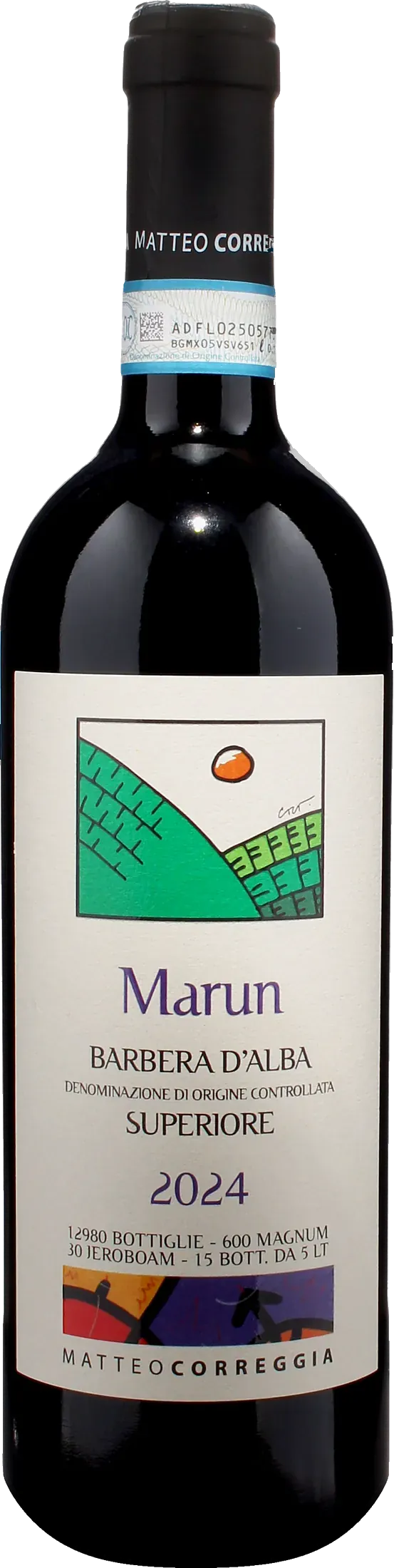
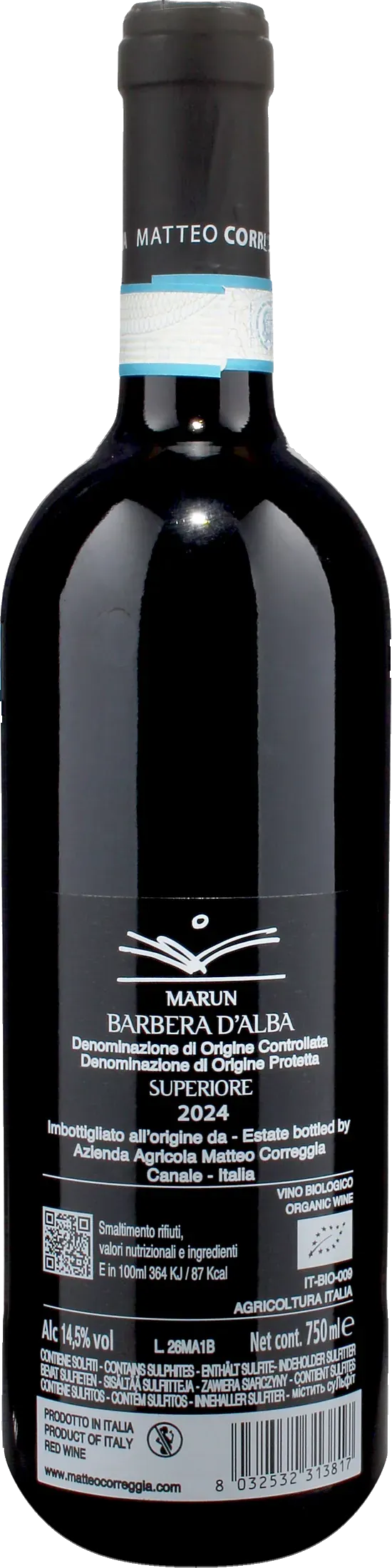
Description
What type of wine it is
Matteo Correggia Barbera d’Alba Superiore Marun is a still organic red wine that precisely expresses the character of the Barbera grape variety. Produced in Piedmont in the Barbera d’Alba Superiore area, it stands out for its full and structured style. On the palate, it reveals a vigorous body, supported by a vibrant acidic drive and perfectly integrated silky tannins. Its sensory profile opens with a ruby red colour with deep violet highlights, anticipating a sip of masterful balance. Meticulous care during the winemaking phase ensures a prolonged taste persistence, enriched by elegant aromatic returns.
Where it comes from
This wine originates from the renowned Marun vineyard, located in the municipality of Canale, within a particularly well-suited Piedmontese territory. The vines enjoy a favourable south-facing exposure and are situated at an altitude between 290 and 310 metres above sea level, ensuring complete ripening of the bunches. The distinctive element of this plot lies in the sandy composition of the soil, characterised by fine and coarse sands enriched with silt and a minimal clay fraction. This peculiar substrate gives the wine momentum and aromatic definition, enhancing the expressive finesse of the area of origin.
How it is produced
The production process begins with a manual harvest of the bunches towards the end of September, guaranteeing a rigorous selection of the fruit. In the cellar, winemaking involves maceration on the skins for eight to ten days in stainless steel tanks, a technique aimed at extracting intense colour and a complex phenolic structure. The wine then undergoes a period of ageing in barrels and small used wooden casks, followed by a further rest in the bottle. This process brings out a concentrated olfactory bouquet of black fruits, cocoa and spices, which fade into balsamic and tobacco accents, culminating in a finish with clear hints of graphite.
History and interesting facts
As Giovanni points out, Barbera is a Mediterranean variety sensitive to humidity that requires ideal locations to reach full maturity, avoiding acidic and tannic harshness. The wine boasts a documented history of excellence, with Vinous scores recorded since the 1998 vintage reaching 93 points for the 2022. Annual production stands at approximately 14,000 bottles.
Tasting notes

Perfume

Color

Taste
Serve at:
16 - 18 °C
Longevity:
10 - 15 years
Decanting time:
1 hour
- Start up year: 1985
- Oenologist: Luca Rostagno, Giovanni Correggia
- Bottles produced: 150.000
- Hectares: 19
All the wines by Matteo Correggia are the result of personal experience, and there is no room for fashion or doctrine. The concern has always persevered when the results have been good, but never stopping to dare or consider what could be done better. Wine making takes place in modern wine cellars, in stainless stell vats at controlled temperature, while ageing is done in the large rooms created under the hill where Marun first began, in contact with the fossil rich millennial marlstones, that give them the dampness and quitness necessary as the perfect compliment to the whole process in the vineyards and wine cellars. the barrels and casks are carefully selected for the wines they will host, and gradually replaced according to a twenty-years pratice geared to avoid olfactory impact from the wood. All wines are bottled on the premises, in dedicated areas, where a large warehouse for stocking the bottles underground is attacched. The bottles are also labeled here, in keeping with Matteo Correggia Concer tradition. They are decorated with paintings by Coco Cano depictiong the gentle slopes planted with vines and bathed by the roero's hot sun. Read more


| Name | Matteo Correggia Barbera d'Alba Superiore Marun 2024 |
|---|---|
| Type | Red organic still |
| Denomination | Barbera d'Alba DOC |
| Vintage | 2024 |
| Size | 0,75 l |
| Alcohol content | 14.5% by volume |
| Grape varieties | 100% Barbera |
| Country | Italy |
| Region | Piedmont |
| Vendor | Matteo Correggia |
| Story | History and interesting facts As Giovanni points out, Barbera is a Mediterranean variety sensitive to humidity that requires ideal locations to reach full maturity, avoiding acidic and tannic harshness. The wine boasts a documented history of excellence, with Vinous scores recorded since the 1998 vintage reaching 93 points for the 2022. Annual production stands at approximately 14,000 bottles. |
| Origin | Canale (Province of Cuneo) |
| Soil composition | 64% fine sand, 4% coarse sand, 30% silt, 2% clay |
| Cultivation system | Guyot vertical trellis system |
| Plants per hectare | 5,000–5,800 vines per hectare |
| Yield per hectare | 45 hectolitres per hectare |
| Harvest | Hand-harvested at the end of September |
| Fermentation | 8–10 days |
| Production technique | Maceration on the skins for 8–10 days in stainless steel tanks |
| Wine making | 8 0 days of maceration on the skins in steel (stainless steel tanks). |
| Aging | At least 15 months in 30-hl casks and in small used wooden barrels; at least 10 months in the bottle. |
| Year production | 14000 bottles |
| Allergens | Contains sulphites |