

Masi Agricola
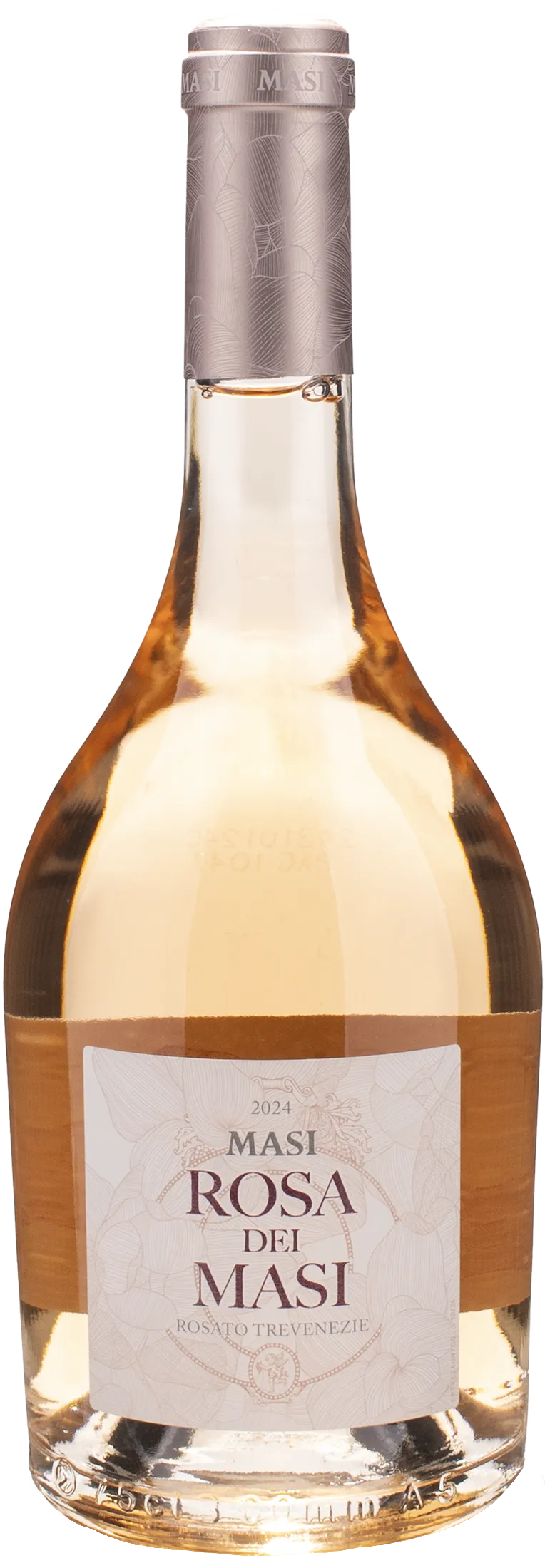
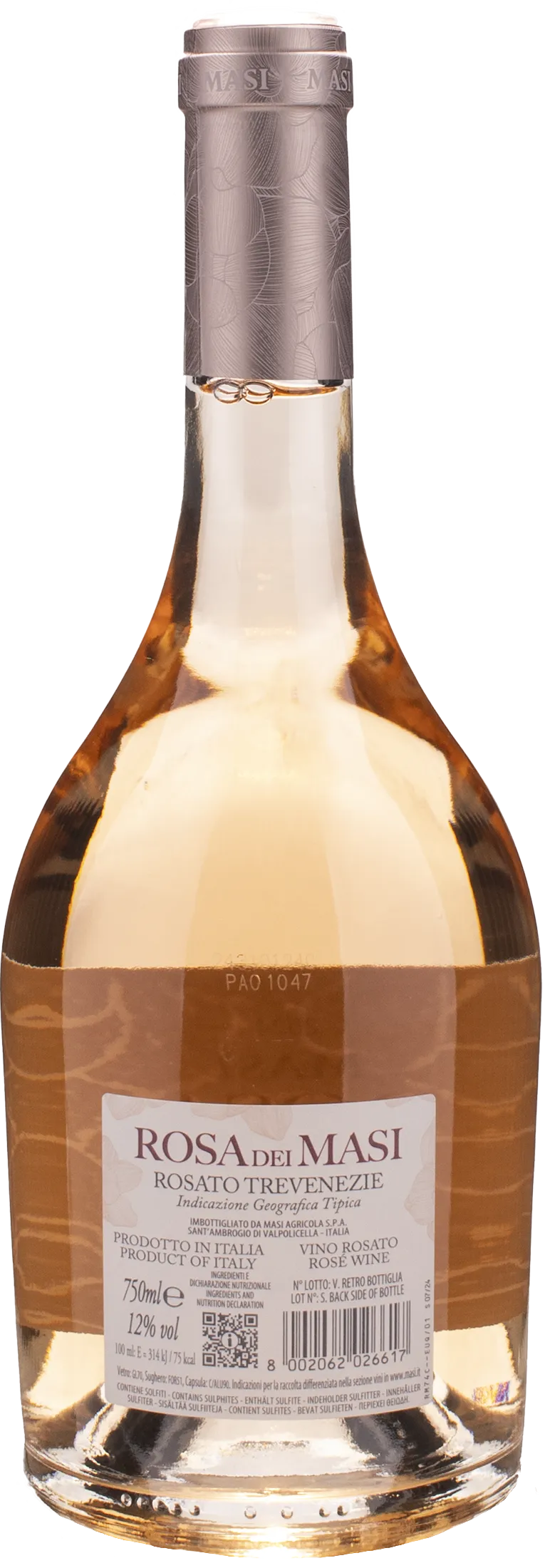
Rosa dei Masi Rosato 2024
Other years:
2023| Denomination | Tre Venezie IGT |
|---|---|
| Size | 0,75 l |
| Alcohol content | 12.0% by volume |
| Area | Veneto (Italy) |
| Grape varieties | 100% Merlot |
| Aging | Maturation in stainless steel on fine lees with weekly bâtonnage for about 60 days. Stabilisation, filtration and bottling. |
| Year | 2024 |
| Product name | Rosa dei Masi Rosato 2024 |
| Color | Pale pink with 'onion skin' reflections. |
| Perfume | Intense floral aromas emerge on the nose. |
| Taste | Fresh and pleasant on the palate where hints of red fruits stand out, with distinct notes of raspberry. Dry finish supported by pleasant acidity. |
| Pairings | Excellent as an aperitif all year round and to be enjoyed by the pool or on the seashore in combination with shellfish, oysters and seafood. Perfect with sushi and a good pasta dish with clams. Try it as a base for fresh fruit cocktails, it will be a pleasant surprise. |
| Region | Veneto |
| Country | Italy |
| Other years | 2023 |
Description
Rosa dei Masi Rosato 2024 from Masi Agricola, a still rosé from Veneto, a fresh and pleasant wine that celebrates spring. Made with Merlot grapes, this IGT Tre Venezie rosé is the expression of Masi's passion for quality wines. On the nose, it reveals intense floral aromas. Pale pink in color with onion skin highlights. Fresh and pleasant on the palate, it reveals aromas of red fruits, with pronounced notes of raspberry. The finish is dry, supported by a pleasant acidity. A perfect wine to accompany aperitifs, light dishes, and summer evenings.
Details

Perfume

Color

Taste
Serve at:
10 - 12 °C.
Longevity:
03 - 05 years
Pairings
- Start up year: 1772
- Oenologist: Gruppo Tecnico Masi
- Bottles produced: 3.950.000
- Hectares: 560
Masi produces first-class wines primarily from native grape varieties, using traditional methods that embody sustainability and continuous technological innovation. With more than two hundred and fifty vintages behind it, Masi has been owned since its inception by the Boscaini family, which today runs the company with the sixth, seventh and eighth generations. Read more


| Name | Masi Rosa dei Masi Rosato 2024 |
|---|---|
| Type | Rosé still |
| Denomination | Tre Venezie IGT |
| Vintage | 2024 |
| Size | 0,75 l |
| Alcohol content | 12.0% by volume |
| Grape varieties | 100% Merlot |
| Country | Italy |
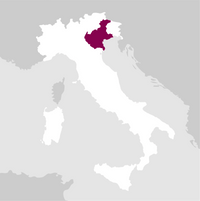
| Region | Veneto |
| Vendor | Masi Agricola |
| Origin | Upper Valpolicella vineyards. The Saline vineyard is situated in the north-eastern part of the commune of Negrar between 700 and 720 m a.s.l. with south-westerly exposure |
| Climate | Spring 2023 was characterised overall by rainfall that was in line with historical values and slightly higher temperatures. The vegetative resumption was earlier than the previous year, but temperature drops due to the unstable spring-summer weather led to a complete reabsorption of the phenological advance, causing a slight delay compared to the previous vintage. The 2023 summer season recorded average rainfall amounts and in some locations even higher. The summer rains contributed to a luxuriant development of the vegetative part and its fruit. From mid-August onwards, there was an exceptional increase in temperature at all sites, with maximum daytime temperatures of over 30-35 °C. Under these conditions, the vine slowed down its metabolic activity. The harvest in Valpolicella began in the first ten days of September with healthy, uniform and ripe grapes. |
| Soil composition | The soil presents a first layer of vegetation well deep on a substratum of skeleton mixed with clay. |
| Cultivation system | Double arbour training to protect against sunburn. |
| Fermentation temperature | 13 - 16 °C |
| Wine making | Very soft pressing (max.0.8 bar) of the still cold grapes with further addition of dry ice in the press. Flotation of must in tank, addition of selected yeasts and fermentation between 13 and 16 °C. Decanting. |
| Aging | Maturation in stainless steel on fine lees with weekly bâtonnage for about 60 days. Stabilisation, filtration and bottling. |
| Total acidity | 5.62 gr/L |
| PH | 3.28 |
| Residual sugar | 0.5 gr/L |
| Dry extract | 20.1 gr/L |
| Allergens | Contains sulphites |