


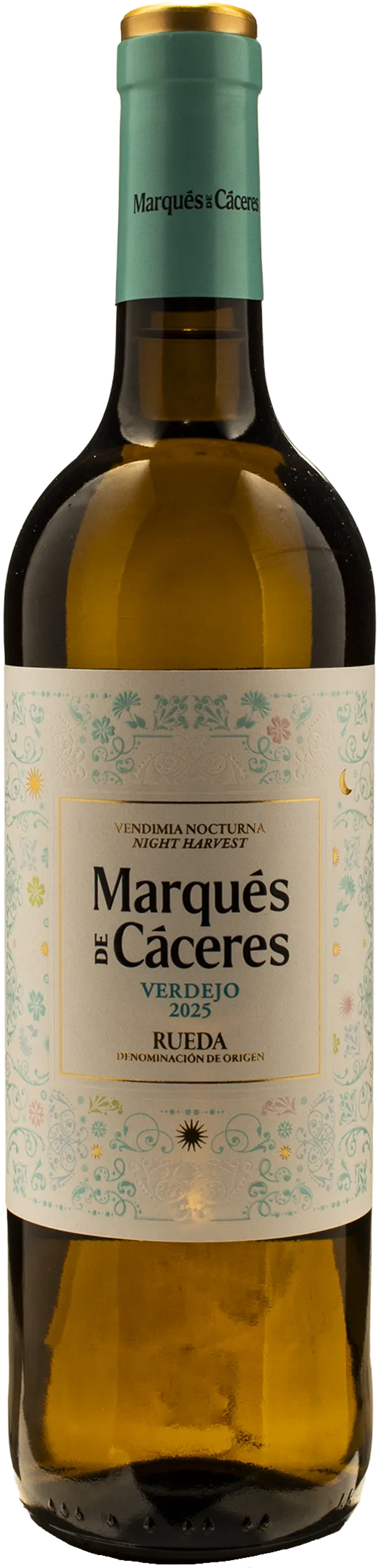
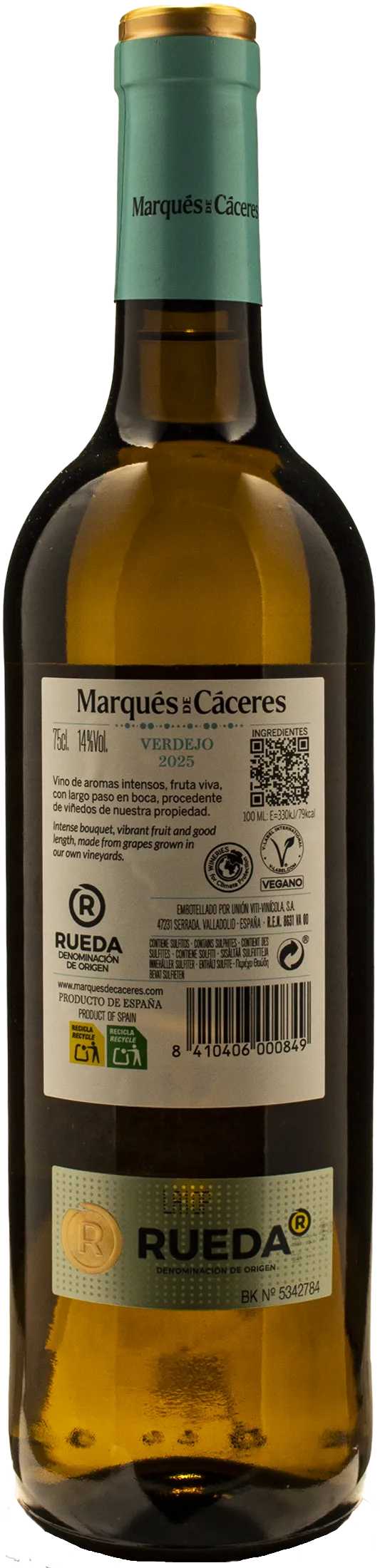
Marques de Caceres
Rueda Verdejo 2025
| Denomination | DO Rueda |
|---|---|
| Size | 0,75 l |
| Alcohol content | 14.0% by volume |
| Area | Castile and León (Spain) |
| Grape varieties | 100% Verdejo |
| Aging | Ageing on fine lees (kept on the lees until bottling in January following the harvest) |
- Style and characteristics: vegan white wine, fresh and lively, alcohol content 13.5–14%
- Grapes and region: 100% Verdejo from Serrada and La Seca, Rueda designation (Valladolid)
- Vinification: night-time harvest, fermentation in steel and ageing on fine lees
- Aromas: notes of white flowers, pear, apple and citrus fruits such as grapefruit and lime
- Pairings and serving: temperature 8–10 °C; suitable for aperitif, sushi, sashimi and shellfish
Description
What kind of wine it is
Marques de Caceres Rueda Verdejo is a white wine produced by Marqués de Cáceres. Made from Verdejo grapes, it represents a pure expression of the Rueda region. It stands out for its fresh aromatic profile, combining notes of white flowers with hints of pear, apple, and intense citrus accents of grapefruit and lime. On the palate, it offers a brilliant acidity and a medium body, delivering a pronounced minerality. The structure is balanced by a creamy texture that leads to a persistent finish. This white, suitable for a vegan diet, is ideal as an aperitif or paired with shellfish and sushi.
Where it comes from
The grapes are grown in the Valladolid area, specifically between Serrada and La Seca. The vineyards, over twenty-five years old, are rooted in gravelly soils with excellent drainage, an essential condition for promoting aromatic purity. The land benefits from a vegetative cover, locally known as a green mantle: a sustainable agricultural practice that encourages biodiversity while limiting pests. These territorial characteristics define a vibrant style, capable of delivering clear freshness and distinct fruity notes in the glass.
How it is produced
Production begins with a rigorous night harvest, crucial for preserving the intense freshness of the grapes. The grapes are chilled before pressing to protect the delicate varietal aromas. The must ferments in stainless steel tanks at a controlled temperature. The wine then undergoes careful ageing on fine lees until bottling, a process that imparts greater tactile complexity without weighing down the palate. This technique harmonises the flavour profile, concluding with a gentle bottling aimed at preserving all the nuances.
History and Curiosities
In the Rueda DO, vines over 25 years old grown on gravelly soils give rise to Marqués de Cáceres Rueda Verdejo 2025. The rigorous night-time harvest preserves the intense freshness of the grapes, enhancing their floral and citrus aromas. Thanks to a targeted ageing on fine lees, the wine acquires a pleasant creamy texture that balances its brilliant acidity. Born from sustainable viticulture, protected by a natural green cover, it offers a vibrant expression and purity, ideal for enhancing the most special occasions with genuine elegance.
Tasting notes
Perfume

Color

Taste
Serve at:
12 - 14 °C
Longevity:
03 - 05 years
Today, he has been succeded by his son D. Juan Noguera Merle, a worthy representative of the Marquisate which was granted in the XVIII century to his ancestor Juan Ambrosio Harcia de Càceres y Montemayor, a Captain of the Royal Armada for war merits. Read more


| Name | Marques de Caceres Rueda Verdejo 2025 |
|---|---|
| Type | White green still |
| Denomination | Rueda DO |
| Vintage | 2025 |
| Size | 0,75 l |
| Alcohol content | 14.0% by volume |
| Grape varieties | 100% Verdejo |
| Country | Spain |
| Region | Castile and León |
| Vendor | Marques de Caceres |
| Story | History and Curiosities In the Rueda DO, vines over 25 years old grown on gravelly soils give rise to Marqués de Cáceres Rueda Verdejo 2025. The rigorous night-time harvest preserves the intense freshness of the grapes, enhancing their floral and citrus aromas. Thanks to a targeted ageing on fine lees, the wine acquires a pleasant creamy texture that balances its brilliant acidity. Born from sustainable viticulture, protected by a natural green cover, it offers a vibrant expression and purity, ideal for enhancing the most special occasions with genuine elegance. |
| Origin | Serrada and La Seca, Rueda (Valladolid), Castile and León, Spain |
| Soil composition | Gravelly soils with excellent drainage; partly brown soil with vegetative cover ('green mantle') |
| Production technique | Night harvest; fermentation in temperature-controlled stainless steel tanks on fine lees; ageing on fine lees until bottling |
| Wine making | Hand-picked grapes harvested at night, chilled before pressing, fermented in stainless steel tanks at controlled temperature on fine lees and kept on the lees until bottling (in January following the harvest); gentle bottling to preserve the nuances. |
| Aging | Ageing on fine lees (kept on the lees until bottling in January following the harvest) |
| Allergens | Contains sulphites |