


Marchesi di Barolo
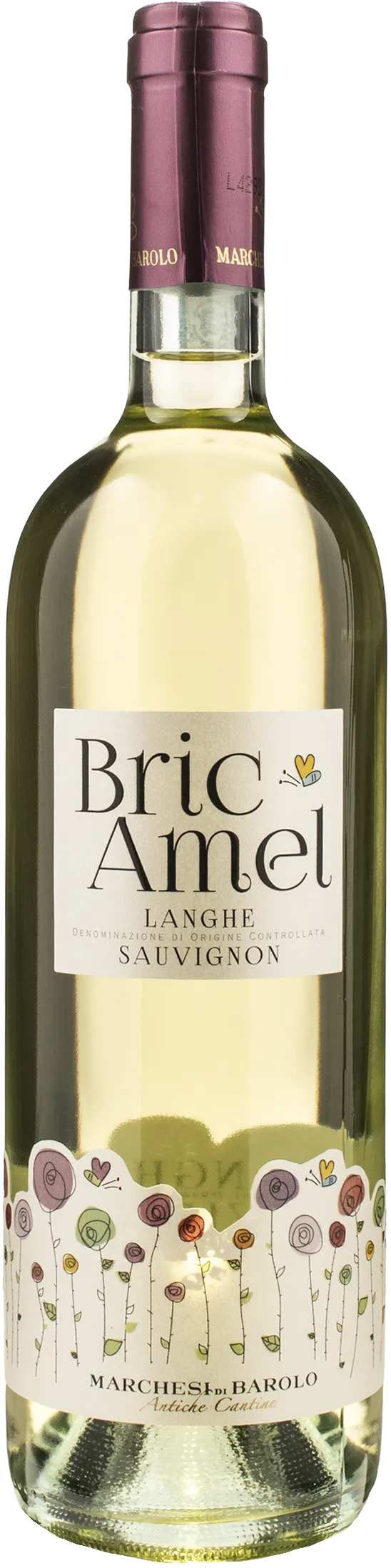
Langhe Sauvignon Bianco Bric Amel 2024
| Denomination | DOC Langhe Bianco |
|---|---|
| Size | 0,75 l |
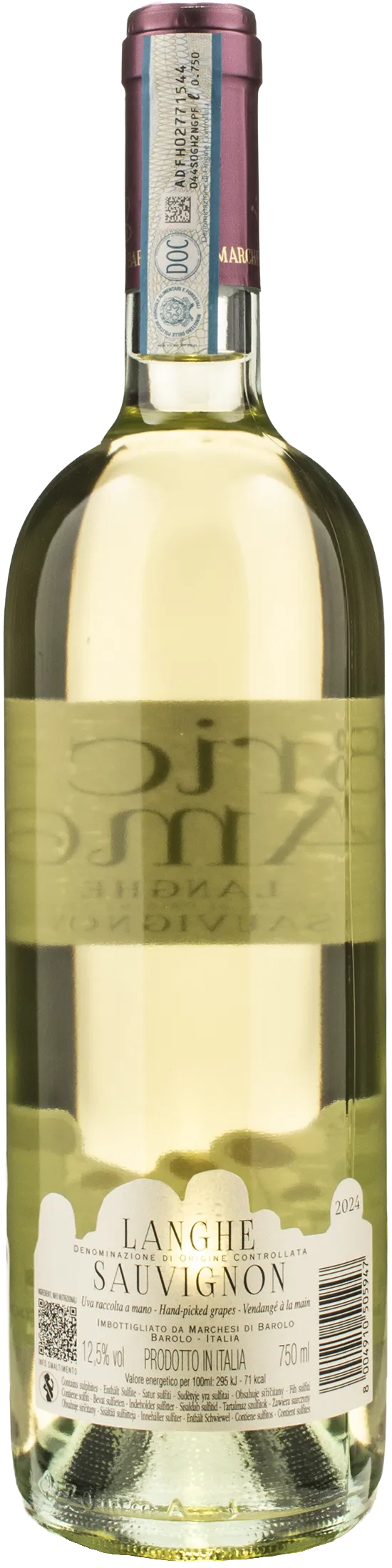
| Alcohol content | 12.5% by volume |
| Area | Piedmont (Italy) |
| Grape varieties | Arneis, Chardonnay, Sauvignon |
| Aging | Aged at controlled temperature on its own fermentation lees. |
- Name and vintage: Langhe DOC, still white wine 2024, 0.75 l, 12.5% vol
- Grape varieties: Blend of Arneis, Chardonnay and Sauvignon Blanc with a refined profile
- Aroma: Notes of peach and apricot with hints of almond, acacia and hawthorn
- Vinification: Fermentation at controlled temperature in steel, ageing on the lees
- Pairings and serving: Pairs well with fish dishes and sushi; serving temperature 8–10 °C
Description
What kind of wine it is
Bric Amel is a still white wine from Piedmont, an authentic expression of the Langhe. It is created from a harmonious blend of Arneis, Sauvignon Blanc and Chardonnay grapes. In the glass, it displays a pale straw yellow colour with greenish highlights. On the nose, it offers clear notes of peach and apricot, intertwined with hints of almond, acacia and hawthorn. On the palate, it reveals a full and fragrant flavour, supported by a delicate minerality and a pleasant freshness. The sip is smooth and light, with a pleasantly persistent finish.
Where it comes from
This wine originates in Piedmont, in the Barolo area. The name chosen by Marchesi di Barolo recalls the term “Bric”, which in the local dialect refers to the summit of the Langhe hills. In these elevated positions, the vineyards take root in calcareous soils, rich in quartz sands and fine clays. This particular geology ensures a solid structure and immediate aromatic intensity. The Guyot training system enhances the white grapes, while the terroir gives the glass a distinct savoury character.
How it is produced
Production begins with the harvest of ripe, intact grapes. After destemming and gentle crushing, the varieties are immediately blended to harmonise their aromas. The must is obtained through a soft pressing, followed by fermentation at low temperature in steel tanks, a technical choice that preserves the bouquet’s clarity. The process concludes with a prolonged ageing on the lees, carried out at a controlled temperature. This step integrates the natural freshness, defining the final taste balance.
History and Curiosities
Founded in 1806, the Marchesi di Barolo winery boasts six generations of pure winemaking tradition. The name is a tribute to the “Bric”, a term in the local dialect indicating the top of the hills. Here, the calcareous soils, rich in quartz sands and fine clays, are perfectly suited to white grape varieties. This unique terroir gives the wine a significant structure and an immediate aromatic expression, fully enhancing the lively elegance of this Piedmontese DOC.
Tasting notes

Perfume

Color

Taste
Serve at:
08 - 10 °C
Longevity:
03 - 05 years
- Start up year: 1800
- Oenologist: Marco Marsili
- Bottles produced: 1.500.000
- Hectares: 105


| Name | Marchesi di Barolo Langhe Sauvignon Bianco Bric Amel 2024 |
|---|---|
| Type | White still |
| Denomination | Langhe DOC |
| Vintage | 2024 |
| Size | 0,75 l |
| Alcohol content | 12.5% by volume |
| Grape varieties | Arneis, Chardonnay, Sauvignon |
| Country | Italy |
| Region | Piedmont |
| Vendor | Marchesi di Barolo |
| Story | History and Curiosities Founded in 1806, the Marchesi di Barolo winery boasts six generations of pure winemaking tradition. The name is a tribute to the "Bric", a term in the local dialect indicating the top of the hills. Here, the calcareous soils, rich in quartz sands and fine clays, are perfectly suited to white grape varieties. This unique terroir gives the wine a significant structure and an immediate aromatic expression, fully enhancing the lively elegance of this Piedmontese DOC. |
| Origin | Barolo (Cuneo), Piemonte |
| Soil composition | Calcareous soils, rich in quartz sands and very fine clays |
| Cultivation system | Guyot |
| Fermentation temperature | Low temperature |
| Production technique | Low temperature fermentation in temperature-controlled steel tanks; ageing on its own yeasts |
| Wine making | The grapes, once fully ripe, were harvested and immediately brought to the winery intact, gently crushed and destemmed, and blended to ensure early harmonisation. This was followed by gentle pressing. The must was fermented at a low temperature in temperature-controlled stainless steel tanks. The wine was then kept at a controlled temperature on its own fermentation lees to best express its characteristics and achieve harmony. |
| Aging | Aged at controlled temperature on its own fermentation lees. |
| Allergens | Contains sulphites |