


Montenisa (Antinori)
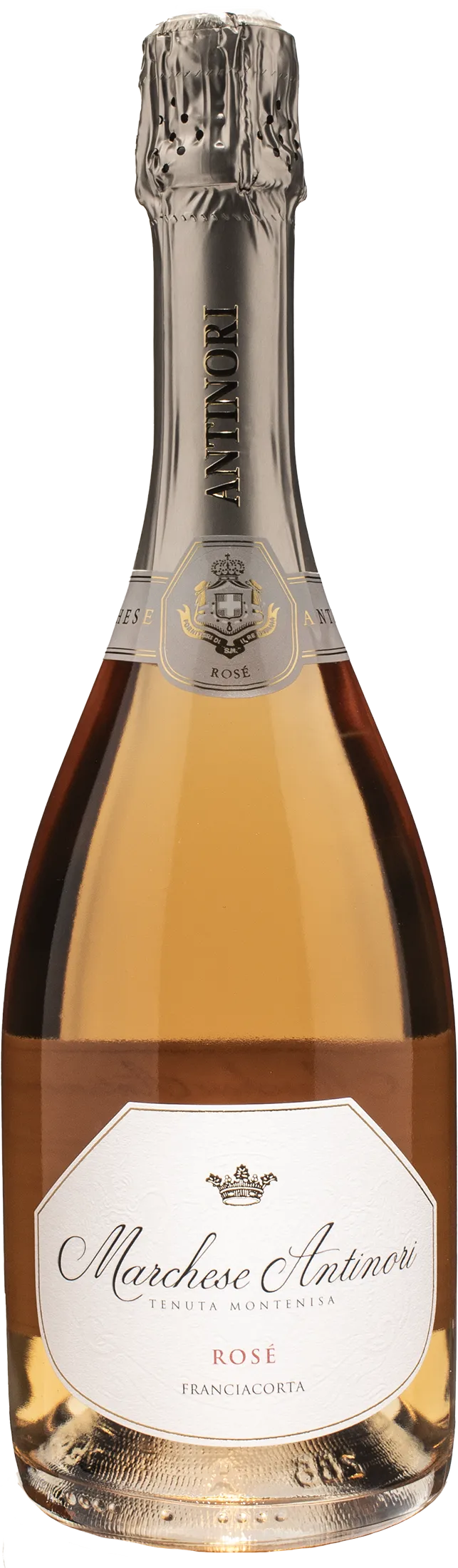
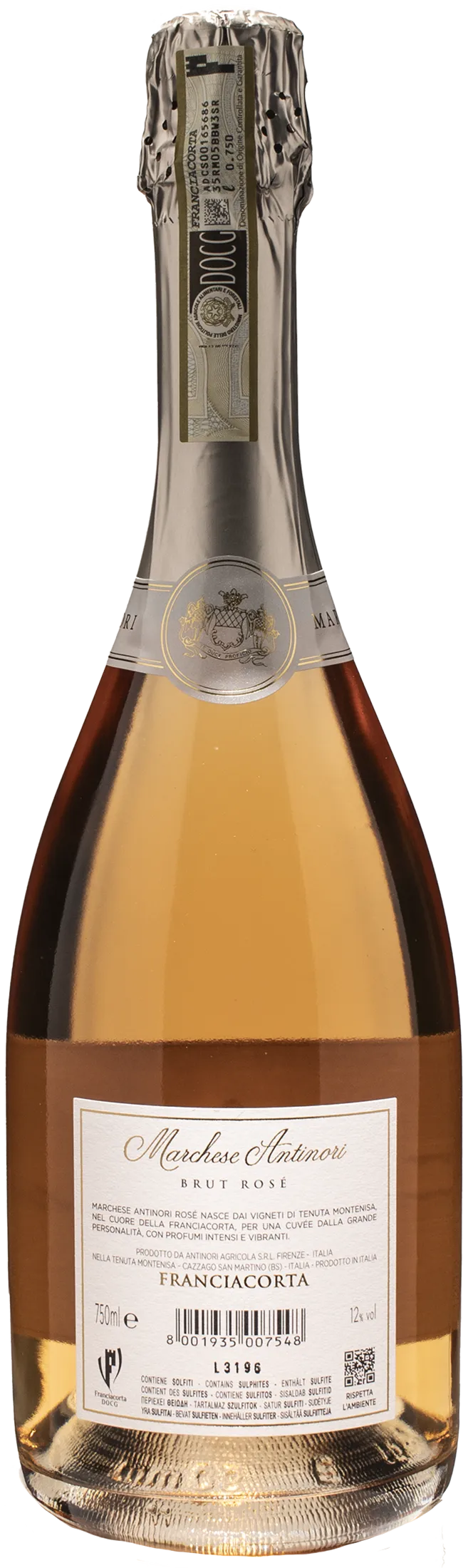
Tenuta Montenisa Franciacorta Rosè
| Denomination | DOCG Franciacorta Rosé Brut |
|---|---|
| Size | 0,75 l |
| Alcohol content | 12.0% by volume |
| Area | Lombardy (Italy) |
| Grape varieties | 100% Pinot Nero |
| Aging | Ageing on the lees in the bottle for at least 24 months; after disgorgement, the bottles rest for at least 3 months before being released for sale. |
- Traditional Method: Bottle refermentation with 24 months ageing on the lees
- Grapes and style: 100% Pinot Noir, Brut Rosé with a fresh, harmonious and structured profile
- Aromas: Notes of red fruits, pomegranate, pink citrus, yeast and bread crust
- Perlage and taste: Creamy mousse and fine perlage; savoury, enveloping and persistent flavour
- Serving: Temperature 6-9°C, ideal with shellfish, sushi and mature cheeses
Description
What kind of wine is it
Marchese Antinori Tenuta Montenisa Franciacorta Brut Rosé is a sparkling wine made from Pinot Noir grapes. Faithfully crafted according to the Traditional Method, it offers a fresh, harmonious and well-structured style. On the palate, it reveals a pleasant creamy texture, enhanced by a fine and persistent perlage. The bouquet expresses clear notes of small red fruits, pomegranate and pink citrus, combined with pronounced hints of yeast and bread crust.
Where does it come from
This Franciacorta comes from the Calino area in the province of Brescia, from historic vineyards adjacent to the Montenisa Estate and the hill of Santo Stefano. The temperate climate, moderated by breezes from Lake Iseo, ensures a slow and complete ripening of the grapes. The vines sink their roots into moraine soils, rich in minerals, which give the glass a distinctive savoury profile. The historic estate is now meticulously managed by the Marchesi Antinori.
How is it produced
The hand-picked grapes undergo gentle pressing with a brief maceration, essential to extract the characteristic rosé hue. The first fermentation of the free-run must takes place partly in stainless steel tanks and partly in barrels. The subsequent refermentation in the bottle follows the Traditional Method, requiring ageing on the lees for at least twenty-four months. After manual riddling and disgorgement, the wine rests for three months to best integrate all its components.
History and Curiosities
Located in the heart of Calino, the ancient Tenuta Montenisa boasts a noble heritage documented since 1158. The meeting in 1999 between the Counts Maggi and the prestigious Marchesi Antinori transformed this residence into the emblem of sparkling wine excellence in Franciacorta. Born among the historic vineyards of the Santo Stefano hill, the first Franciacorta Brut Rosé was created in 2006. This fascinating synergy combines the deep vocation of the land with unparalleled oenological expertise, ensuring tastings of absolute prestige.
Awards
-
 88
88/100
The prestigious international wine guide from the renowned Robert Parker, the world's most experienced and trusted wine taster.
-
 3
3One of the most prestigious wine guides in Italy.
Tasting notes

Perlage

Perfume

Color

Taste
Serve at:
06 - 08 °C
Longevity:
05 - 10 years
- Start up year: 1999
- Oenologist: Renzo Cotarella, Giorgio Oddi
- Bottles produced: 500.000
- Hectares: 60
The most important building is undoubtedly the 'Palazzetto Maggi' built in the 16th century and frescoed by the Lattanzio Gambara (1530-1574) from Brescia. This building is located in the centre of two large courtyards enclosed by porticoes.
The small church of Santo Stefano is also part of the estate. It is on the hill of the same name and overlooks the village: immersed in greenery amidst vineyards, this thousand-year-old parish church, with its Greek-cross plan, has for centuries preserved the tombs of the local noble Calini family. Read more


| Name | Marchese Antinori Tenuta Montenisa Franciacorta Rosè |
|---|---|
| Type | Rosé brut |
| Denomination | Franciacorta DOCG |
| Size | 0,75 l |
| Alcohol content | 12.0% by volume |
| Grape varieties | 100% Pinot Nero |
| Country | Italy |
| Region | Lombardy |
| Vendor | Montenisa (Antinori) |
| Story | History and Curiosities Located in the heart of Calino, the ancient Tenuta Montenisa boasts a noble heritage documented since 1158. The meeting in 1999 between the Counts Maggi and the prestigious Marchesi Antinori transformed this residence into the emblem of sparkling wine excellence in Franciacorta. Born among the historic vineyards of the Santo Stefano hill, the first Franciacorta Brut Rosé was created in 2006. This fascinating synergy combines the deep vocation of the land with unparalleled oenological expertise, ensuring tastings of absolute prestige. |
| Origin | Collina di Santo Stefano, near the Montenisa estate in Calino (Cazzago San Martino, Brescia), Franciacorta, Lombardy, Italy |
| Climate | Temperate climate influenced by the nearby Lake Iseo |
| Soil composition | Suoli morenici, ricchi di minerali |
| Fermentation | At least 24 months |
| Production technique | Traditional method (secondary fermentation in bottle) |
| Wine making | After manual harvesting and destemming-crushing, the free-run must ferments partly in temperature-controlled stainless steel tanks and partly in barriques; in spring, the second fermentation takes place in the bottle according to the traditional method, with ageing on the lees for at least 24 months. Remuage is carried out by hand using pupitres and, after disgorgement, the bottles rest for at least 3 months before being released onto the market. |
| Aging | Ageing on the lees in the bottle for at least 24 months; after disgorgement, the bottles rest for at least 3 months before being released for sale. |
| Year production | 500000 bottles |
| Allergens | Contains sulphites |