


Cantine Leonardo da Vinci
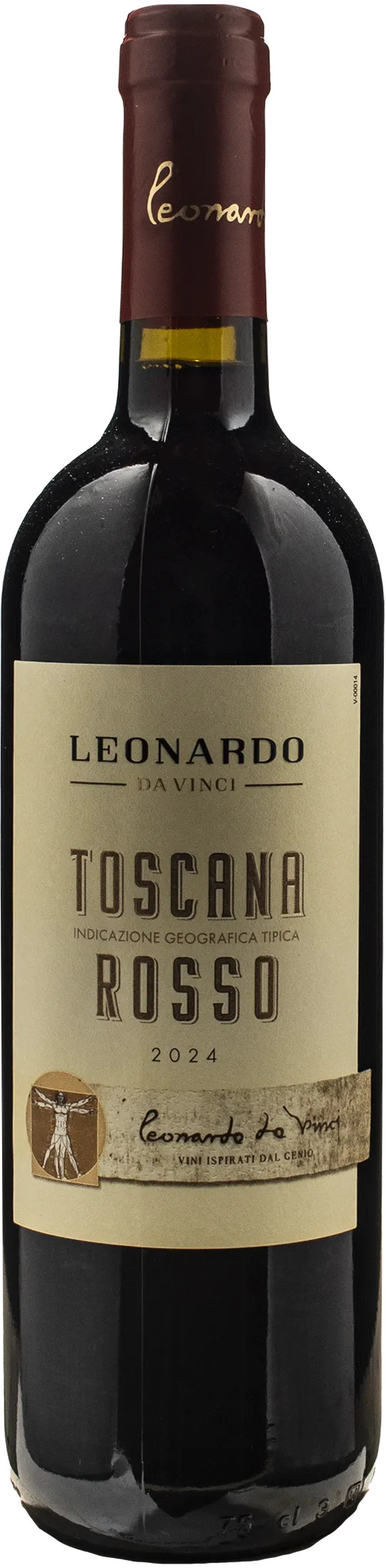
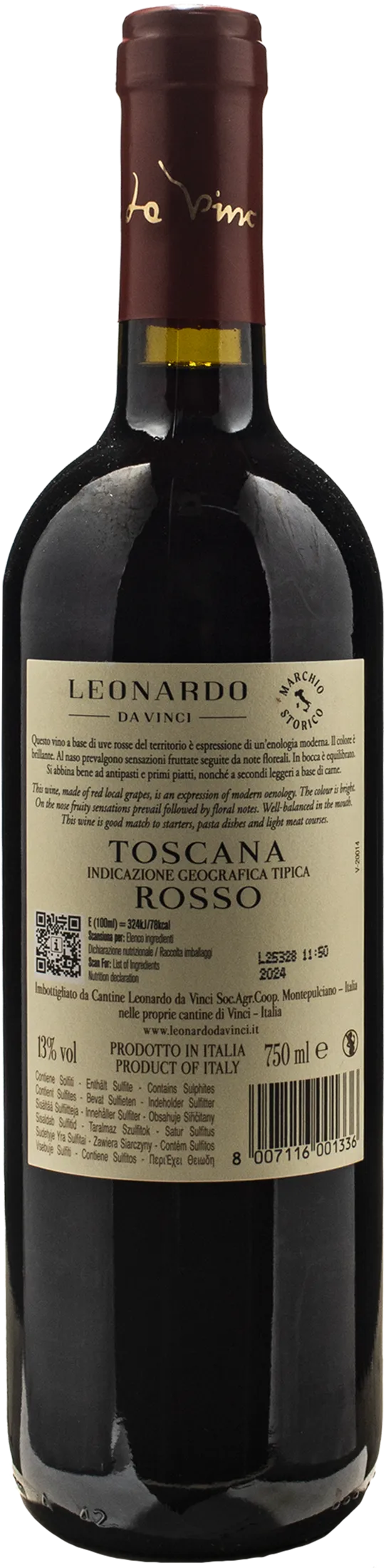
Vitruviano Toscana Rosso 2024
| Denomination | IGT Toscana |
|---|---|
| Size | 0,75 l |
| Alcohol content | 13.0% by volume |
| Area | Tuscany (Italy) |
| Grape varieties | Sangiovese, Uve Rosse |
| Aging | Aged in stainless steel. |
- Identity: Still red wine Toscana IGT 2024, 13% vol, 0.75 l bottle
- Grape varieties: Predominantly Sangiovese with Merlot and other red varieties; semi-dry style
- Vinification: 10-day maceration, fermentation at 29°C, matured in stainless steel
- Aroma and taste: notes of blackberries and dark cherries, Mediterranean herbs, hint of menthol; long persistence
- Serving and pairings: temperature 16–18°C, decant for 1 hour; ideal with ragù, roasts, cheeses
Description
What kind of wine it is
Leonardo da Vinci Vitruviano Toscana Rosso is created from a blend of Sangiovese, Merlot and other red grape varieties, resulting in a semi-dry and structured blend. The bouquet opens with aromas of dark fruits and juicy cherry, accompanied by notes of Mediterranean herbs and a delicate menthol touch. On the palate, it is soft and enveloping, supported by elegant and well-integrated tannins. This red stands out for its long and persistent finish, able to keep every fruity component in perfect balance.
Where it comes from
This Tuscan red originates from the vineyards of Vinci and the surrounding areas, situated at an altitude between forty and one hundred and thirty metres. The vines, predominantly south-facing, grow on Pliocene alluvial deposits rich in mollusc remains. These particular soil and climate characteristics give the wine a clear and vibrant fruit expression. The Leonardo da Vinci winery makes the most of this renowned hilly area, achieving a balanced harvest that translates into a sip with clear and complex aromas.
How it is produced
Harvesting takes place between the end of September and the beginning of October. During vinification, only the first-press must is used, which is immediately cooled to preserve its organoleptic qualities. The process includes a ten-day maceration on the skins for optimal extraction of colour and structure. Fermentation at a controlled temperature of twenty-nine degrees ensures aromatic clarity and precision. Finally, ageing in stainless steel preserves the integrity of the fruit, with no ageing in wooden barrels.
History and Curiosities
Created to pay tribute to the illustrious genius from whom it takes its name, this Rosso Toscana IGT weaves art into the great Tuscan winemaking tradition. The Leonardo da Vinci Wineries were founded in 1961 from the union of thirty determined local farms. The vines thrive in Vinci and the surrounding municipalities, sinking their roots into prized Pliocene alluvial deposits rich in fossilised shells. This unparalleled terroir gives the wine a distinct territorial identity, celebrating the vibrant and elegant essence of the Tuscan landscape.
Tasting notes

Perfume

Color

Taste
Serve at:
14 -16 °C
Longevity:
05 - 10 years
Decanting time:
1 hour

- Start up year: 1961
- Oenologist: Riccardo Pucci
- Bottles produced: 5.000.000
- Hectares: 750
The original headquarters, restructured and enlarged, are still the operative centre today. The winery is situated in the borough of Vinci, just 5 kilometres from the birthplace of the world famous artist and inventor Leonardo.
The co-operative takes its name from the great man, paying homage to the mind of the man who was universally recognised as a genius and to emphasise its deep-rooted bond with the territory, the same bond which Leonardo felt and whose surname is specifically associated with the village where he was born on 15 April 1452.
Today, Cantine Leonardo da Vinci is a pioneering co-operative, innovative and modern, which relies on the work and grape production of its 160 members. Read more


| Name | Leonardo da Vinci Vitruviano Toscana Rosso 2024 |
|---|---|
| Type | Red still |
| Denomination | Toscana IGT |
| Vintage | 2024 |
| Size | 0,75 l |
| Alcohol content | 13.0% by volume |
| Grape varieties | Sangiovese, Uve Rosse |
| Country | Italy |
| Region | Tuscany |
| Vendor | Cantine Leonardo da Vinci |
| Story | History and Curiosities Created to pay tribute to the illustrious genius from whom it takes its name, this Rosso Toscana IGT weaves art into the great Tuscan winemaking tradition. The Leonardo da Vinci Wineries were founded in 1961 from the union of thirty determined local farms. The vines thrive in Vinci and the surrounding municipalities, sinking their roots into prized Pliocene alluvial deposits rich in fossilised shells. This unparalleled terroir gives the wine a distinct territorial identity, celebrating the vibrant and elegant essence of the Tuscan landscape. |
| Origin | Vineyards of Vinci and neighbouring municipalities |
| Climate | Altitude: 40 30 m a.s.l. |
| Soil composition | Pliocene alluvial deposits, rich in shells |
| Cultivation system | Mainly Guyot, but also spurred cordon and, for older vineyards, Tuscan arch |
| Harvest | From 20 September to 10 October |
| Fermentation temperature | 29 °C |
| Production technique | Maceration of the skins for about 10 days; fermentation at a controlled temperature of around 29°C; ageing in stainless steel |
| Wine making | Skin maceration for about 10 days, fermentation at a controlled temperature of about 29 °C, ageing in steel. |
| Aging | Aged in stainless steel. |
| Total acidity | 5.2 gr/L |
| Residual sugar | 9.0 gr/L |
| Allergens | Contains sulphites |