


Cantine Leonardo da Vinci
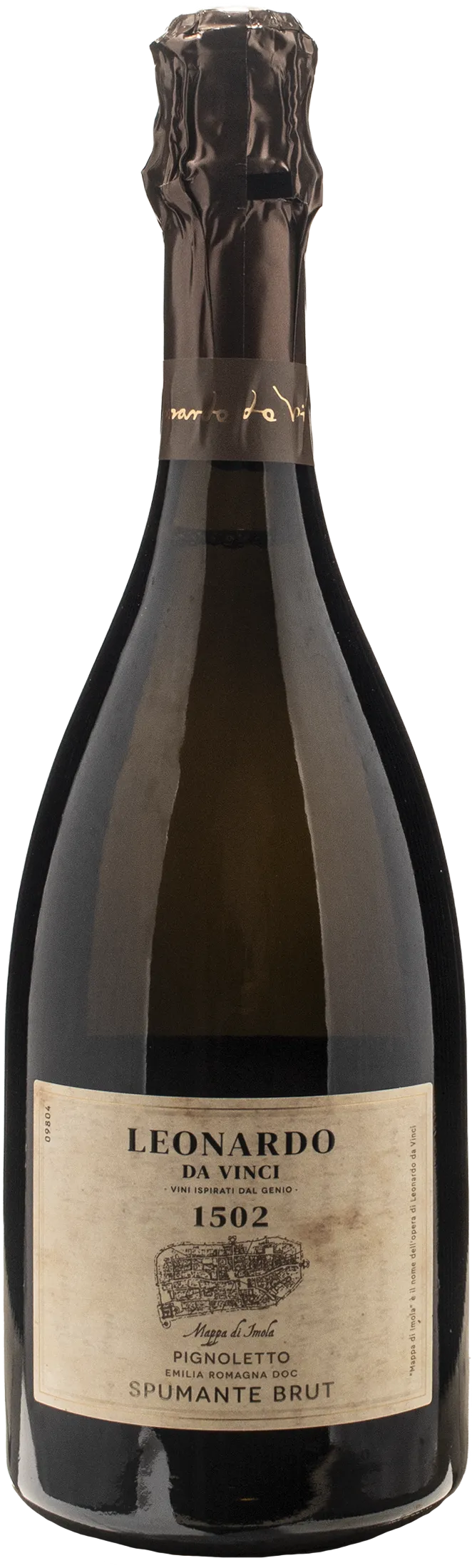
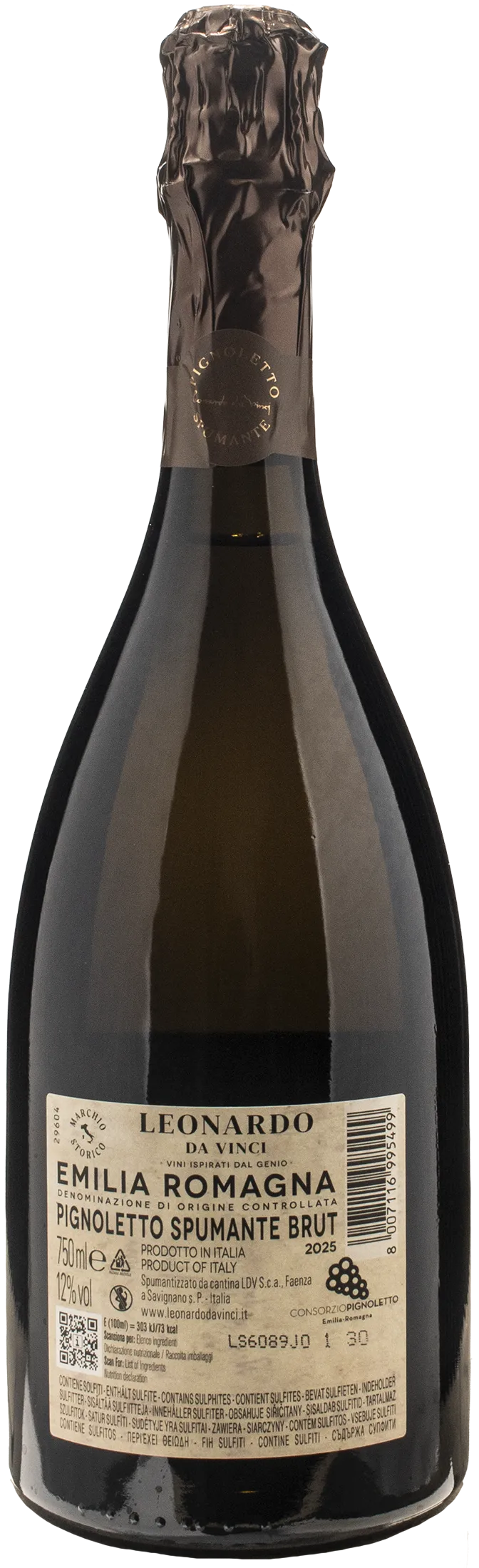
Mappa di Imola Pignoletto Spumante Brut 2025
| Denomination | DOC Pignoletto Spumante |
|---|---|
| Size | 0,75 l |
| Alcohol content | 12.0% by volume |
| Area | Emilia-Romagna (Italy) |
| Grape varieties | Pignoletto |
| Aging | Refermentation in autoclave for 1 month. |
- Name and style: Pignoletto Spumante Charmat 2025, 12% vol
- Grape variety: 85% Grechetto Gentile and 15% Chardonnay from the hills of Imola
- Vinification: fermentation in steel (max 13 °C) with selected yeasts
- Perlage and aromas: fine bubbles; notes of yellow plum and dog rose
- Pairings and serving: ideal for aperitifs and gratinated scallops at 6-10 °C
Description
What kind of wine it is
The Leonardo da Vinci 1502 Mappa di Imola Pignoletto Spumante Brut from Cantine Leonardo da Vinci is a sparkling wine from Emilia-Romagna with controlled designation of origin, created from a balanced blend of Grechetto Gentile and Chardonnay. Produced using the Charmat Method, this Pignoletto stands out for its vibrant style, highlighted by a straw yellow colour with greenish reflections and a fine perlage. The bouquet offers clear notes of yellow plum and dog rose, while on the palate it delivers a clean and refreshing sip, driven by a distinct liveliness that finishes with pleasant bitter vegetal notes. An excellent pairing for aperitifs and light seafood dishes.
Where it comes from
The grapes are grown on the hills of the Imola area, in Emilia-Romagna, at an altitude between one hundred and one hundred and fifty metres. The vineyards, managed with Guyot systems and spur cordon, take root in soils of medium-textured clay. These specific pedoclimatic conditions ensure harmonious vine development, resulting in a precise and very fresh wine. The strong connection with the region of origin shapes the wine’s identity and imparts that typical vegetal component which distinctively characterises its final structure.
How it is produced
After harvesting, the grapes undergo cold vinification in stainless steel with selected yeasts. The secondary fermentation is carried out using the Charmat Method, with refermentation in autoclave for about a month, avoiding any barrel ageing to preserve the original aromas. This process ensures absolute aromatic clarity and great cleanliness on the palate.
History and Curiosities
This refined Pignoletto Spumante DOC, crafted by Cantine Leonardo da Vinci, pays tribute to the renowned Map of Imola from 1502, celebrating the deep connection between the Genius and Emilia-Romagna.
Tasting notes

Perlage

Perfume

Color

Taste
Serve at:
06 - 08 °C
Longevity:
03 - 05 years

- Start up year: 1961
- Oenologist: Riccardo Pucci
- Bottles produced: 5.000.000
- Hectares: 750
The original headquarters, restructured and enlarged, are still the operative centre today. The winery is situated in the borough of Vinci, just 5 kilometres from the birthplace of the world famous artist and inventor Leonardo.
The co-operative takes its name from the great man, paying homage to the mind of the man who was universally recognised as a genius and to emphasise its deep-rooted bond with the territory, the same bond which Leonardo felt and whose surname is specifically associated with the village where he was born on 15 April 1452.
Today, Cantine Leonardo da Vinci is a pioneering co-operative, innovative and modern, which relies on the work and grape production of its 160 members. Read more


| Name | Leonardo da Vinci 1502 Mappa di Imola Pignoletto Spumante Brut 2025 |
|---|---|
| Type | White charmat method sparkling wine brut |
| Denomination | Pignoletto DOC |
| Vintage | 2025 |
| Size | 0,75 l |
| Alcohol content | 12.0% by volume |
| Grape varieties | Pignoletto |
| Country | Italy |
| Region | Emilia-Romagna |
| Vendor | Cantine Leonardo da Vinci |
| Story | History and Curiosities This refined Pignoletto Spumante DOC, crafted by Cantine Leonardo da Vinci, pays tribute to the renowned Map of Imola from 1502, celebrating the deep connection between the Genius and Emilia-Romagna. |
| Origin | Colline dell’Imolese (Imola), Emilia-Romagna |
| Climate | Altitude: 100 50 m a.s.l. |
| Soil composition | Medium clay loam in the lower hills of Imola. |
| Cultivation system | Guyot and spurred cordon |
| Harvest | Mid-September |
| Fermentation temperature | Maximum 13 °C |
| Fermentation | 1 month |
| Production technique | Charmat method (secondary fermentation in an autoclave for 1 month) |
| Wine making | Fermentation at low temperature in stainless steel at a controlled temperature (maximum 13°C) with selected yeasts; sparkling achieved using the Charmat Method through refermentation in a pressurised tank for about 1 month, with no ageing in wood. |
| Aging | Refermentation in autoclave for 1 month. |
| Allergens | Contains sulphites |