


Le Marchesine
Franciacorta Brut Nature Secolo Novo Giovanni Biatta Riserva 2010
| Denomination | DOCG Franciacorta Riserva Brut |
|---|---|
| Size | 0,75 l |
| Alcohol content | 13.0% by volume |
| Area | Lombardy (Italy) |
| Grape varieties | 100% Chardonnay |
| Aging | Aged on the lees for approximately 72 months (at least 54 months) in temperature-controlled rooms (12–14 °C). |
- Type and vintage: Classic method sparkling wine Brut Nature Riserva pas dosé 2010, 0.75 l bottle
- Grapes and area: 100% Chardonnay from Passirano, soils characterised by limestone rock
- Ageing: 72 months maturation on the lees to impart structure and persistent perlage
- Aromas: Notes of peach, pineapple, plum, yellow rose, honey and toasted bread
- Pairings: Recommended with slow-cooked meats, game, stuffed pasta and fine salt-baked fish
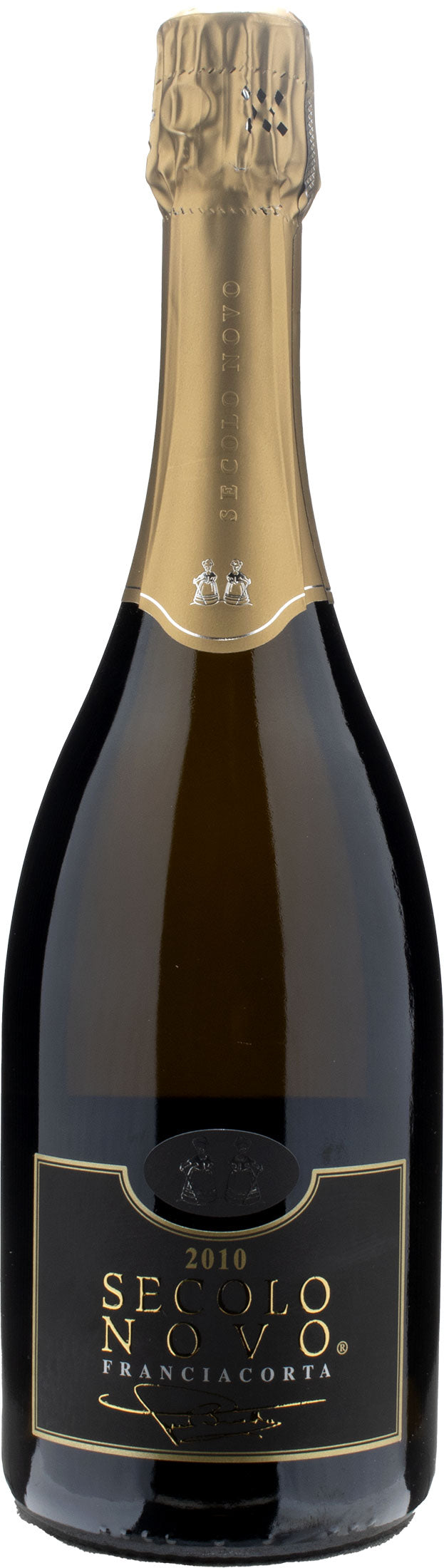
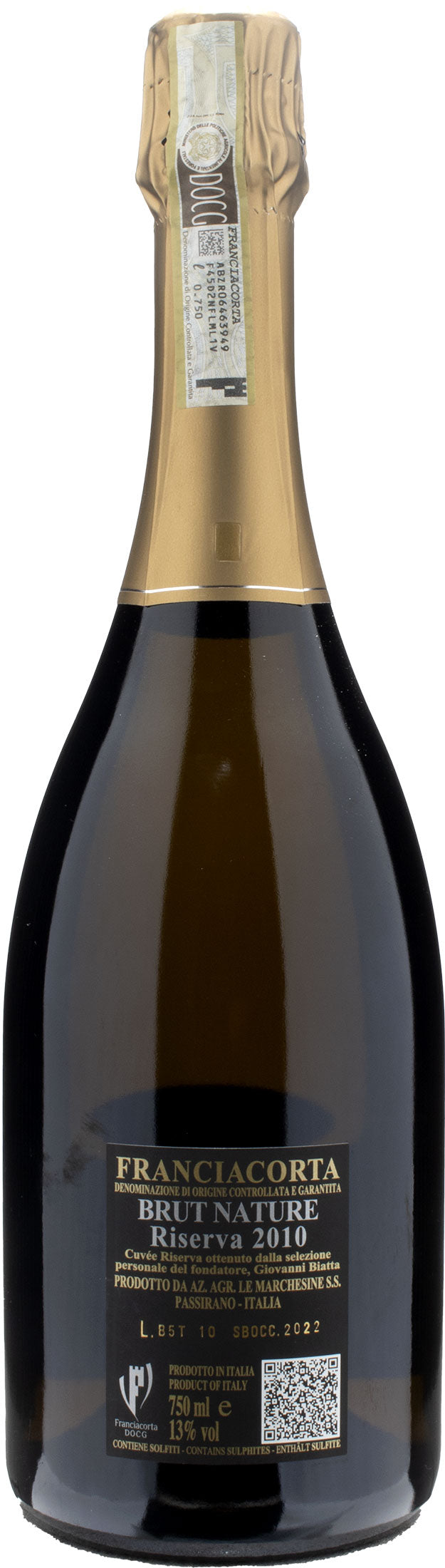
Description
What kind of wine is it
Franciacorta Brut Nature Riserva Secolo Novo Giovanni Biatta is produced by Le Marchesine using the Traditional Method. Made from carefully selected Chardonnay, it offers a full and robust sip. In the glass, it stands out for its persistent perlage and creamy mousse, supported by a vibrant acid-saline freshness. The aromatic profile combines notes of peach, pineapple and plum with hints of yellow rose, honey and toasted bread, evolving into a long and complex finish with nuances of blond tobacco, incense and lemongrass.
Where does it come from
This Franciacorta originates from the vineyards of Passirano, in Lombardy, trained using the Guyot system. The vines draw nourishment from a soil rich in limestone rock, which gives the wine a distinctive savoury character. The agronomic management focuses on low yields and meticulous manual harvesting to preserve the integrity of the bunches. This deep connection with the terroir defines a precise acidic structure, essential for ensuring body and remarkable longevity.
How is it produced
Vinification is carried out by gravity, limiting mechanical intervention to extract only the free-run must. After fermentation in stainless steel with indigenous yeasts, the wine is cooled to prevent malolactic fermentation, preserving its freshness. Following the prise de mousse, a slow ageing on the lees begins, lasting seventy-two months. This maturation gives the wine a profound structure, enhanced by the choice of zero dosage which highlights its absolute purity.
History and Curiosities
The result of the dedication of the Biatta family, active since 1985, this Franciacorta DOCG embodies excellence. The 2010 vintage enhances the pas dosé identity of a project that began in 2007. The fine Chardonnay grapes, grown on limestone soils in Passirano and meticulously hand-picked, impart an unmistakable territorial character. The exceptional 72 months of ageing on the lees gives this multi-award-winning Riserva a complex and enveloping structure, widely celebrated by the most authoritative international wine guides.
Awards
-
2010
 93
93/100
The prestigious international wine guide from the renowned Robert Parker, the world's most experienced and trusted wine taster.
-
2010
 3
3One of the most prestigious wine guides in Italy.
-
2010
 4
4Italian Sommelier Association (AIS) guide
Tasting notes

Perlage
Perfume

Color
Taste
Serve at:
06 - 08 °C
Longevity:
05 - 10 years
- Start up year: 1985
- Oenologist: Jean Pierre Valade
- Bottles produced: 425.000
- Hectares: 51


| Name | Le Marchesine Franciacorta Brut Nature Secolo Novo Giovanni Biatta Riserva 2010 |
|---|---|
| Type | White pas dosé |
| Denomination | Franciacorta DOCG |
| Vintage | 2010 |
| Size | 0,75 l |
| Alcohol content | 13.0% by volume |
| Grape varieties | 100% Chardonnay |
| Country | Italy |
| Region | Lombardy |
| Vendor | Le Marchesine |
| Story | History and Curiosities The result of the dedication of the Biatta family, active since 1985, this Franciacorta DOCG embodies excellence. The 2010 vintage enhances the pas dosé identity of a project that began in 2007. The fine Chardonnay grapes, grown on limestone soils in Passirano and meticulously hand-picked, impart an unmistakable territorial character. The exceptional 72 months of ageing on the lees gives this multi-award-winning Riserva a complex and enveloping structure, widely celebrated by the most authoritative international wine guides. |
| Origin | Passirano (BS) |
| Soil composition | Limestone |
| Plants per hectare | 4,000–4,500 vines per hectare |
| Yield per hectare | Approximately 8,000 kg per hectare |
| Fermentation temperature | 17 9 °C |
| Production technique | Fermentazione controllata in purezza a 17 9 °C con lieviti indigeni per mantenere integro il sapore e i profumi della Franciacorta. |
| Wine making | White vinification by gravity without mechanical pressing, using only free-run must; fermentation in stainless steel tanks at controlled temperature (17–19 °C) with indigenous yeasts. The wine is cooled to around 10 °C to prevent malolactic fermentation; addition of the liqueur de tirage and bottling (March-April) for the prise de mousse. Ageing on the lees in temperature-controlled cellars (12–14 °C) for at least 54 months (around 72 months on the lees). |
| Aging | Aged on the lees for approximately 72 months (at least 54 months) in temperature-controlled rooms (12–14 °C). |
| Total acidity | 6.65 gr/L |
| Dry extract | 22.0 gr/L |
| Allergens | Contains sulphites |