


Larmandier-Bernier
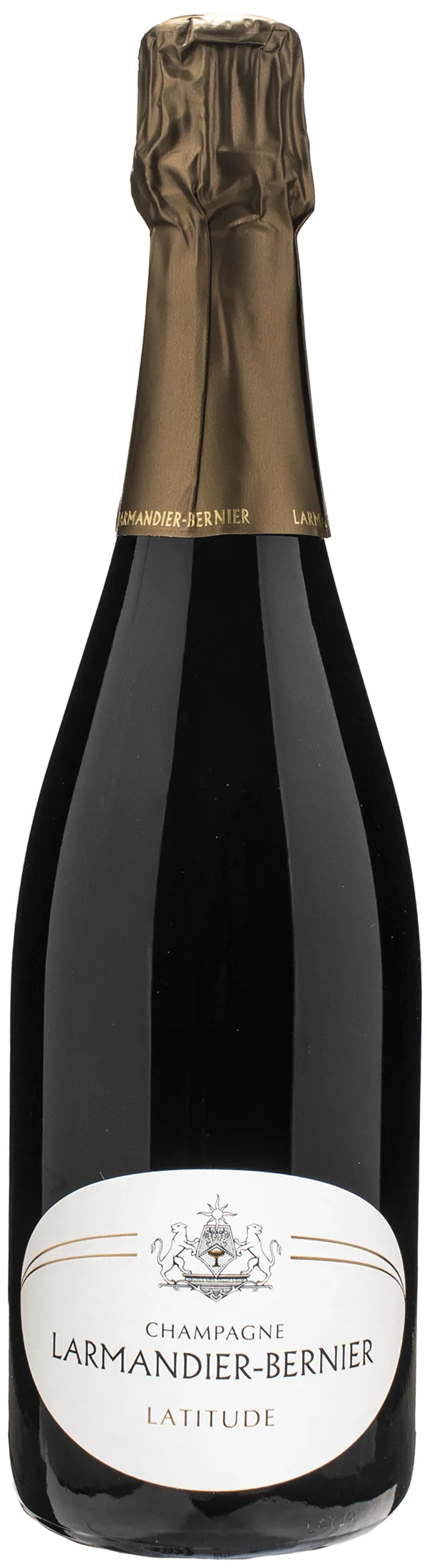
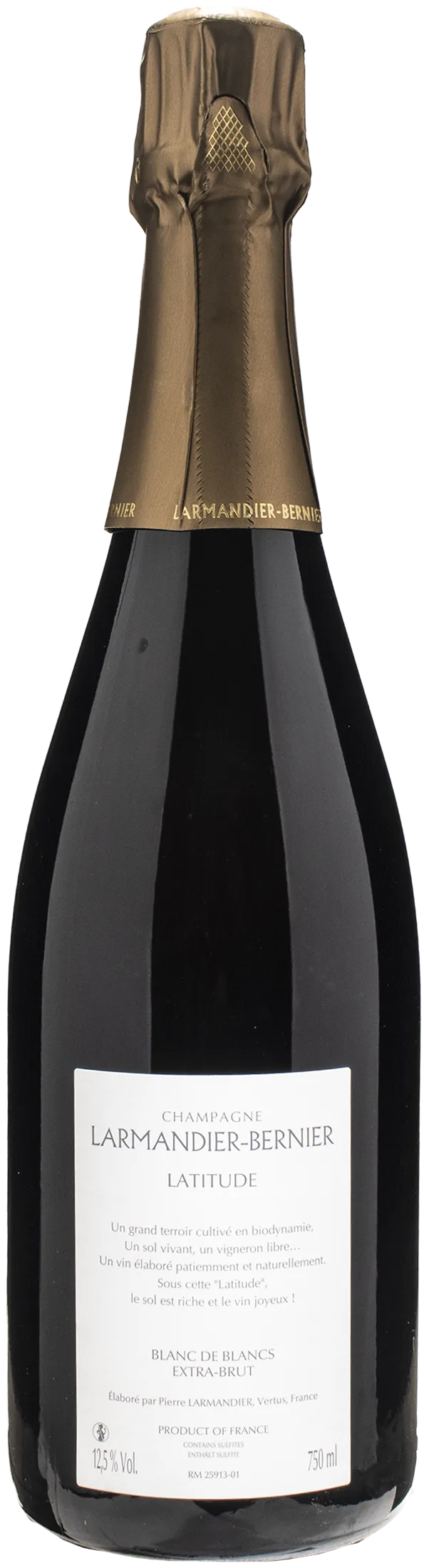
Bernier Champagne Blanc de Blancs Latitude Extra Brut
| Denomination | AOC Champagne Blanc de Blancs Extra Brut |
|---|---|
| Size | 0,75 l |
| Alcohol content | 12.5% by volume |
| Area | Champagne region (France) |
| Grape varieties | 100% Chardonnay |
| Aging | The bottles are then taken to the coolness of the cellars, where the second fermentation begins and maturation on racks takes place for a period of more than 2 years; ageing on the lees for at least two years; manual disgorgement nine months before release to the market. |
- Grape variety and style: 100% Chardonnay, Extra Brut (2 g/l), 12.5% vol, 0.75 l bottle
- Premier Cru origin: grapes from vineyards south of Vertus, Champagne; elegant and rounded character
- Natural vinification: indigenous yeasts, unfiltered and unfined; Traditional Method
- Ageing on the lees: matured for over 2 years; manual disgorgement carried out 9 months prior
- Tasting notes and pairings: hints of smoke, incense, anise, pear and chalk; recommended with fish and cheese
Description
What kind of wine it is
Latitude produced by Larmandier-Bernier faithfully represents Champagne Blanc de Blancs Extra Brut, crafted according to the Traditional Method. Made exclusively from Chardonnay grapes, it offers a dense and harmonious sip. The aromatic profile reveals hints of smoke, incense, anise and pear, quickly evolving into notes of candied lemon, marzipan, mint and clear chalky tones. On the palate it is very dry, broad and endowed with a strong gustatory presence, finishing with an extremely clean aftertaste. Its low dosage makes it perfect for elegantly accompanying refined dishes based on fish, shellfish and cheese.
Where it comes from
This cuvée originates from the renowned Premier Cru vineyards located south of the commune of Vertus, in the heart of Champagne. The generous terroir of the area imparts a natural roundness to the Chardonnay, essential for ensuring the pronounced structural breadth of the sip. The vocation of the soil guarantees both elegance and definition, maintaining a pure and rigorous gustatory identity. To ensure expressive consistency and greater depth, the blend is enriched with a precious perpetual reserve, which provides stylistic continuity and perfect harmony to the aromatic profile.
How it is produced
After a gentle pressing of the ripe bunches, the musts undergo a natural fermentation triggered by indigenous yeasts and a spontaneous malolactic fermentation. During the first year, the wine rests on its lees in Stockinger barrels, wooden vats and stainless steel tanks, without any filtration or clarification. The second fermentation takes place in the bottle according to the Traditional Method, followed by ageing for at least two years in contact with the lees. The rigorous artisanal process ends with manual disgorgement, carefully carried out about nine months before release to the market to preserve the freshness of the fruit.
History and Curiosities
Renamed Latitude to reflect its harmonious, rounded and captivating character, this prestigious cuvée originates from the historic Premier Cru vineyards located south of Vertus. The excellence of this Champagne Extra Brut lies in the perfect balance between natural fermentation with indigenous yeasts in Stockinger barrels and the integration of 40% perpetual reserve started in 2004. The absence of filtration, ageing for at least two years and meticulous manual disgorgement deliver a pure sip, celebrated by Robert Parker and Wine Spectator.
Awards
-
 91
91/100
The prestigious international wine guide from the renowned Robert Parker, the world's most experienced and trusted wine taster.
-
 90
90/100
Wine spectator is the most influential wine guide on the internet.
Tasting notes
Perfume

Color
Taste
Serve at:
06 - 08 °C
Longevity:
15 - 25 years
From the beginning of the 20th century, the Larmandiers made Champagnes which very quickly proved their fine qualities. Thus Jules Larmandier and then his son, Philippe Allyre, began to supply the great Parisian restaurants (la Tour d'Argent, Taillevent, Charlot Roi des Coquillages, …).
In 1971, Philippe Larmandier, the grandson of Jules, created with his wife, Elisabeth Bernier, who owned vineyards in Vertus, Larmandiers-Bernier Champagne. Upon the death of her husband in 1982, Elisabeth managed the family estate and developed the sales, particularly in Belgium and Switzerland. In 1988, Pierre, the son of Philippe and Elisabeth, who had just graduated from Nantes Business School, decided to return to the job "which flowed in his veins".
Pierre is striving to refine still further his work in the cellar in order to bring the grapes to the glass in the best possible way, by putting the originality of each terroir first.
In 2002, he bought about ten acres of vines in Vertus. Ten acres in Vertus is already exceptional, but what is perhaps unique in Champagne is the fact that these vines have never known any weed-killer, nor any processed household refuse. The soil is and always has been ploughed. The previous owner, who was taking retirement, knew that the vines would continue to be ploughed.
The estate was awarded one, and then two stars in the guide 'Classement des Meilleurs Vins de France'. Pierre Larmandier was selected by the 'Revue des Vins de France' as 'most promising figure for wine 2002' and 'winegrower of the year 2003' by Bernard Burtschy of GaultMillau. In 'The New France', Andrew Jefford considered that "few winegrowers in Champagne have such an impressive range of Champagnes". Read more


| Name | Larmandier Bernier Champagne Blanc de Blancs Latitude Extra Brut |
|---|---|
| Type | White green classic method sparkling wine extra brut |
| Denomination | Champagne AOC |
| Size | 0,75 l |
| Alcohol content | 12.5% by volume |
| Grape varieties | 100% Chardonnay |
| Country | France |
| Region | Champagne region |
| Vendor | Larmandier-Bernier |
| Story | History and Curiosities Renamed Latitude to reflect its harmonious, rounded and captivating character, this prestigious cuvée originates from the historic Premier Cru vineyards located south of Vertus. The excellence of this Champagne Extra Brut lies in the perfect balance between natural fermentation with indigenous yeasts in Stockinger barrels and the integration of 40% perpetual reserve started in 2004. The absence of filtration, ageing for at least two years and meticulous manual disgorgement deliver a pure sip, celebrated by Robert Parker and Wine Spectator. |
| Origin | South of Vertus, Champagne, France |
| Fermentation | At least two years |
| Production technique | Traditional method (second fermentation in bottle) |
| Wine making | Natural alcoholic fermentation with indigenous yeasts; spontaneous initiation of malolactic fermentation; fermentation and ageing in Stockinger wooden barrels, wooden vats and stainless steel tanks; grapes gently pressed with musts slightly clarified; ageing on natural lees for almost a year with bâtonnage; no filtration or fining; blending and bottling in July; second fermentation in bottle in the cellar and maturation on the lees for at least two years; manual disgorgement nine months before release; dosage 2 g/l (extra brut). |
| Aging | The bottles are then taken to the coolness of the cellars, where the second fermentation begins and maturation on racks takes place for a period of more than 2 years; ageing on the lees for at least two years; manual disgorgement nine months before release to the market. |
| Residual sugar | 2.0 gr/L |
| Allergens | Contains sulphites |